About Ammomanes phoenicura (Franklin, 1831)
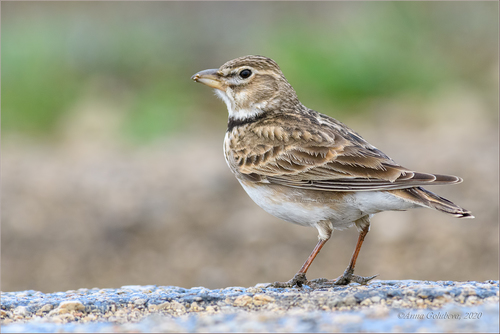
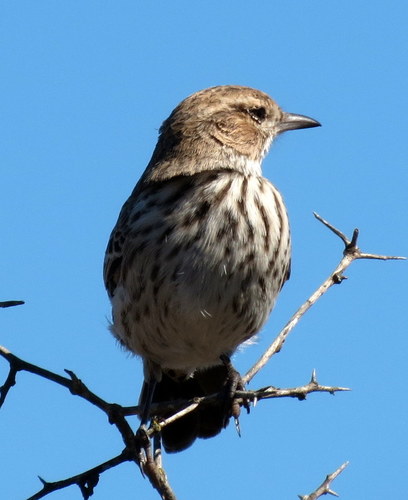
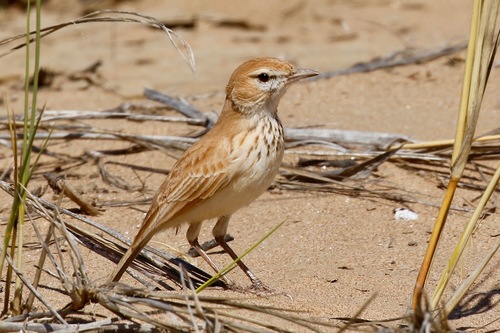
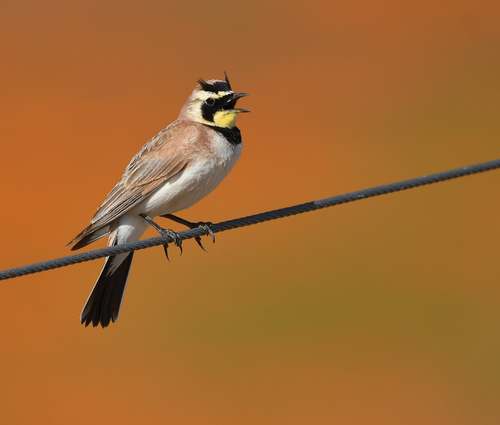
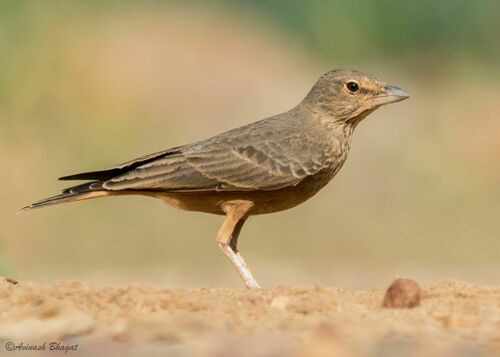
Like other larks in the Ammomanes genus, this species has a wide curved beak, with nostrils covered by feathers. Its hindclaw is the same length as its hindtoe, and it is moderately curved. The base of the lower mandible is fleshy, while the rest of the mandible is horn-grey; its legs are also flesh-coloured. In field observations, this species can be distinguished by its rufous overall colour, reddish rump, and a dark tail band that narrows toward the sides, forming a triangular shape. Its throat is lightly streaked with dark brown, and young birds have less streaking on the underside. This species is found mainly in low-altitude dry regions, in open habitats without significant tree cover. It is a resident species mostly across India south of the Ganges, ranging west to Kutch and the Aravallis of Rajasthan. It is a summer visitor to parts of Pakistan in northern Punjab and to southern Nepal. The species does not occur in Sri Lanka, reports of its presence on the island of Rameshwaram have not been confirmed, and it is largely absent from the Western Ghats region, particularly in Kerala. These birds are usually seen on the ground, and sometimes perch on wires, and they are not secretive. They walk on the ground, making quick dashes to capture insects. When disturbed, they crouch and stay still, and only flush when approached very closely. Their breeding season runs from February to May. Males perform a courtship display: they rise high into the air with deep wing beats, then descend in a series of nose dives while producing short burbling or chirruping notes. They also call while perched. The nest is built in a depression in the ground, and a typical clutch holds two to four eggs. The eggs are broad oval-shaped with a slight gloss. They are creamy or pale yellowish-white, covered with spots that are denser at the broader end. The incubation period for this species has not been confirmed.