About Ammomanes deserti (Lichtenstein, 1823)
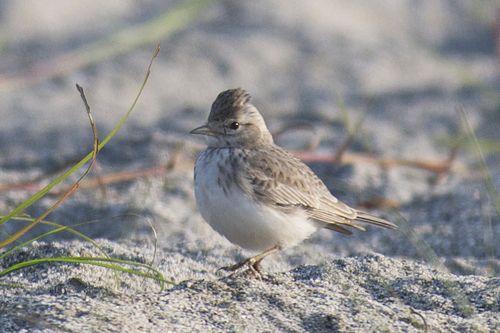
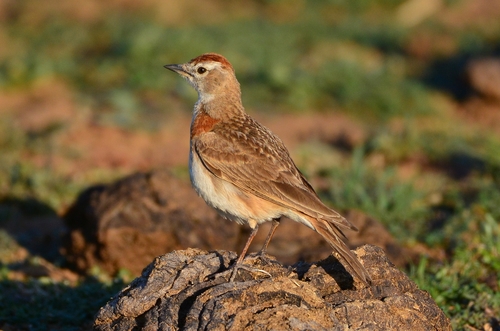
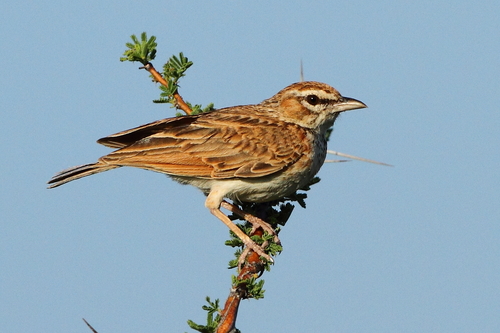
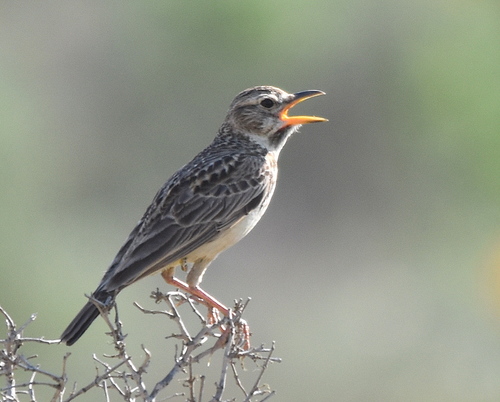
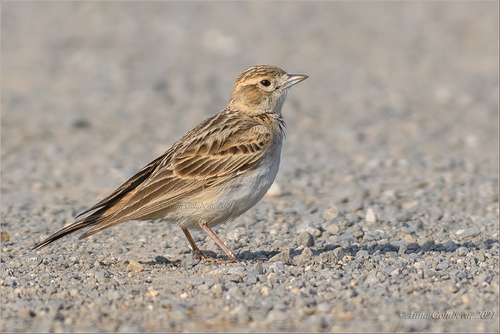
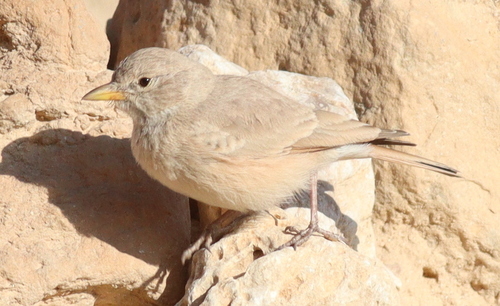
The desert lark, scientifically Ammomanes deserti, is a medium-sized lark with a large head and long bill, growing between 16 and 17 centimetres (6.3 to 6.7 inches) long. The sexes have identical appearance, but the species shows considerable geographical variation. Its plumage is rather dull, and can range from quite pale to rather dark. While plumage variation occurs between subspecies, individuals within the same population can also vary in colour. It looks similar to the bar-tailed lark, but is slightly larger, with a less domed head, a larger broader beak, stouter legs, and a longer tail. The upperparts of the many subspecies vary in colour; most are pale greyish brown, but some subspecies are very pale and washed out, while others are quite deeply coloured. Some subspecies have rufous colouring on the wings and tail, similar to the bar-tailed lark, but the desert lark has pale pinkish grey underparts with much more streaking than the bar-tailed lark. It also lacks the clearly defined terminal black tail band that the bar-tailed lark has, though it may have a diffuse dark patch on its tail. Its colour variation generally matches its habitat: sandy-coloured birds are more common in sandy areas, greyer birds in rocky areas, and the darkest birds in basalt-dominated deserts. Its song is a mournful choo-wee-chacha wooee, produced from the ground, a boulder, or during undulating flight. The song is more mellow and less squeaky than that of the bar-tailed lark. When flushed, the desert lark makes a short churree or chee-lu call. The desert lark occurs from Mauritania, Western Sahara and southern Morocco in the west, eastwards through northern Africa as far south as Chad and Somalia, and continues across southwest Asia to western India. It is a non-migratory resident species, only making local movements, and inhabits arid stony areas. It avoids flat sand, and is always found in broken terrain that has a vertical element. The desert lark is not very sociable and does not form large flocks; it is most often encountered alone or in small groups. It is territorial during the breeding season. It nests on the ground, in a shallow scrape sheltered by a grass tussock or stone. The scrape is lined with plant material, and has a rim of pebbles, which may surround the nest or sit on its more exposed side. The clutch contains 1 to 5 eggs. Egg laying occurs at different times across its range: for example, it takes place from January to February in the southern part of the range, and March to April in the north. The desert lark feeds on seeds and insects, with insects making up a larger part of its diet during the breeding season.