About Amitermes meridionalis (Froggatt, 1898)
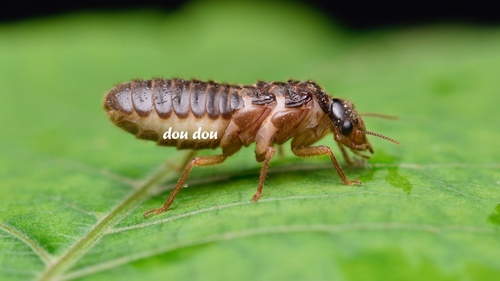
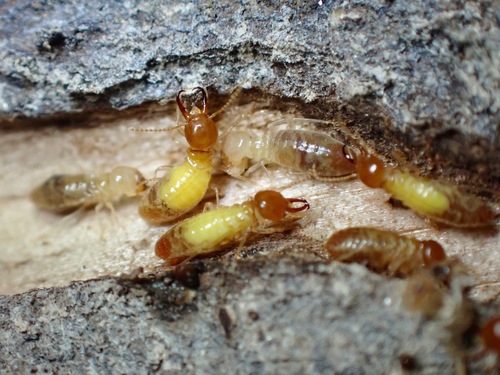
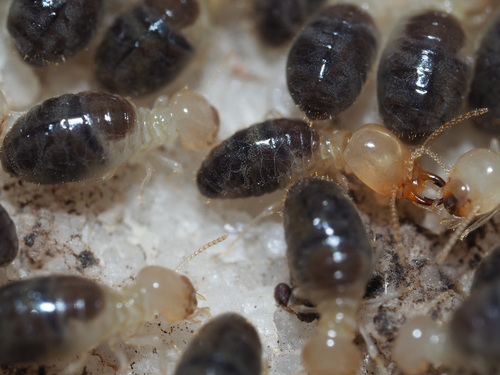
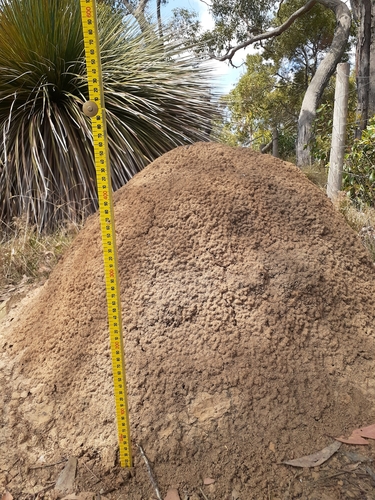
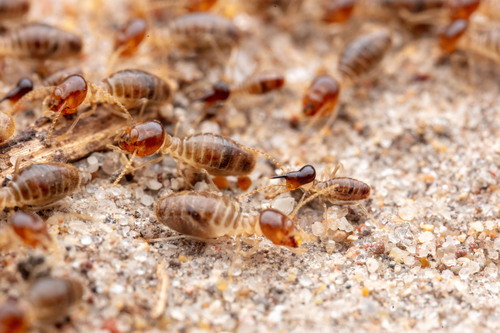
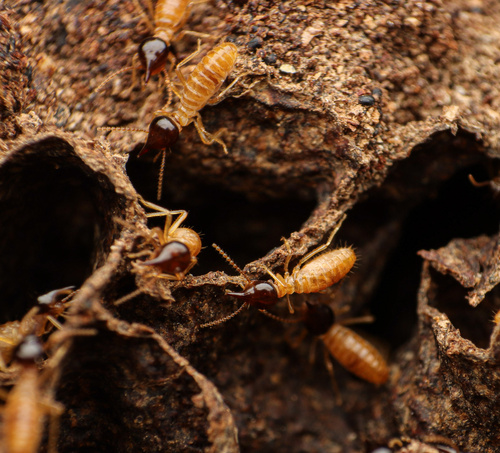
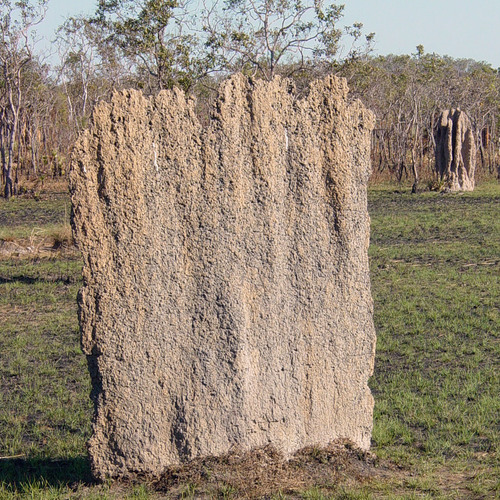
The scientific name of this termite species is Amitermes meridionalis (Froggatt, 1898). A single large mound built by this species can hold up to one million individual termites. Each mound forms the nest of one Amitermes meridionalis colony, and houses the colony's queen, king, reproductives, soldiers, and workers. The outer surface of the mound is hard and durable, while the papery inner material separates the mound's internal chambers and galleries. Soldiers of this species measure 4 to 6 mm (0.16 to 0.24 in) in length, and their curved mandibles each have a single in-turned tooth. Many Amitermes meridionalis individuals never leave their mound. The sheltered, protected mound environment means these termites have thin cuticles, colourless bodies, poor vision, and very little ability to defend themselves. Amitermes meridionalis is native to the northern part of Australia's Northern Territory, specifically in the area around Darwin. The species builds distinctive slab-like mounds that are located in low-lying grassland areas that flood during the rainy season. These mounds are often widely scattered across the landscape, but they may also be grouped together in a pattern that resembles a graveyard.