About Amitermes hastatus (Haviland, 1898)
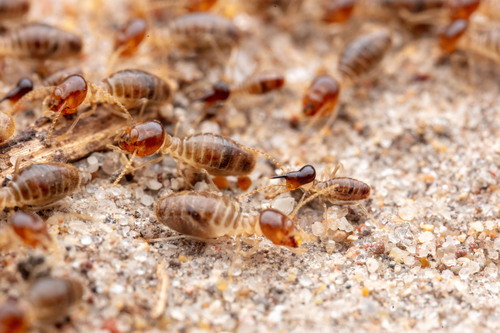
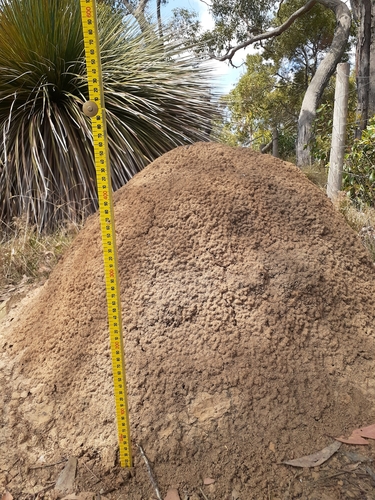
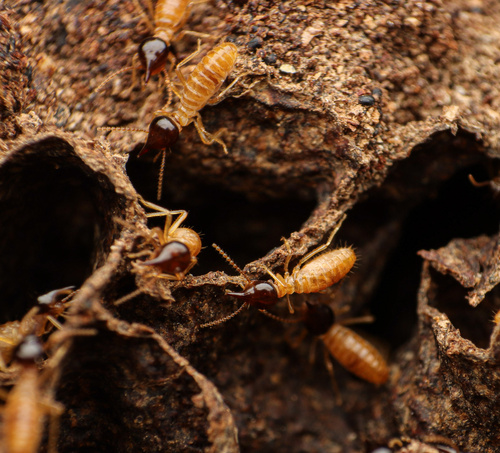
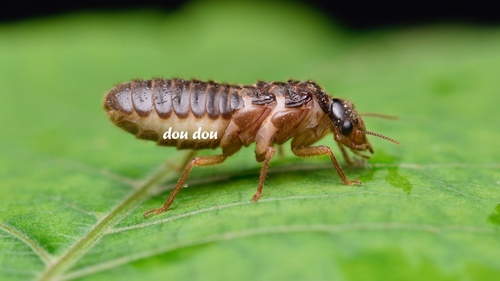
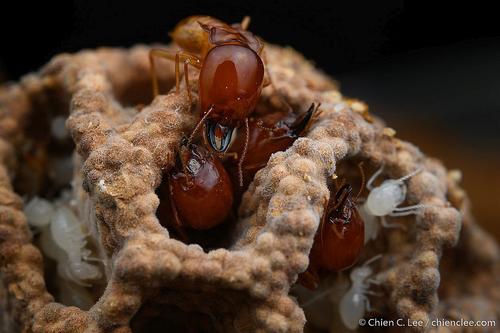
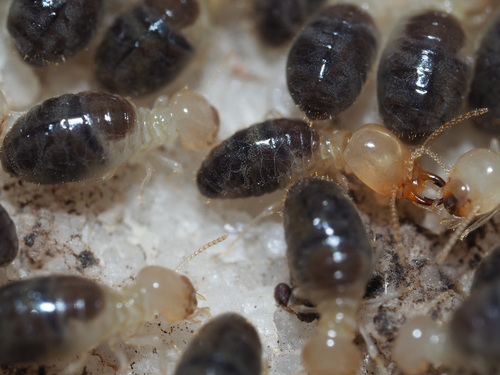
Workers of Amitermes hastatus range from 4mm to 4.5mm in length, and have relatively large white heads. They can live relatively long lives that exceed nine months. These termite workers mostly harvest humus and dead damp organic plant matter to eat while underground, and they rarely forage for food on the surface. Soldiers of the species are larger than workers, ranging from 5mm to 5.5mm in length, and they have larger heads that are yellow or red in colour. A large portion of the soldier's head is occupied by a frontal gland that excretes a colourless, sticky fluid, which has a strong irritant effect on other insects. Typically, there is one soldier for every twenty to thirty workers, and soldiers depend on workers to provide them with food. White nymphs are found in mature mounds that are over two or three years old during February and March. These nymphs develop into sexually reproductive alates, which take mating flights in April or May after the first autumn rains. Queens of Amitermes hastatus can grow up to 15mm in length and move freely within the centre of the mound. Each mound houses multiple kings and queens, and may contain up to thirty-five queens total. Known parasites of Amitermes hastatus are two species of mites: Termitacarus cuneiformis and Cosmoglyphus kramerii. Another termite species, Termes winifredae, often lives in very close proximity to A. hastatus as an inquiline. Populations of T. winifredae are typically small and do not pose significant threat to A. hastatus. Even though the tunnels and chambers of the two species may run parallel to one another, the two species rarely mix. If either species breaks into the other's colony, they will fight, and A. hastatus usually successfully repels T. winifredae. A species of springtail is a common inhabitant of A. hastatus nests, and larvae of the fly Termitometopia skaifei can be found in some of these nests. Larger animals including aardvarks, and lizards such as southern rock agamas, are known to feed on a variety of termite species, including Amitermes hastatus.