About Amianthium muscitoxicum (Walter) A.Gray
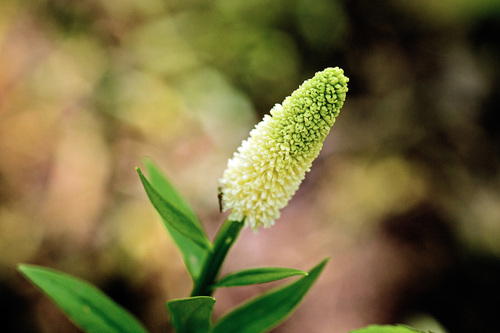
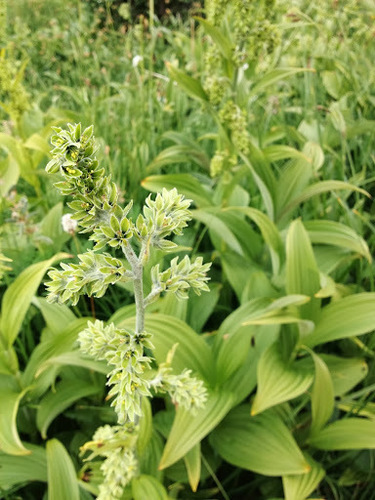
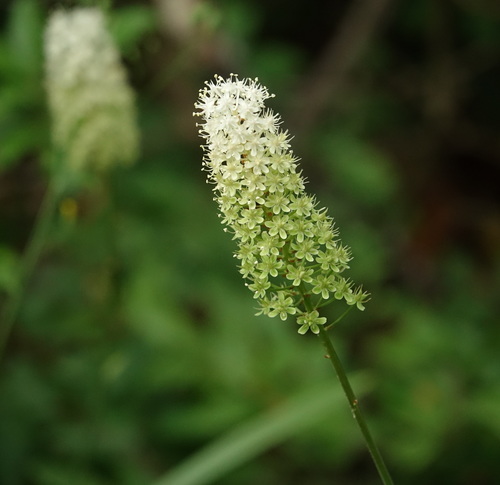
Amianthium muscitoxicum, also known by the scientific name Amianthium muscitoxicum (Walter) A.Gray, blooms between May and July. It produces small white flowers that turn greenish or purplish as they age, arranged in an indeterminate bracteate raceme inflorescence. Blooming progresses from the bottom of the inflorescence upward, and the plant eventually forms small, bright orange fruits in late summer or fall. Mature plants grow between 1 and 4 feet tall. Most of its leaves grow at the base of the plant; these basal leaves are thin and can reach over 12 inches in length. Smaller, highly reduced leaves also grow along the length of the plant's stem. This species is native to the eastern United States, ranging from New York south to Florida, and west as far as Missouri and Oklahoma. Its native habitats include oak forests, bogs, low pinelands, savannas, meadows, and sandhills. It grows best in partial shade, receiving 1 to 2 hours of direct sunlight daily. Known companion plants for Amianthium muscitoxicum include longleaf pine, willow oak, mountain laurel, blueberries, galax, heartleaf, foamflowers, smilacina, Soloman's seal, dwarf iris, jack-in-the-pulpit, black cohosh, and grasses. Amianthium muscitoxicum contains toxic alkaloids, and is highly poisonous to humans, livestock, and other animals if ingested. Four toxic alkaloids, similar in nature to neurotoxins, have been isolated from the plant: jervine, amianthine, and two uncharacterized ester alkaloids. These toxic compounds are present in all parts of the plant, with particularly high concentrations found in the bulbs. Historical toxicity experiments conducted on sheep and cattle recorded consistent symptoms including cessation of eating, excess saliva production, nausea, vomiting, rapid pulse, rapid and irregular respiration, weakness, and difficulty walking. In fatal cases, death occurred approximately one hour after ingestion. This pattern of movement difficulty gives the plant its common common name "stagger grass". One of the plant's other common names, "fly poison", comes from its historical use by early colonists for fly control. Early users would grind the plant's bulbs and mix the powder with sweet substances like molasses or honey to attract flies. After consuming the mixture, flies become unstable and have trouble moving. If flies are not removed within 24 hours, the poison's effects wear off and the flies appear to return to normal.