About Ameles decolor Charpentier, 1825
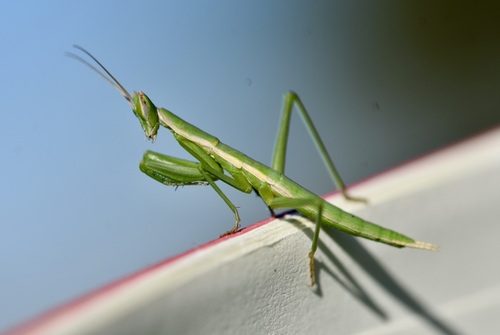
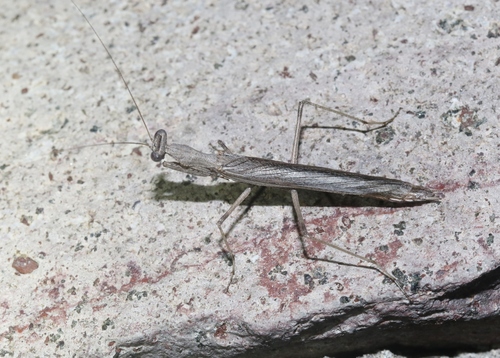
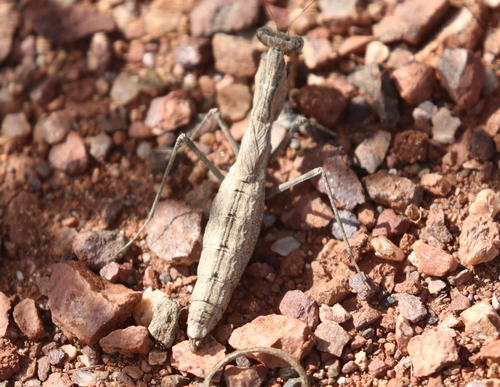
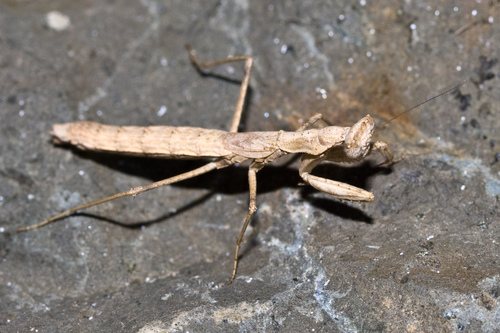
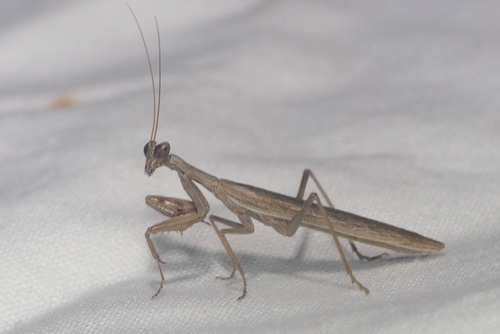
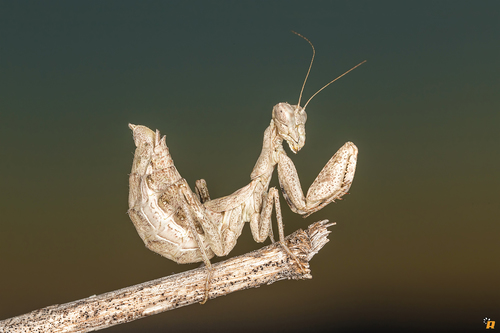
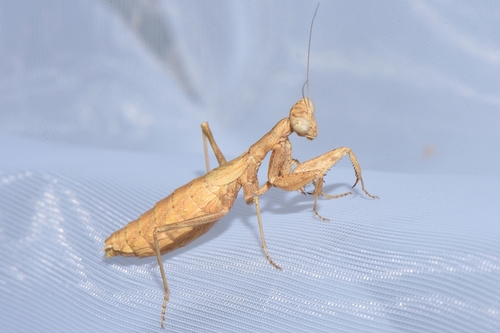
Ameles decolor Charpentier, 1825 is a small species of praying mantis. Males of this species reach a body length between 18 mm (0.71 in) and 27 mm (1.1 in), while females are slightly larger, with a body length of 19 mm (0.75 in) to 28 mm (1.1 in). This mantis has a slender pronotum (prothorax) and a cylindrical abdomen. Its body and eyes are ochre in color, and the eyes sometimes have a tubercle at their apical end. Males and females have similar head widths and overall eye structure; the main difference is that the eyes of females angle upward. Male leathery front wings, called tegmina, extend past the sub-genital plate and have a narrow white stripe. Female front wings only reach the distal end of the urotergite, making their wings much shorter than those of males. Males have fine hairs along the thorax that females do not have. Males also have dense hairs on their middle and posterior legs, while females have only sparse hairs on their legs. Females have longer femurs and tibiae, and their anterior legs are noticeably larger. Males have a cylindrical abdomen with wide urosternites and visible external genitalia, while the female abdomen is longer and narrower than the male abdomen. Ameles decolor is commonly confused with Ameles heldreichi; the two species can be told apart by Ameles heldreichi's rounder eyes and distinct genitalia. It is also similar to Ameles massai, and differs from that species by its longer tegmina, shorter pronotum, and different genital shape. This species is native to the Mediterranean basin, with a range extending from central Europe to northern Africa. Confirmed native populations occur in Albania, Algeria, France, Greece, Italy including Sardinia, Libya, Macedonia, Montenegro, Serbia, Spain, Sicily, Tunisia, and the Ionian Islands. In 2018, native populations were also confirmed in coastal Slovenia and Croatia, along the Dragonja River. The IUCN estimates the minimum total native range of this species is approximately 870,000 km2 (335,909 mi2). It remains debated whether the species is native to the Maltese Islands, as there are only two records of it occurring in the archipelago. Ameles decolor is most often found in herbaceous vegetation and wooded areas, including grasslands, arid fields, maquis shrubland, and garrigue shrubland. Egg masses of this species are always deposited under stones. After hatching, the species undergoes incomplete metamorphosis, starting with nymph stages that are typically brachypterous, or short-winged. Females stay brachypterous their entire lives, while males grow full wings. Ameles decolor usually reaches adulthood around July and lives as an adult until October.