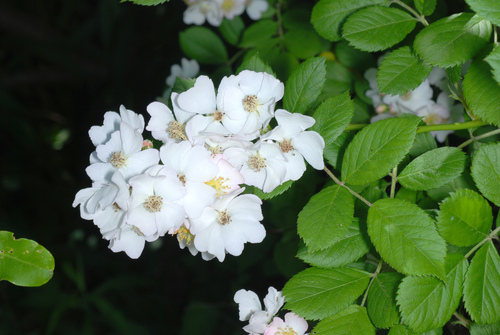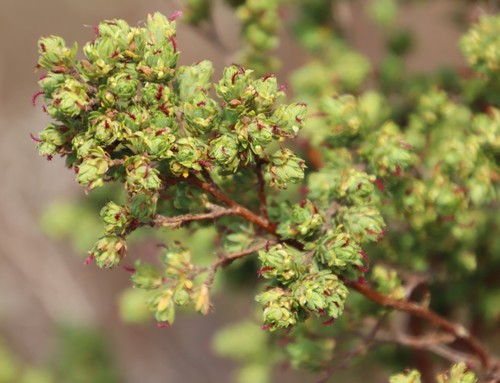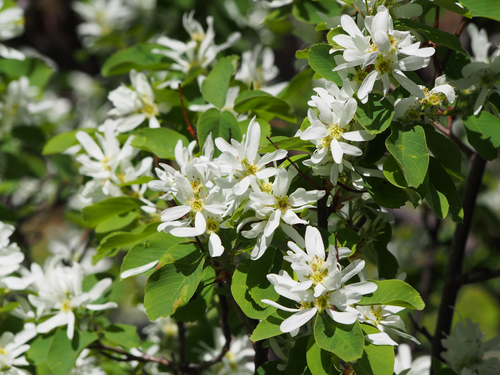
About Amelanchier alnifolia var. cusickii (Fernald) C.L.Hitchc.
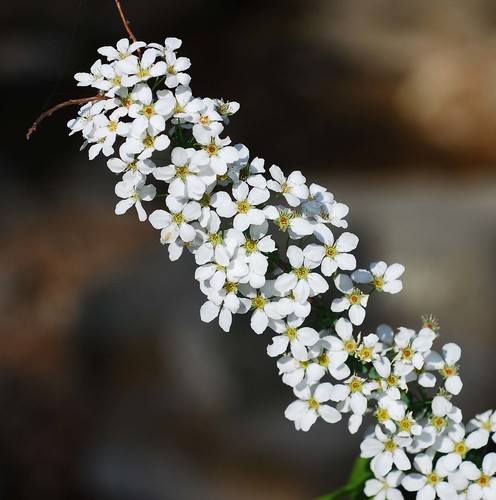
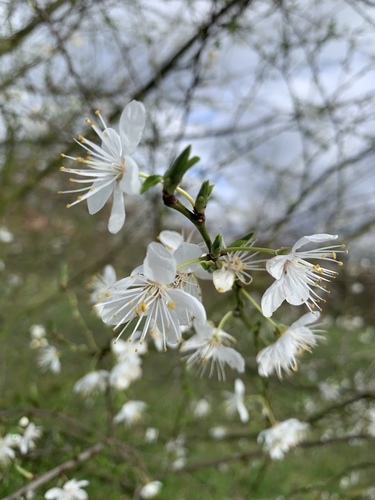
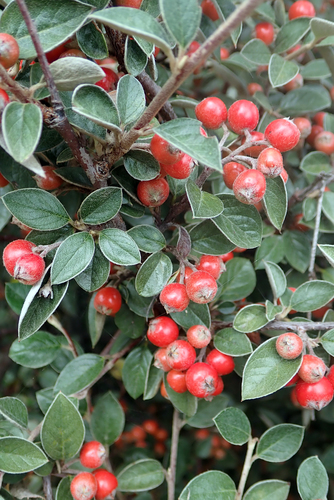
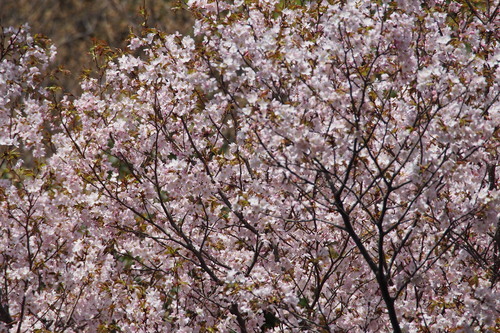
Amelanchier alnifolia var. cusickii (Fernald) C.L.Hitchc. is a deciduous shrub or small tree that most commonly reaches 1–8 metres (3–26 feet) in height, and rarely grows up to 10 m (33 ft). Its growth form ranges from producing suckers and forming colonies to growing in clumps. The leaves are oval to nearly circular, 2–5 centimetres (3⁄4–2 inches) long and 1–4.5 cm (1⁄2–1+3⁄4 in) wide, borne on a 0.5–2 cm (1⁄4–3⁄4 in) petiole, with toothed margins mostly above the middle. Like all species in the genus Amelanchier, this variety has white flowers with five distinct petals and five sepals. In A. alnifolia, flowers are about 2.5–5 cm (1–2 in) across, with 20 stamens and five styles; they grow in short, somewhat crowded racemes holding 3 to 20 flowers, and bloom from April to July. The fruit is a small purple pome 5–15 mm (3⁄16–19⁄32 in) in diameter, covered with a waxy bloom, and ripens in early summer. Distinguishing between different Saskatoon Amelanchier species can be relatively difficult. This taxon is distributed from Alaska across most of western Canada, and also occurs in the western and north-central United States. Across its range, it grows from sea level in the northern portion, up to 2,600 m (8,530 ft) elevation in California and 3,400 m (11,200 ft) in the Rocky Mountains. It is a common shrub found in forest understories and canyons. A. alnifolia is susceptible to several plant diseases: cedar-apple rust, Entomosporium leaf spot, fireblight, brown rot, Cytospora canker, powdery mildew, and blackleaf. Common problematic insect pests include aphids, thrips, mites, bud moths, saskatoon sawflies, and pear slug sawflies. This plant acts as a larval host for the pale tiger swallowtail, two-tailed swallowtail, and western tiger swallowtail butterflies. Its foliage is browsed by deer, elk, rabbits, and livestock, while its fruit is eaten by wildlife including birds, squirrels, and bears. For cultivation, seedlings are planted with 4.0–6.1 m (13–20 ft) of space between rows, and 0.46–0.91 m (1.5–3 ft) between individual plants. A single bush can produce fruit for 30 years or more. Saskatoons are adaptable to most soil types, with the exception of poorly drained or heavy clay soils that lack organic matter. Shallow soils should also be avoided, especially if the water table is high or inconsistent. This plant has exceptional winter hardiness, but frost can damage blooms as late as May. Full, ample sunshine is required for successful fruit ripening.