About Ameiurus nebulosus (Lesueur, 1819)
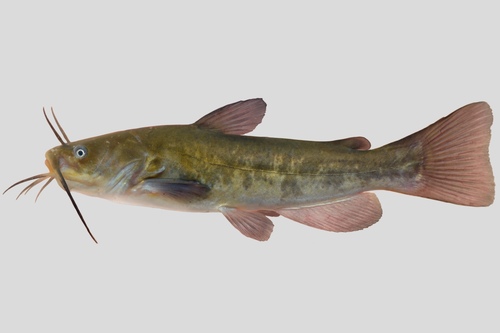
The brown bullhead, scientifically named Ameiurus nebulosus, is a bullhead catfish species in the family Ictaluridae, widely distributed across North America. It is closely similar to the black bullhead (Ameiurus melas) and yellow bullhead (Ameiurus natalis). Originally described by Charles Alexandre Lesueur in 1819 under the name Pimelodus nebulosus, this species has also been referred to as Ictalurus nebulosus. It is commonly known by multiple alternate names: mud pout, horned pout, hornpout, or simply mud cat, a name that is also used for other bullhead species. For the Ojibwe people, the brown bullhead (called wawaazisii in their tradition) is an important clan symbol; it is one of six beings that emerged from the sea to form the original Ojibwe clans. The native range of the brown bullhead covers the Atlantic and Gulf Slope drainages. More specifically, it is native to areas from Nova Scotia and New Brunswick south to Mobile Bay, Alabama, and also occurs in the Great Lakes, Hudson Bay, and Mississippi River basins, stretching from Quebec to Saskatchewan, south to Louisiana, and west to Texas. Evidence shows the species was historically absent from the Gulf Coast west of the Apalachicola River and east of the Mississippi River. Due to stocking for food or sport, the species is now abundant in many additional regions, including Georgia, Alabama, Arizona, Arkansas, California, Colorado, Hawaii, Idaho, Kansas, Kentucky, Louisiana, Maine, Missouri, Nebraska, Nevada, New Hampshire, New Mexico, Ohio, Oklahoma, Oregon, Virginia, and Washington. Brown bullheads are social, non-migratory fish that form schools. The brown bullhead can thrive in a wide variety of habitats, including lakes, ponds, and slow-moving streams, even in areas with low oxygen levels or muddy substrates. Across most of the United States, brown bullheads are opportunistic bottom feeders. They have very few natural predators, and while they are not popular with anglers in most regions, they are very popular in some areas such as the Oneida Lake region of Upstate New York, where local restaurants feature them each spring. Because of these factors, the species has thrived. They can be found in habitats ranging from lakes and murky ponds to drainage ditches. They are rarely active during the day, emerging at night to feed by searching the bottoms of lakes and rivers for food. Their diet includes insects, leeches, snails, other fish, clams, many types of plant matter, and corn — corn is often used as bait to catch them. Like other catfish, brown bullheads only spawn after water temperatures reach 27°C (80°F) in June and July, though cooler water temperatures are required for spawning in the northern United States. Brown bullheads can tolerate a very wide range of water temperatures and very low oxygen levels, and can even survive in heavily polluted water with dissolved oxygen levels as low as 0.2 ppm. Their tolerance for low oxygen means they are less vulnerable to winterkill, and can survive in relatively extreme aquatic environments. Brown bullheads typically live between six and eight years, though individuals in captivity have been recorded living as long as fifteen years. Spawning occurs between April and June. Females are monogamous for the full length of each breeding season, and there are no consistent documented behaviors for mate attraction. Females lay eggs in dark, sheltered locations such as under rocks or inside logs, where the eggs are externally fertilized by males; the two fish face opposite directions during the fertilization process. Nests are primarily built by females, but both sexes protect the eggs. A single nest’s egg cluster can hold between 50 and 10,000 eggs. Eggs usually hatch after six days, but hatching can take up to 13 days. Both parents generally care for their offspring for five additional days after hatching. A parent keeps young brown bullheads in a school for up to one month, and juveniles will remain in schools. Both male and female brown bullheads reach sexual maturity at around three years of age. Brown bullheads have occasionally been recorded eating their own eggs.