About Ameiurus melas (Rafinesque, 1820)
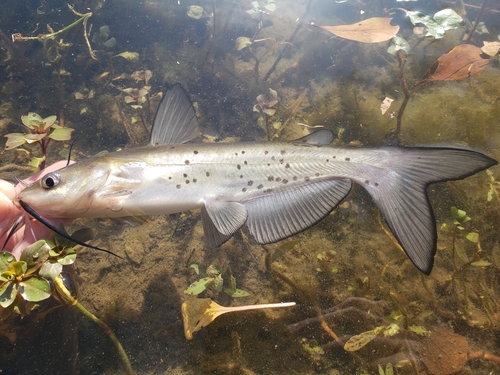
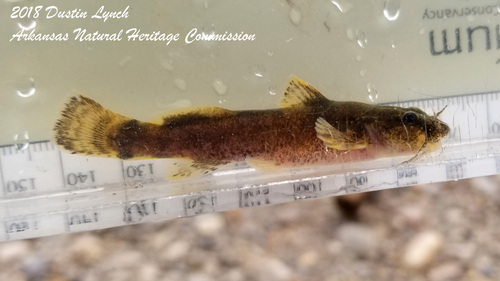
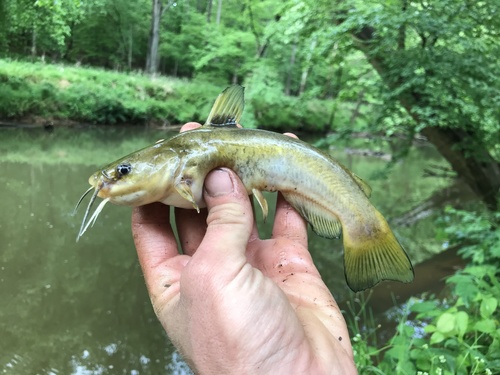
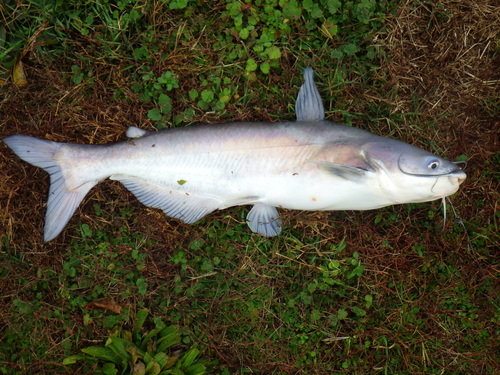
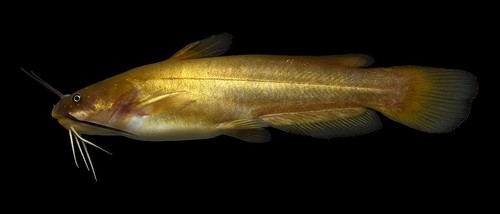
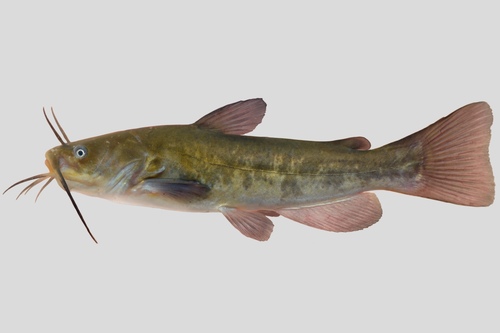
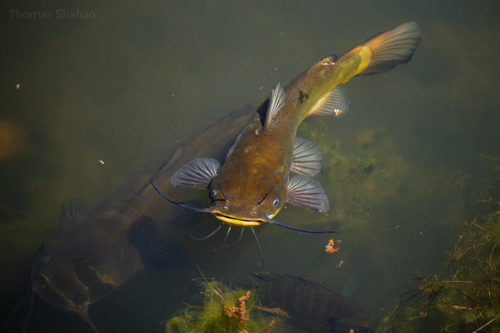
The black bullhead, also called black bullhead catfish, has the scientific name Ameiurus melas, and is a species of bullhead catfish. Like other bullhead catfish, this species can thrive in waters that are low in oxygen, brackish, turbid, and/or very warm. It has barbels near its mouth, a broad head, spiny fins, and no scales. It can be told apart from other bullheads by its black barbels and the tan crescent that marks its tail. Its caudal fin is truncated, meaning it is squared off at the corners. Like nearly all catfish, the black bullhead is nocturnal and prefers to feed at night, though young individuals feed during the day. It generally does not grow as large as channel catfish or blue catfish; average adult weights fall between 1 and 2 pounds (0.45 to 0.91 kg), and it almost never reaches 4 pounds (1.8 kg). Its typical length ranges from 6 to 14 inches (15–36 cm), and the largest recorded specimen measured 24 inches (61 cm), making it the largest species among bullheads. Its dorsal (upper) side is typically black or dark brown, while its ventral (lower) side is yellow or white. Like most bullheads and even flathead catfish, it has a squared tail fin, which is noticeably different from the forked tail of channel and blue catfish. It is a bottom-rover fish, well-adapted to live on the bottom of water bodies. It is typically dorsoventrally flattened, and has a slightly humped back. Its color varies depending on the location it is caught from, but it is generally darker than the brown bullhead (A. nebulosus) and yellow bullhead (A. natalis). It can be distinguished from flathead catfish (Pylodictis olivaris) by its lower lip, which does not protrude past the upper lip. Distinguishing black bullhead from brown bullhead can be more difficult depending on the capture location, but one key difference is the weak serration on the black bullhead's pectoral spine, while the brown bullhead's matching spine has stronger barbs. The black bullhead's anal fin also has a gray base, and its caudal fin often has a pale bar at its base. The brown bullhead is also typically mottled brown and gray-green on its dorsal side, rather than the darker black of the black bullhead. Both black and brown bullheads can be easily told apart from the yellow bullhead by the color of their chin barbels: yellow bullheads have white barbels under the mouth. Black bullheads are found across the central United States, most often in stagnant or slow-moving waters with soft bottoms. They are known to gather in confined spaces such as lake outlets or under dams. They are very tolerant fish, able to survive in muddy water, warm temperatures, and water with low oxygen levels — conditions that reduce competition from other fish species. Black bullheads also exist as an invasive species in large parts of Europe. The species was eradicated from the United Kingdom using the biocide rotenone, after being found only at one location: Lake Meadows, Billericay, Essex, where individuals grew to a maximum weight of 1.19 pounds (0.539 kg). Black bullheads begin spawning in April and continue spawning through June. Females scoop out a small hole or depression on the lake floor and lay between 2000 and 6000 eggs. Males fertilize the eggs, then guard and care for them. When the eggs hatch one week later, both parents watch over the newly hatched fry for a short time.