About Ameerega hahneli (Boulenger, 1884)
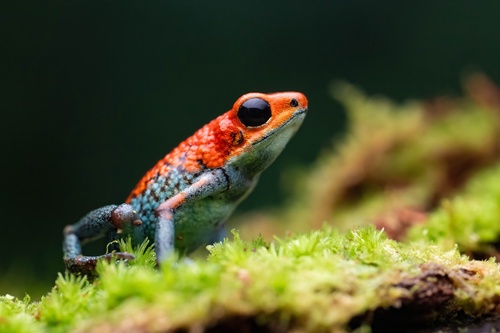
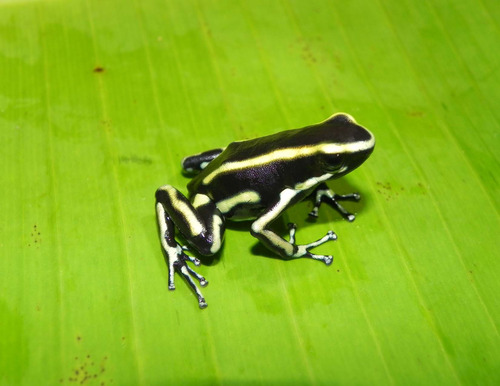
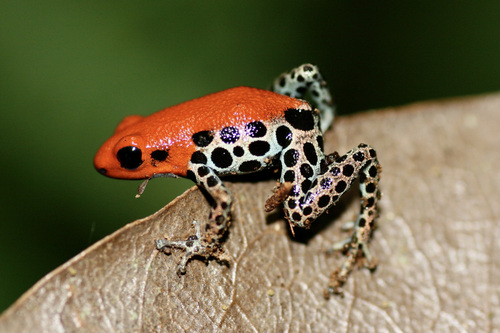
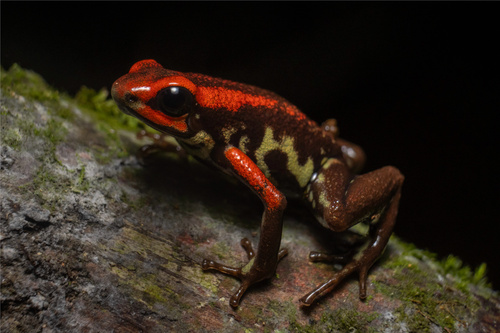
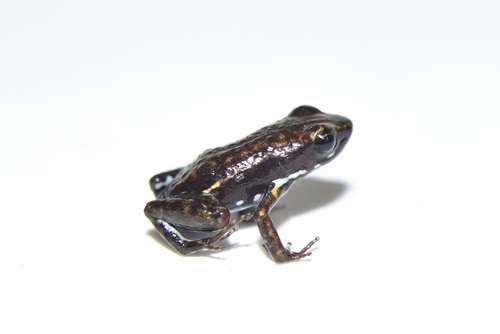
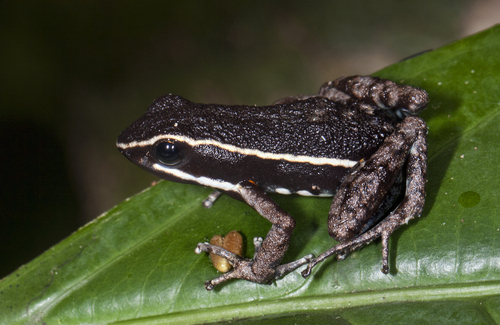
Ameerega hahneli (Boulenger, 1884) shows clear sexual size dimorphism: males measure 17–19 mm (0.67–0.75 in) and females measure 19–22 mm (0.75–0.87 in) in snout–vent length. The species' back and limbs have a finely granular texture and brown color, and may or may not have black spots. Its flanks are black, and are bordered above by a narrow, white or cream dorsolateral line that stretches from the tip of the snout to the groin. It also has a white or cream labial stripe that does not extend onto the arm. The belly is blue with black reticulated markings. Yellow-orange oval spots are present on the ventral surfaces of the arms, the inner surfaces of the shanks, and in the groin. The iris is dark brown. Ameerega hahneli is generally a common frog, with the exception of the Guianas, where it is uncommon. It lives on the forest floor of tropical rainforests, and is typically found associated with fallen palm fronds, branches, and small gaps in the forest. This species is active during the day and hides in low vegetation at night. While habitat loss poses a potential threat to Ameerega hahneli, its total population is stable and the species as a whole is not considered threatened. Legal captive breeding for the international pet trade occurs, but researchers do not regard this activity as a threat to the species. Male Ameerega hahneli are territorial. The species' territorial call is a long series of short "peep" notes, while its courtship call is similar in structure but only contains three notes. Females lay between 6 and 33 pigmented eggs in leaf litter. Eggs hatch 4 to 16 days after being laid, and the newly hatched tadpoles are carried on their father's back to a creek. Tadpoles of this species need running water to develop. They are brown, have a depressed body shape and a long tail, and undergo metamorphosis two months after hatching.