About Ameerega bilinguis (Jungfer, 1989)
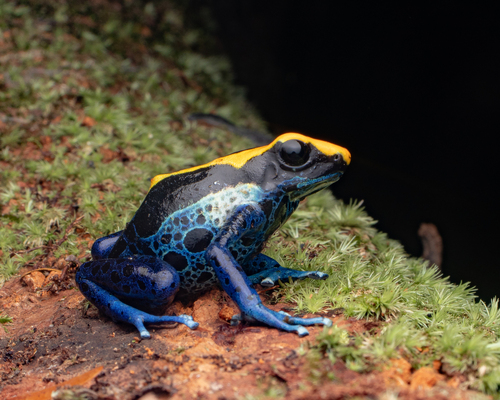
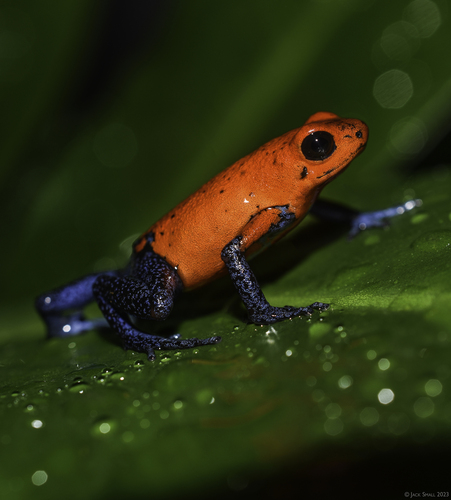
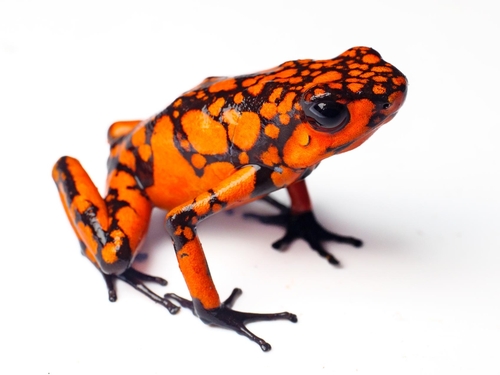
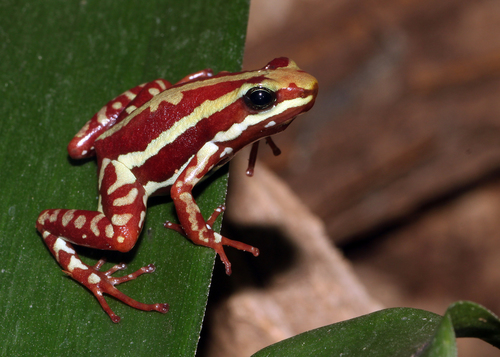
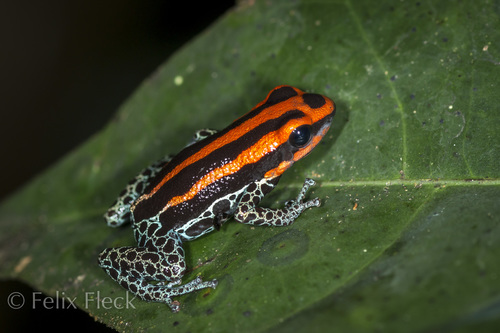
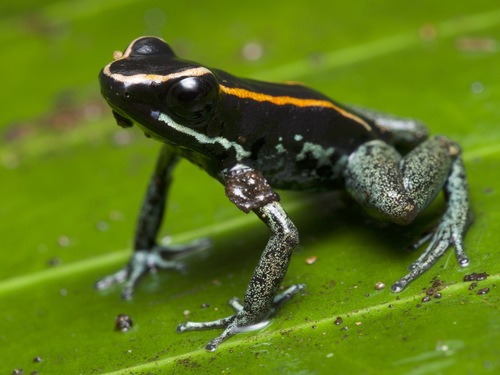
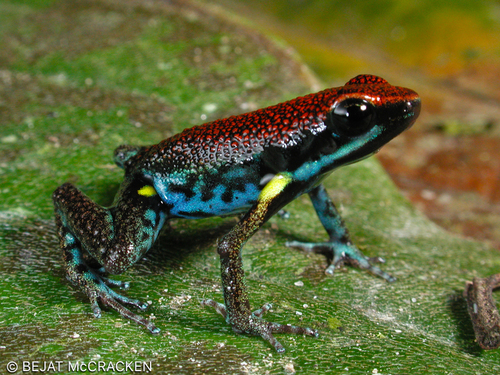
Ameerega bilinguis is a species of poison dart frog originally described by Jungfer in 1989. Adult males of this species measure 16.5–20.2 mm in snout-vent length, while adult females measure 18.6–22.7 mm. The dorsal skin is black with red markings. Ventral areas are light blue with black bars that have diffuse margins. The flanks are black with a light blue stripe, and blue coloration increases toward the vent. The tops of the feet are dark gray, and yellow markings are present near the junction of the legs and body. The iris is black, and the sides of the head are black with some blue markings. The bright, striking coloration of this species acts as a warning to potential predators that its skin produces poison, making it an undesirable food source. This is a terrestrial frog whose natural habitats are subtropical or tropical moist lowland primary forest and secondary forest, including seasonally flooded areas, though the frogs only inhabit these areas when they are not flooded. Individuals have been found in leaf litter at elevations between 125 and 800 meters above sea level. Its range includes multiple protected areas: Parque Nacional Yasuni, Reserva Biólogica Limoncocha, and Reserva de Produccion Faunística. During the breeding season, males commonly call from slightly elevated sites to attract females. Females lay clutches of 4 to 16 eggs on leaf litter, and each egg measures approximately 2 mm in diameter. Males guard the egg clutches, which hatch after 18 to 22 days. After hatching, the male carries the tadpoles to pools of water or slow-moving streams. This frog secretes a deadly neurotoxin called epibatidine, which when isolated from the frog's skin is reported to be 200 times more potent than morphine.