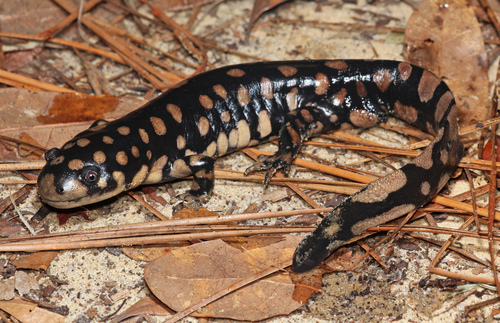
About Ambystoma tigrinum (Green, 1825)
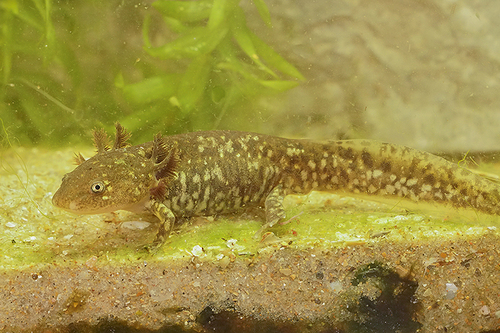
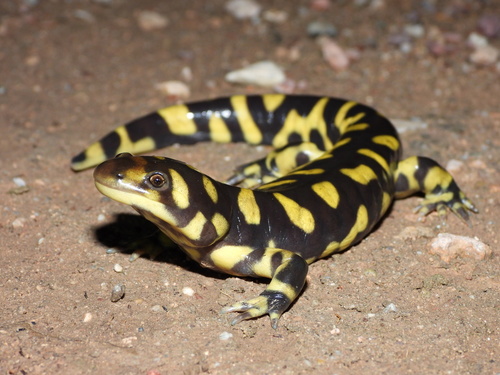
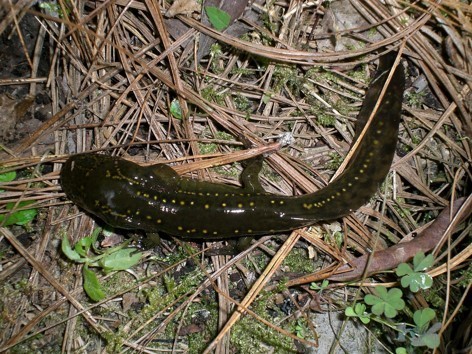
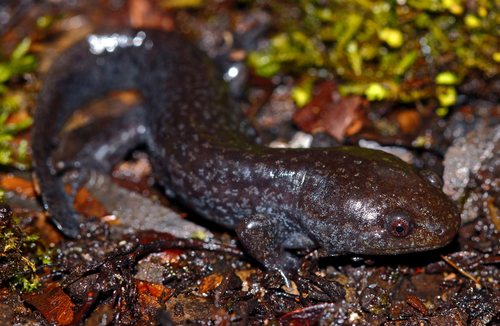
Ambystoma tigrinum, commonly known as the tiger salamander, was first described in 1825 by Green. These salamanders typically reach a length of 6–8 inches (15–20 cm) and have a lifespan of around 12–15 years. They are identified by variable colored markings that cover the back of their head, body, and tail. The spots range in color from brownish yellow to greenish yellow, while the rest of their back is black or dark brown. They have smooth skin, with costal grooves running along their sides that help control moisture. Their physical features include short snouts, thick necks, strong legs, and long tails, and they use specialized foot pads for burrowing. Tiger salamanders are sexually dimorphic: males are larger in overall body size and have longer, higher tails than females. Their native habitats include both conifer- and deciduous-filled woodlands, as well as open grassy fields. These secretive amphibians spend most of their lives underground in burrows, which makes them difficult to observe. A key requirement for their survival is loose soil suitable for burrowing; they often dig their own burrows, and have been recorded living over 60 cm below the soil surface. After completing metamorphosis, adult tiger salamanders migrate to new territory. Females have been recorded migrating farther than males, and larger individuals migrate farther than smaller individuals. Adult tiger salamanders are almost entirely terrestrial, and typically only return to water to breed. Ideal breeding habitats for the species include wetlands such as cattle ponds, vernal pools, and flooded swamps. The colonization of wetlands by tiger salamanders shows a positive correlation with the wetland's area, depth, and forest cover. This species is most commonly found along the Atlantic coast of North America, ranging from New York south to Florida. It is the most widely distributed salamander species in North America, with smaller populations found from coast to coast across the continent. Populations in the northern and eastern United States are considered native, with study evidence indicating these are relict populations. Populations on the west coast of the United States are not native to the region; they were introduced as sport fishing bait, and this introduction has led to hybridization with native species. Although tiger salamanders are not considered ecosystem indicator species overall, they are good indicators of a healthy environment because they require good, moist soil for burrowing. Current threats to their annual populations include pond disturbance, invasive fish, and road construction. In aquatic breeding habitats, higher pH levels and lower water conductivity are both correlated with larger populations of male tiger salamanders specifically.