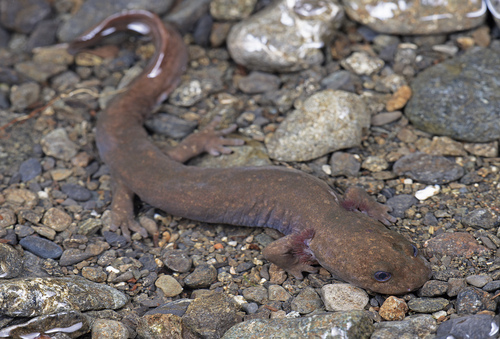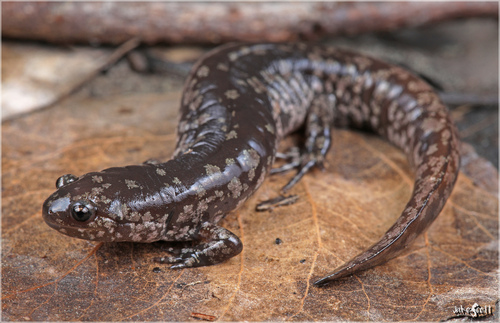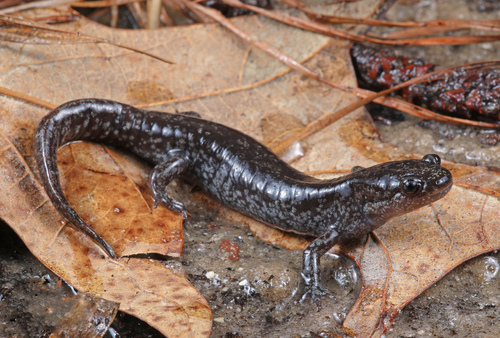
About Ambystoma mabeei Bishop, 1928
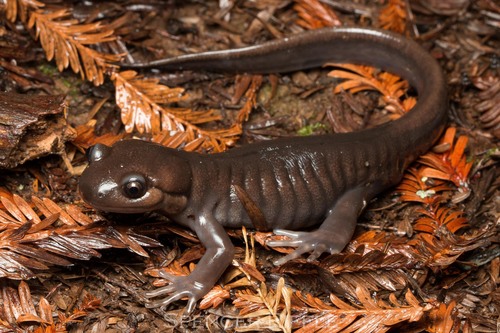
Mabee's salamander, with the scientific name Ambystoma mabeei, is a species of mole salamander. It can be found in a variety of wet lowland habitats, including tupelo and cypress bottoms within pinewoods, open fields, lowland deciduous forests, pine savannahs, low wet woods, and swamps. It typically burrows in areas close to breeding ponds. Females attach their eggs to submerged plant material or bottom debris in acidic, fishless ponds that lie within or near pine stands. In Virginia, this salamander breeds in two types of fish-free water bodies: a vernal pond located in a large clear-cut area, and ephemeral sinkhole ponds up to 1.5 meters deep that sit in bottomland hardwood forest mixed with pine. Larvae of this species complete their development inside these breeding ponds. The distance adult Mabee's salamanders move into terrestrial habitat has not been confirmed, but it is thought to be greater than 150 meters (490 feet). This species occurs on the Atlantic Coastal Plain of the southeastern United States, and its known range covers the states of Virginia, Georgia, North Carolina, and South Carolina. The total size of the adult population of this species is unknown, but it is estimated to be at least 10,000 individuals. Its general habitat includes open fields, pine forest, and broadleaf woodland.