About Ambystoma barbouri Kraus & Petranka, 1989
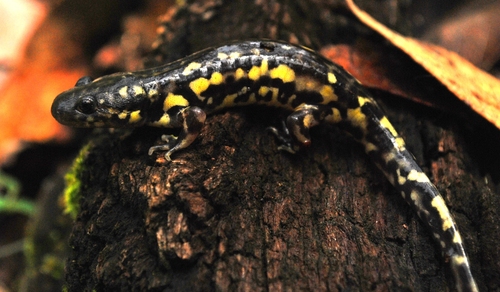
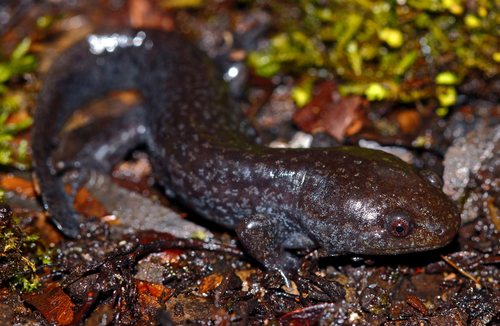
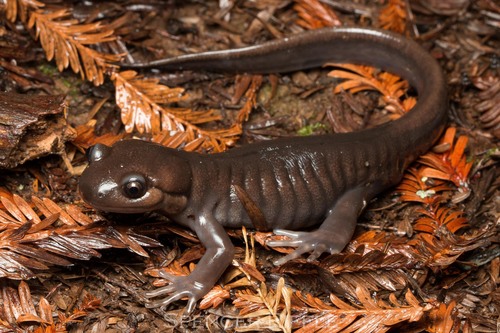
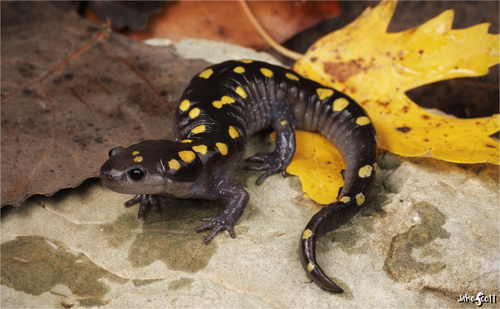
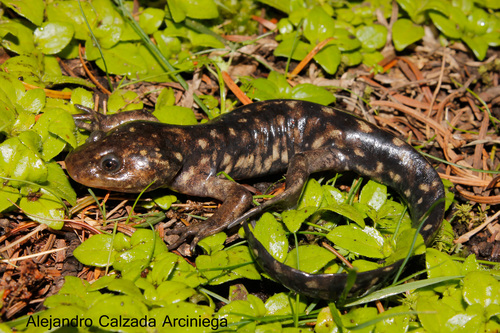
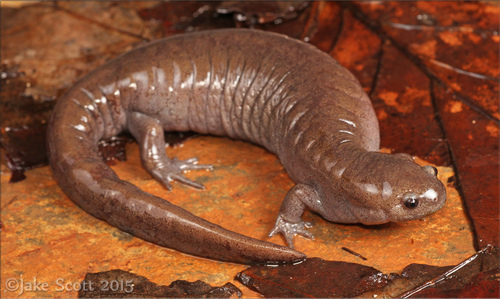
Description: The streamside salamander (Ambystoma barbouri) is a medium-sized ambystomatid salamander. It typically has a relatively small head, a short rounded snout, and a relatively short, flaccid body. Fully grown adults have 14 to 15 distinct costal grooves. Its tail is fairly short and thick, and it bears costal grooves that align directly with the vertebrae. Its base color is typically dark black, covered in gray and brown lichen-like markings. Compared to its close relatives, this species has more teeth with a unique cusp shape in its maxillary and premaxillary regions, and it is somewhat stockier in build. Distribution and habitat: This species occurs in central Kentucky, southwestern Ohio, and southeastern Indiana, with an isolated population in Livingston County, Kentucky. Its overall distribution is uncertain, due to the species' cryptic habits, and potential confusion or hybridization with the small-mouth salamander. Adult streamside salamanders live underground, or under rocks or leaf litter, in deciduous forests at moderate elevations. The streamside salamander is closely related to the pond-breeding small-mouth salamander; it is thought to have diverged from this lineage during the late Pleistocene as a result of climatic warming. The loss of pond habitats is believed to have forced this species to adapt to stream habitats.