About Ambystoma altamirani Dugès, 1895
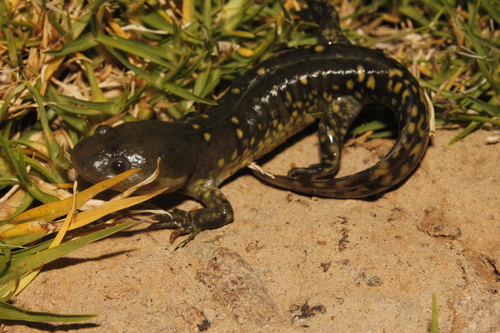
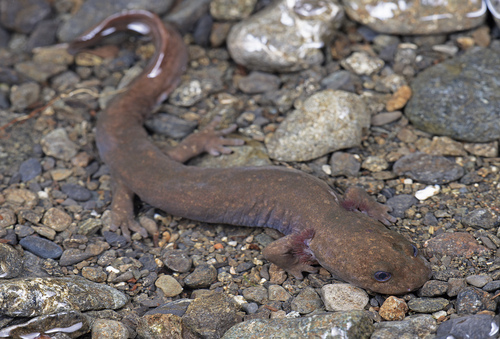
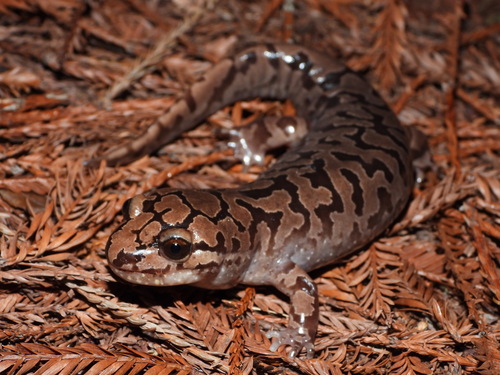
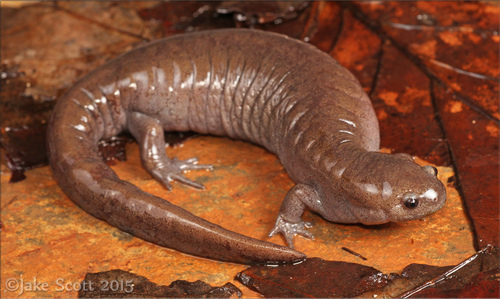
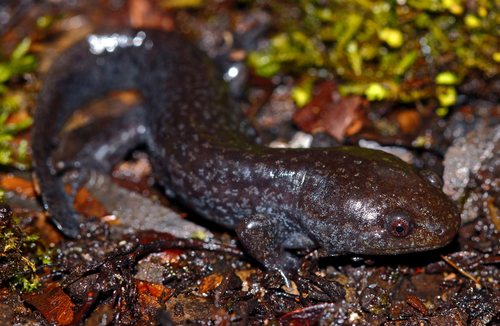
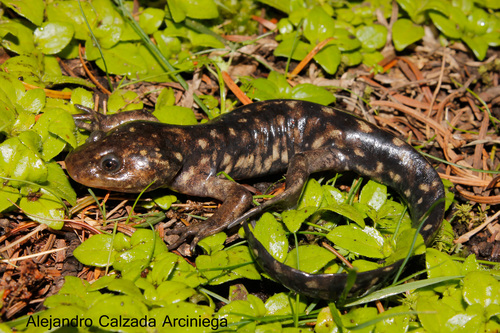
This species, commonly called the mountain stream salamander, reaches an overall length of approximately 115 millimeters, with a tail that measures around 50 millimeters long. Its tail is slender, bearing a low fin along the upper edge and an even smaller fin along the lower edge. Both the limbs and tail are slender in build. The dorsal surface and sides of this salamander are purplish-black, while its belly is purplish-lavender. The chin and undersides of the limbs are clouded with a light lavender hue. The lip edges, digit tips, and the lower tail fin are cream-colored. The mountain stream salamander is found west and south of the Valley of Mexico, occurring at elevations between 2,700 and 3,200 meters above sea level. It lives and breeds in small streams that run through high-elevation pine or pine-oak woodlands, and can also be found in streams located in cleared pastures. Adult mountain stream salamanders occupy both terrestrial habitats and streams. The species undergoes metamorphosis to reach adulthood: it begins as a larval stage restricted to stream habitats. As individuals mature, they develop limbs, gain the ability to live on land, and lose their external gills and larval fins. Some adults and larvae remain in streams year-round, while other adults move out to live on land. Adults return to streams to breed and lay eggs, and do not provide any parental care after depositing eggs.