About Ambrosia psilostachya DC.
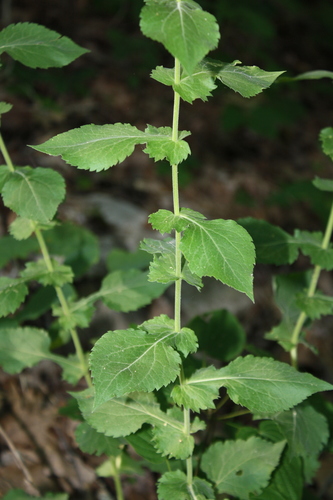
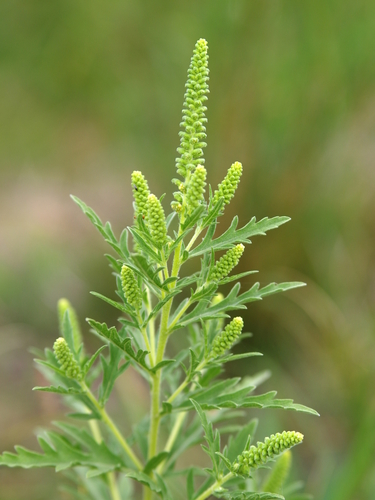
Ambrosia psilostachya DC. is an erect perennial herb. It produces a slender, branching, straw-colored stem that reaches a maximum height close to two meters, though it more often grows under one meter tall. Its leaves can grow up to 12 centimeters long, and range in shape from lance-shaped to nearly oval, divided into many narrow, pointed lobes. Both the stem and leaves are covered in hairs. An inflorescence, typically shaped like a spike, grows at the top of the stem. This species is monoecious: the inflorescence is made up of staminate (male) flower heads, while pistillate (female) heads are positioned below, in the axils of leaves. Its blooming period runs from June through November. The pistillate heads produce fruits that are achenes, held inside oval, greenish-brown burs roughly half a centimeter long. The burs are hairy, and sometimes spiny. This plant reproduces both via seed and by sprouting from a creeping, rhizome-like root system. This plant is widespread across most of North America, including the United States, Canada, and northern Mexico. It is also naturalized in parts of Europe, Asia, Australia, and South America. It is common in many habitat types, including disturbed areas such as roadsides. Ambrosia psilostachya acts as a host plant for the caterpillars of Bucculatrix transversata, Cosmopterix opulenta, Exaeretia gracilis, Gnorimoschema saphirinella, and Schinia sexplagiata; the beetles Calligrapha disrupta and Calligrapha suturalis; and the grasshopper Spharagemon collare. A number of different Native American tribes, including the Cheyenne, Kumeyaay (Diegueno), and Kiowa people, used this plant for various medicinal purposes.