About Amblyptilia repletalis (Walker, 1864)
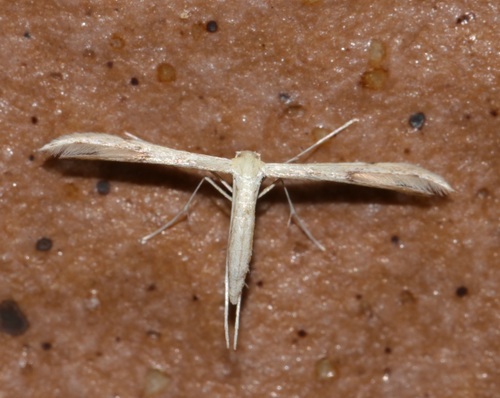
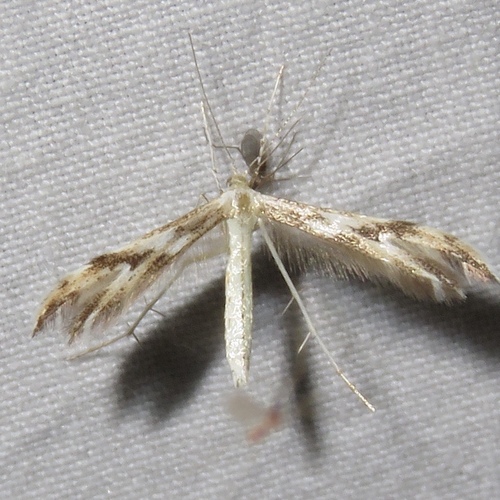
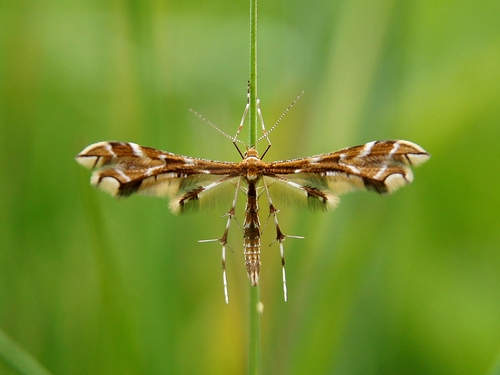
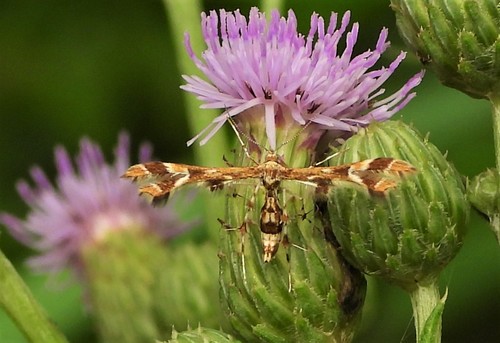
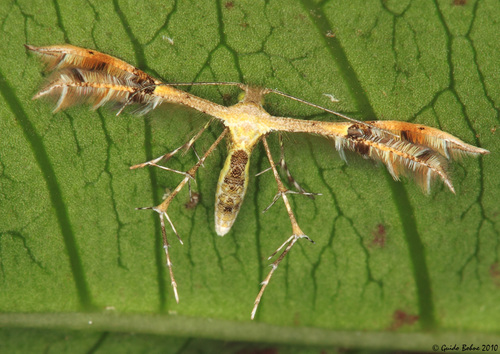
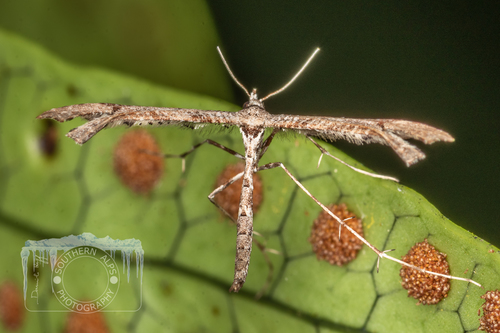
Walker originally described the female adult of Amblyptilia repletalis as follows: The female is ferruginous and slender. Its palpi are porrect and lanceolate. Its tibiae and tarsi have whitish bands. Its wings are rather broad. The forewings are acute, with many cinereous costal points that slope outward toward the disk; these points are more numerous than the cinereous streaks that slope inward from the middle of the wing width to the interior border. There are two brown costal marks: the first is located at one-third of the wing length, and the second, larger than the first, at two-thirds of the wing length. Between the second streak and a cinereous transverse zigzag submarginal line sits a pale fawn-coloured costal patch; this submarginal line is partially bordered on its inner side by deep black. The area between the submarginal line and the undulating black marginal line is dark cinereous, and the fringe is pale. The body measures 6 lines in length, and the wings measure 12 lines in length. The wingspan of this species ranges from 14 to 21 mm. This species is very similar in appearance to A. falcatalis, but it is smaller and has a more indistinct dark triangular pattern on its forewings. This species is endemic to New Zealand, and can be found throughout the country from North Cape to Bluff. Amblyptilia repletalis occurs in a wide variety of habitats, including native forest clearings, shrubland, coastal dunes, and gardens. The larvae of this species feed on the seed-heads of Plantago species.