About Amblyomma cajennense Fabricius, 1787
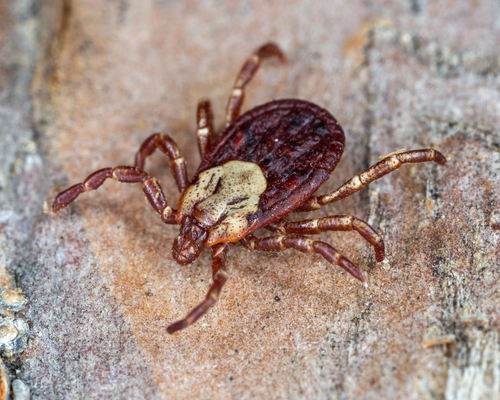
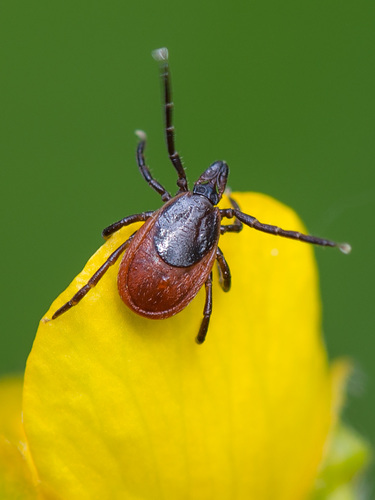
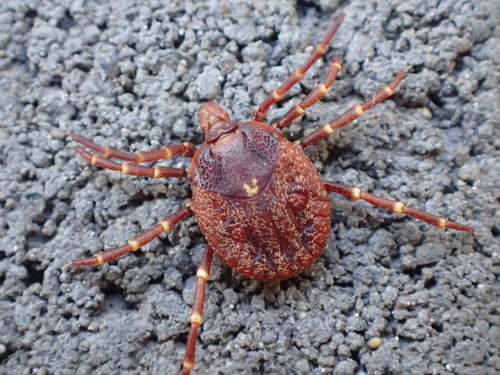
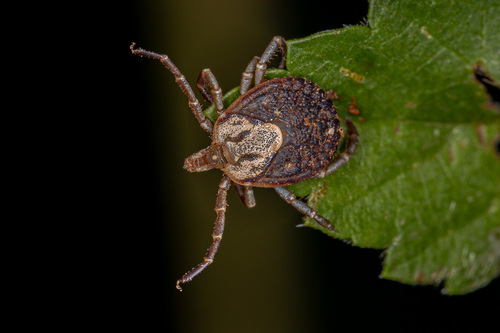
Amblyomma cajennense, commonly known as the Cayenne tick, is a tick species first described by Fabricius in 1787. Its original recorded distribution ranges from the southern United States through Central America and parts of the Caribbean to northern Argentina, and this broad range has allowed the species to adapt to a wide variety of environmental conditions. Large rivers and the Andes mountain range act as major geographic barriers across this range. There has been longstanding scientific debate over whether A. cajennense is a single species or a complex of multiple distinct species. In the 1930s, Maria Tonelli-Rondelli suggested that the morphological variation observed within the group indicated it was a species complex. In the 1950s, researchers instead proposed that this variation represented normal individual variation within a single species. Later molecular biological analyses have supported the hypothesis that A. cajennense is indeed a species complex. A 2014 study defined the restricted range of Amblyomma cajennense sensu stricto as only the Amazonian region of South America. The study also split other former populations into separate species: A. interandinum occurs in the northern Inter-Andean valley of Peru; A. mixtum is found from Texas to western Ecuador; A. patinoi occurs in the Eastern Cordillera of Colombia; A. tonelliae is associated with dry areas of the Chaco region, which spans central-northern Argentina to Bolivia and Paraguay; and A. sculptum is distributed from humid areas of northern Argentina into adjacent regions of Bolivia and Paraguay, as well as coastal and central-western states of Brazil. A. cajennense is medically and veterinary important, as it can transmit Rocky Mountain spotted fever, and affects both humans and domestic cattle. In August 2009, Brazilian researchers announced that Factor X active, a protein found in the saliva of this tick, was effective at stopping the growth of certain cancer cells in laboratory mice.