About Amaranthus spinosus L.
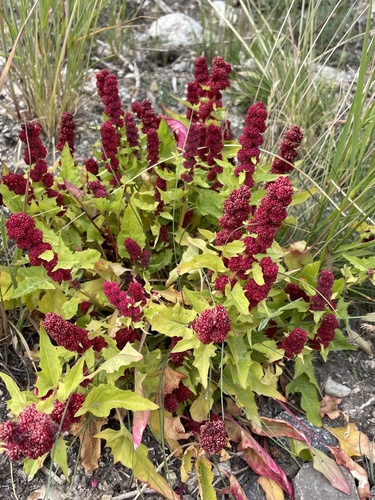
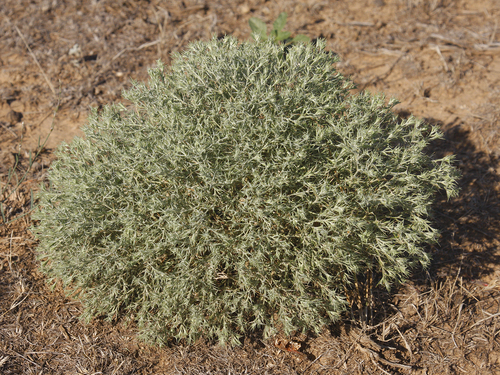
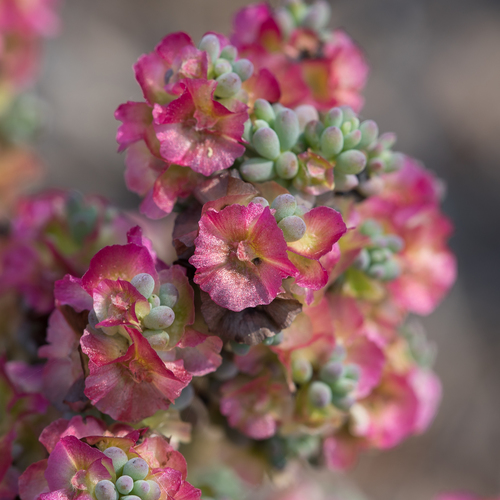
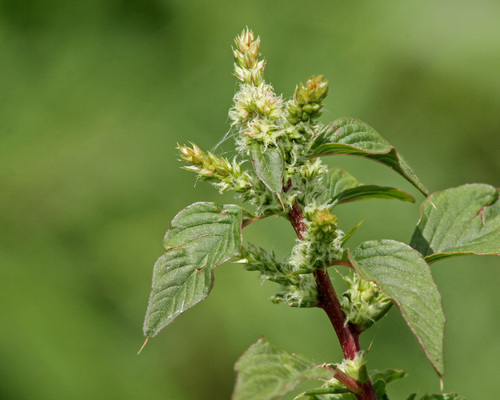
Amaranthus spinosus L. is a vascular flowering dicot plant belonging to the family Amaranthaceae. As its species epithet spinosus indicates, it bears spines at its leaf nodes and has spikes on its flowers. The flowers are green, petal-less, and arranged in both terminal and axillary spikes; male flowers are located in the terminal spikes, while female flowers are basal. Its leaves are alternate, ovate or rhombic-ovate, and have long petioles.
Historically, the ash of this plant was used as a dye to produce grey cloth. It is called pti banlar in Khmer and dền in Vietnamese. It is a valued food plant across much of the world, similar to several of its close relatives. In Africa, it is used as food for both humans and some mammals, and it is called mboa in southern Mozambique. In Brazil, where it is most common in the country's interior regions, it is known as "caruru de porco", and is eaten plain braised or added to salty porridge dishes like angu. It is also a valued ingredient in Thai cuisine, where it is called phak khom (Thai: ผักขม). In Tamil it is called mullik keerai, and it may be identical to the Sanskrit plant taṇḍulīyaka. It is eaten as food in the Philippines, where it goes by the name kulitis. In the Maldives, its leaves, known as massaagu in Maldivian, have long been part of the local diet. In Mexican markets, it is counted among the species labeled quelite quintonil. In Bengali it is called katanote (কাটানটে). In Manipuri it is called chengkrook, and is used as food in stir-fries and broths mixed with other vegetables. In Mauritius it is called brède malbar. The seeds of Amaranthus spinosus are eaten by many species of songbirds.
In traditional folk medicine, the ash of Amaranthus spinosus fruits is used to treat jaundice in India. In Vietnam, water extracts made from its roots and leaves are used as a diuretic.