About Amaranthus blitum L.
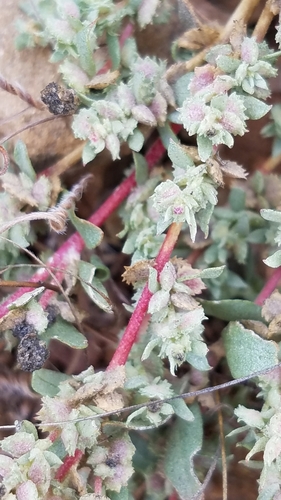
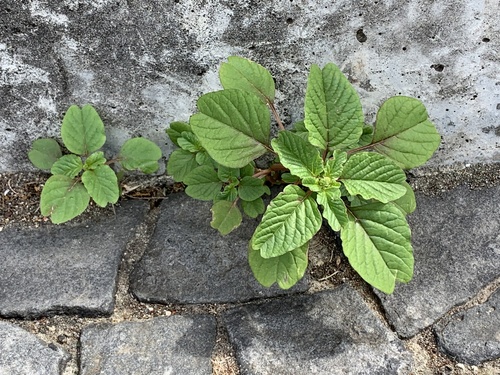
Amaranthus blitum is an erect or semi-prostrate annual plant. Its single or branched stem can grow to 1 metre (3+1⁄2 ft) tall. Green or purplish leaves are up to 10 centimetres (4 in) long, grow on similarly long stalks, and are arranged spirally. The leaves are simple, roughly triangular in shape, and have entire margins. The inflorescence is a spike with tiny male and female flowers clustered together. The fruits are small globular capsules that contain disc-shaped seeds. Native to the Mediterranean region, it is naturalized in other parts of the world, including most of eastern North America, most of tropical Africa, Western Europe and Japan. In Britain, it was first recorded in the wild in 1771 when it appeared in Essex. It occurred more frequently in scattered locations across southern England in the 19th century, but populations have decreased since then. It is established in Guernsey and other places as a casual plant that grows on waste ground, rubbish tips and cultivated areas, probably originating from wool waste, coconut fibre or birdseed. Although not cultivated, this plant is gathered from the wild and eaten in many parts of the world. The Greeks refer to A. blitum var. silvestre as vlita (Modern Greek: βλίτα) and eat its leaves and cooked tender shoots, served with olive oil, lemon and salt. In Lebanon, especially northern Lebanon, a side dish is made from the young shoots; they are cooked in olive oil with onion, chilli, and burghul, seasoned with salt and lemon, and eaten with pita.