About Amanita smithiana Bas
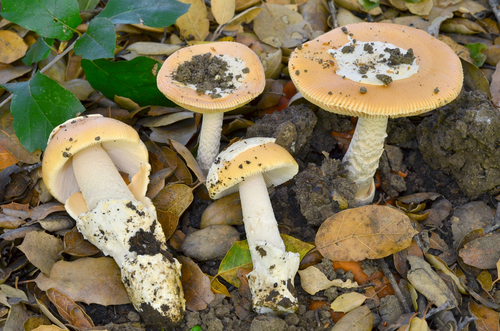
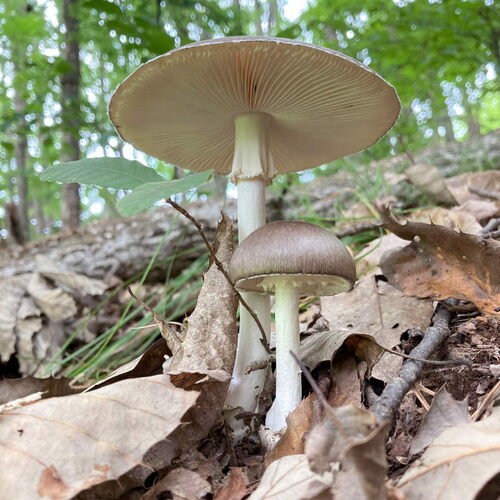
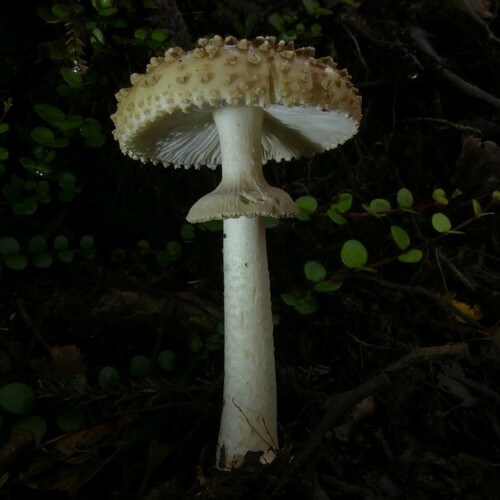
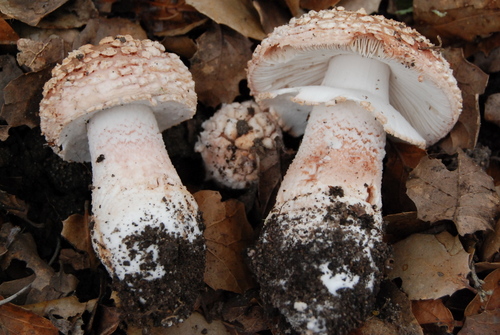
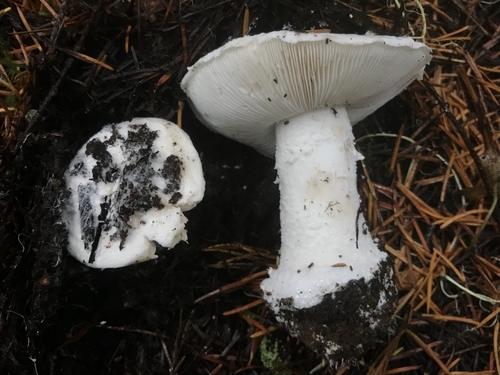
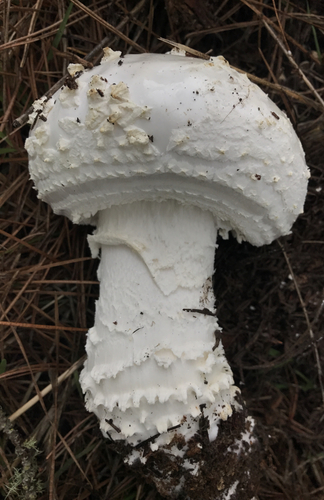
Amanita smithiana Bas has a cap 5 to 17 centimeters (2 to 6+1⁄2 inches) in diameter, which is white and scaled with remnants of the universal veil. The stipe is 6–18 cm (2+1⁄2–7 in) long and 1–3.5 cm (1⁄2–1+1⁄2 in) thick; it is white, similarly scaled, and has a ring. Its spores are ellipsoid to elongated, amyloid, and measure 11–12.5 by 7–8 micrometers. This species causes poisonings in the Pacific Northwest, where people often mistake it for the popular edible mushroom Tricholoma murrillianum, also called Western matsutake. Symptoms start with gastrointestinal issues that appear 1 to 12 hours after ingestion, followed by acute nephritis after a 2–6 day delay. Hemodialysis is considered an effective treatment, and most patients regain normal kidney function within several weeks after eating the mushroom. Researchers think the toxicity of A. smithiana comes from the compounds chlorocrotylglycine and allenic norleucine. Several similar species have been linked to identical poisoning cases: A. sphaerobulbosa, Saproamanita thiersii, A. proxima from Spain, and A. pseudoporphyria from Japan.