About Amalda mucronata (G.B.Sowerby I, 1830)
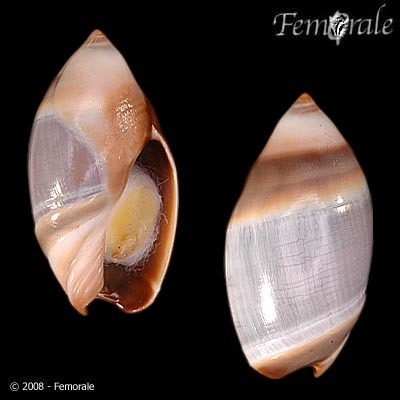
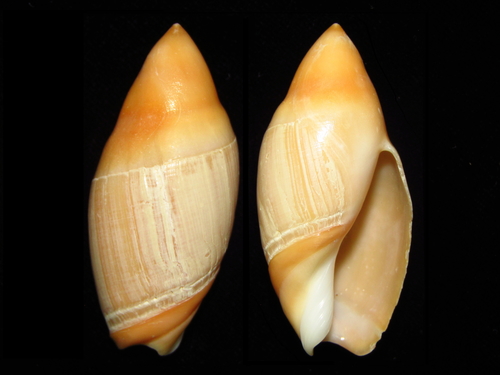
This species, Amalda mucronata, was first described by G.B.Sowerby I in 1830. The shell can reach a maximum height of 61 mm and maximum width of 27 mm. The shell is solid, stubby, oblong in shape, and shiny, with a color ranging from pink to pale brown. The acuminated, callous spire is thickly covered in enamel. The pointed apex is paler than the rest of the shell. The body whorl has a white-bordered band near its upper section. A faintly impressed line ends in a small, blunt tooth at the lower edge of the outer lip. Two bands are visible near the lower part of the body whorl. A very indistinct groove marks the start of the columellar varix, which is narrow, whitish, and subtly striated. The wide aperture is somewhat acute at the top and notched at the bottom. The outer lip is slightly thickened at the edge, and has a single small tooth near the base. The upper portion of the inner lip extends over the spire. The columella has a central ridge and is twisted at its anterior end. This is a marine species that is endemic to New Zealand, where it occurs in waters off the country's coast.