About Amalda australis (G.B.Sowerby I, 1830)
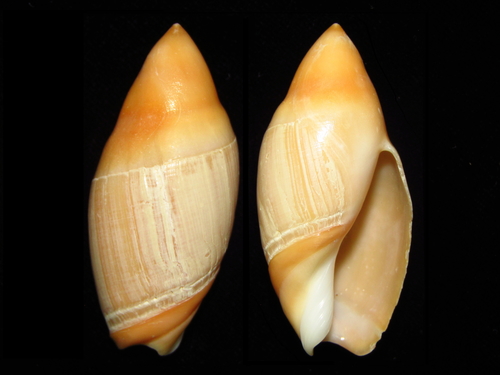
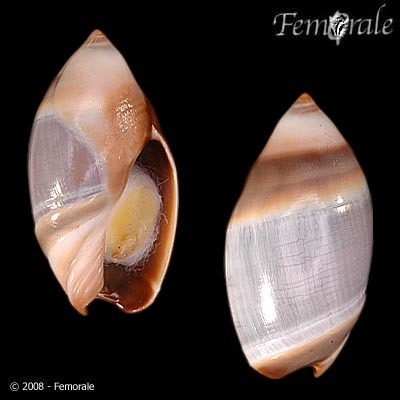
This species of sea snail has the scientific name Amalda australis (G.B.Sowerby I, 1830). The shell of this species reaches 52 mm in length and 23 mm in diameter. The shell is elongate and fusiform, with a smooth, glossy surface. The spire is relatively short, while the body whorl is large and biangulate; the shell's overall sleek, streamlined shape lets the snail burrow easily into sand. The aperture is long and narrow, with a thin outer lip. The suture is covered by a transparent callus. The inner lip and white columella are usually coated with a thin callus. Shell color ranges from creamy white to light brown, and often features faint darker blue-brown bands or streaks. The fasciole and the interior of the shell are dark brown. These predatory snails inhabit intertidal sand, an environment that has a high probability of leading to fossilization. Fossils of Amalda australis date to the Pliocene, and they show morphological stasis in the species. This marine species is endemic to New Zealand. It is found off the North Island and the northern portion of the South Island, ranging as far south as Banks Peninsula.