About Alucita hexadactyla Linnaeus, 1758
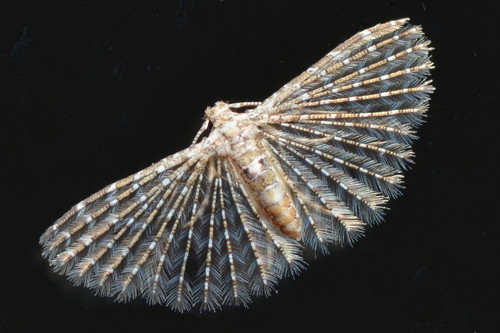
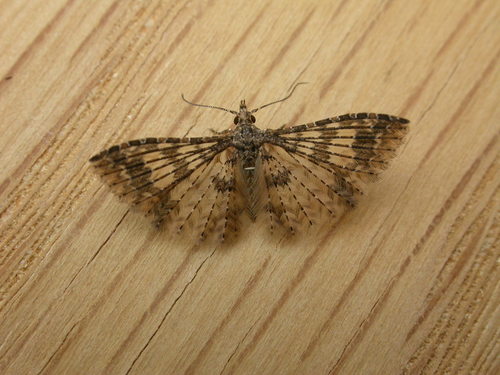
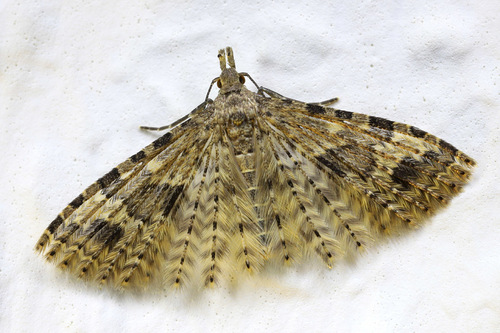
Alucita hexadactyla Linnaeus, 1758 has a wingspan of 14–16 mm. Unlike typical moths, which have two pairs of scaly wings, this species has around twenty thin feathery plumes, with scales growing on the supporting ribs of these plumes. When it perches, it holds its wings spread out in the shape of a fan. Its wings have a distinct bold zigzag pattern made up of white, black, and brown. This pattern, combined with the shiny backward-pointing hairs on each plume, makes the adult moth easy to identify. This species is commonly known by the common name many-plumed moth. Its specific epithet hexadactyla originates from the Greek word meaning six-fingered. It is single-brooded, and adults can be encountered at any time of year. It is a common species that is often found in gardens, but it is easily missed because of its small size. The larvae of Alucita hexadactyla feed on honeysuckle plants of Lonicera species, tunnelling through the flower buds and leaves of these hosts. Visible holes and darkened areas on flower buds are signs that larvae are feeding there. There is ongoing scientific disagreement about whether this species' larvae are leaf miners or gall causers.