About Alstonia scholaris (L.) R.Br.
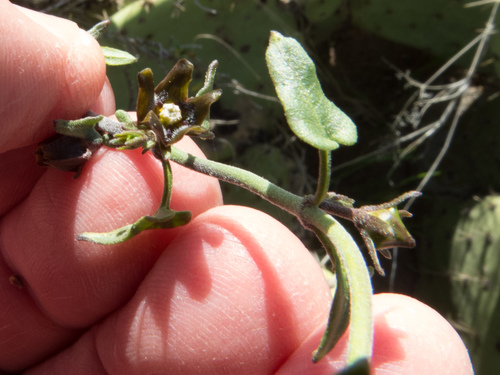
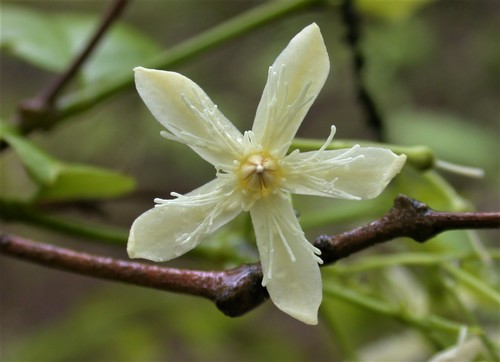
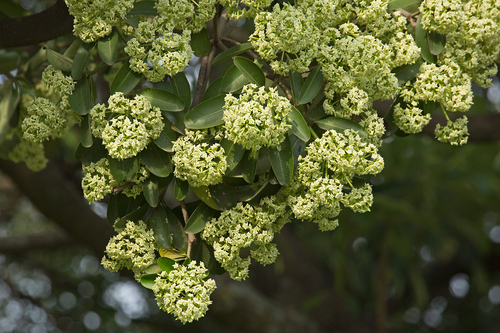
Alstonia scholaris (L.) R.Br. is a large tree that typically reaches up to 40 m (130 ft) in height, and rarely grows as tall as 60 m. It has narrow buttresses that extend a long way up the trunk, creating a fluted trunk appearance. Its bark ranges from gray to pale gray and bears numerous lenticels, and all parts of the plant release large amounts of white sap when broken or cut. The leaves are glossy dark green on the upper surface and pale on the lower surface, and are arranged in whorls of 4 to 8, with petioles (leaf stalks) around 5–15 mm (0.20–0.59 in) long. Leaves are usually obovate (broadest near the tip) to elliptic, tapering toward the base and ending in a rounded tip, with 25 to 40 pairs of lateral veins that angle 80–90° from the midvein. Inflorescences are heavily branched cymose clusters, borne at the ends of branches with peduncles up to 7 cm (2.8 in) long. The small, tubular flowers are cream or white, strongly scented, and measure roughly 10 mm (0.39 in) in both length and width, with five ovate lobes. The calyx is about 2 mm (0.08 in) long, and flower stalks are typically no longer than the calyx. The white, tube-shaped corolla is 6–10 mm (0.2–0.4 in) long; its broadly ovate or broadly obovate lobes are 2–4.5 mm (0.08–0.2 in) and overlap to the left. The fruit consists of a pair of long, papery follicles that grow up to about 30 cm (12 in) long and 6 mm (0.24 in) in diameter. These follicles hold numerous flat, brown seeds around 5 mm (0.20 in) long and 1.2 mm (0.05 in) wide, which have long hair tufts at each end. Alstonia scholaris grows across a wide variety of habitats in tropical and subtropical regions, occurring in forest types ranging from rainforest to savanna on diverse soil types including alluvial, volcanic and metamorphic soils, at altitudes from sea level up to more than 1,000 m (3,300 ft). It is native to tropical and subtropical areas of: South-Central China and Southeast China; the Indian subcontinent including Assam, Bangladesh, East Himalaya, India, Laccadive Islands, Nepal, Pakistan, Sri Lanka, and West Himalaya; Indo-China including Andaman Islands, Cambodia, Laos, Myanmar, Nicobar Islands, Thailand, and Vietnam; Malesia including Borneo, Jawa, Lesser Sunda Islands, Malaya, Maluku, Philippines, Sulawesi, and Sumatera; Papuasia including Bismarck Archipelago, New Guinea, and Solomon Islands; and Australia including Northern Territory, Queensland, and Western Australia. Alstonia scholaris is a toxic plant. At high doses, plant extracts cause significant damage to all major body organs in both rats and mice. Toxicity varies depending on which plant organ is used and the harvesting season: bark collected in the monsoon season is the least toxic, while bark harvested in summer is the most toxic. Intraperitoneal administration is far more toxic than oral administration. Rats are more susceptible to the poison than mice, and pure-bred mouse strains are more susceptible than crossbred mice. The toxic effects are thought to come from the alkaloid echitamine found in the bark. The wood of Alstonia scholaris has been recommended for pencil manufacturing, because it has suitable properties and the tree grows quickly and is easy to cultivate. In Sri Lanka, its light wood has been used to make coffins. The wood near the root is very light and white, and in Borneo it has been used for net floats, household utensils, trenchers, corks, and similar items. In Theravada Buddhism, tradition holds that the first Buddha attained enlightenment under a tree of this species. The 1889 book *The Useful Native Plants of Australia* records that "the powerfully bitter bark of this tree is used by the natives of India in bowel complaints (Treasury of Botany). It has proved a valuable remedy in chronic diarrhoea and the advanced stages of dysentery. It has also been found effectual in restoring the tone of the stomach and of the system generally in debility after fevers and other exhausting diseases (Pharmacopoeia of India). It is described in the Pharmacopoeia of India as an astringent tonic, anthelmintic, and antiperiodic. It is held in the highest repute in the Phillippine Islands [sic]." Despite its long traditional use as an antiperiodic (a treatment intended to cure malaria), it was found to have little to very weak activity against Plasmodium falciparum, the parasite that causes malaria. It had no effect against Giardia intestinalis, and only weak activity against Entamoeba histolytica; both of these organisms cause diarrhoea.