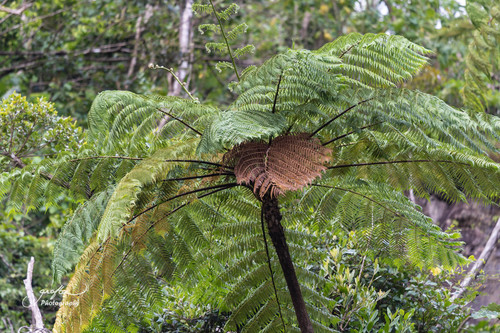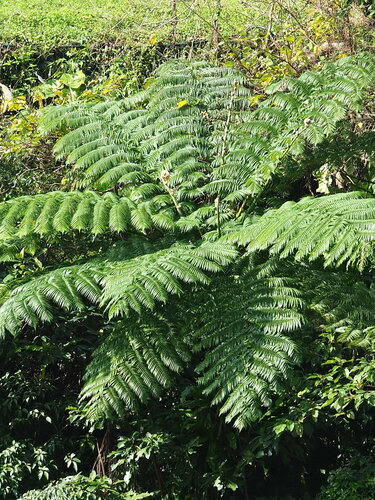
About Alsophila lepifera J.Sm. ex Hook.
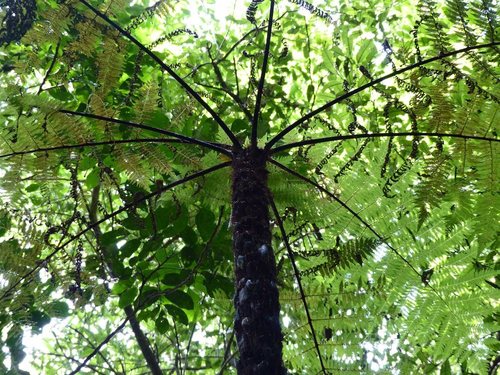
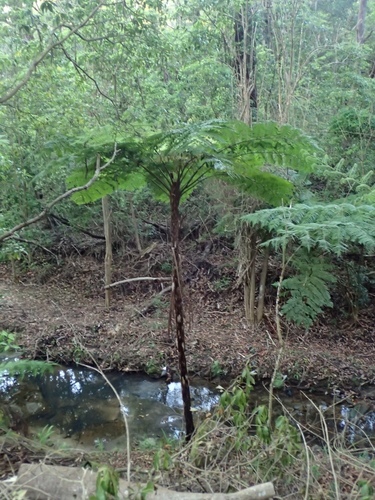
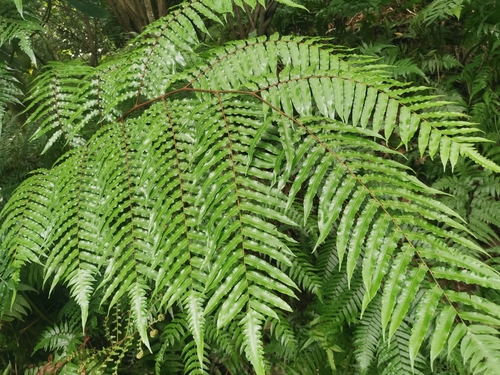
Alsophila lepifera J.Sm. ex Hook. is most widely known by the synonyms Sphaeropteris lepifera and Cyathea lepifera. Common names for this species include the brush pot tree (Chinese: 筆筒樹; pinyin: bǐtǒng shù; Japanese: ヒカゲヘゴ) and flying spider monkey tree fern. It is an endangered tree fern that grows in the mountains of East and Southeast Asia. This species can grow up to 6.1 m (20 feet) tall, with a base diameter up to 20 centimeters. While the overall tree fern lineage dates back to the Jurassic period, the crown group of the genus Sphaeropteris can be traced back to the Cretaceous period, around 90 million years ago.
This species lives in moist subtropical and tropical rainforests across the Ryukyu Islands of Japan, China, Taiwan, the Philippines, and New Guinea. Within China, it occurs in coastal areas from Fujian to Guangxi extending south to Yunnan Province. It can also be found on Hainan, and an in-situ population exists on Nan'ao Island in Guangdong Province.
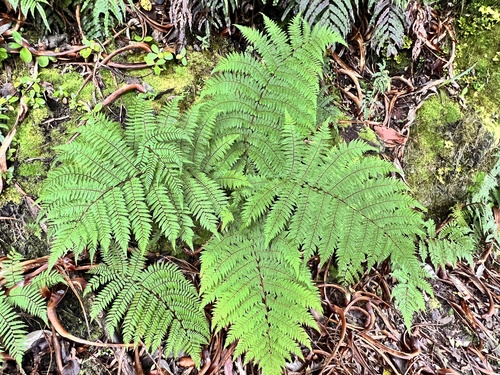
For this species, spores are produced twice per year, at the end of April and October. Sporophytes form after a three-month development period, reaching maturity in July or August for April-produced spores, or January or February for October-produced spores. Low temperatures and dry conditions have been found to reduce sporophyte production in this species.
Sphaeropteris lepifera has documented medicinal value in China. In the Philippines, tree ferns of this species are boiled, and the liquid from boiling young fronds is believed to help shorten labor duration and improve postpartum recovery for mothers. Starch from the stems of this species is used as food in China and Taiwan. In Japan, the new leaves and shoots are eaten: they are boiled to remove bitterness, then prepared as tempura or pickled in a vinegar mixture called sanbaizu, with a texture described similar to daikon radish. The boiled core of Sphaeropteris lepifera is also a traditional festival food on the Yaeyama Islands and Ishigaki Island. In Taiwan and the Philippines, the trunk of this tree fern is used to make sculptures and as construction material.