About Alsophila australis subsp. australis
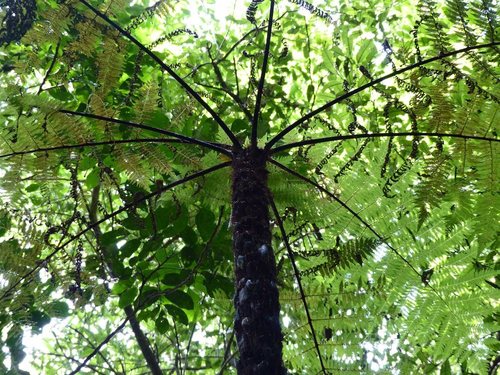
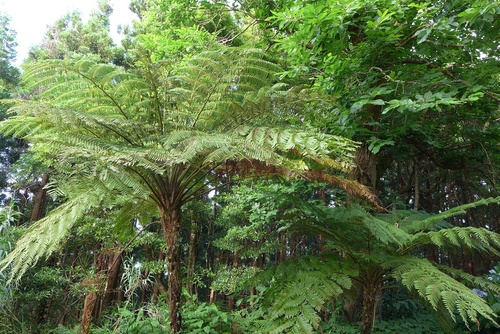
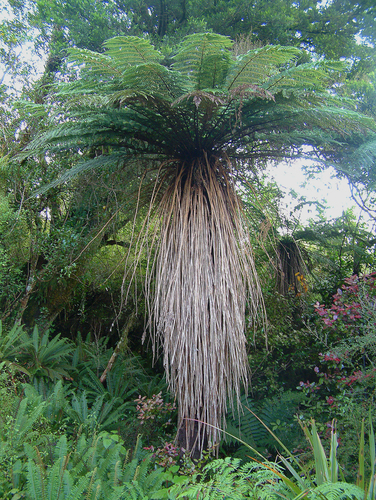
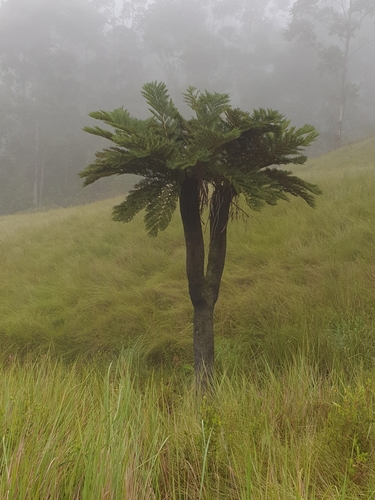
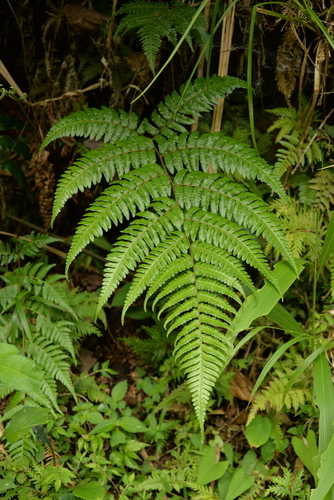
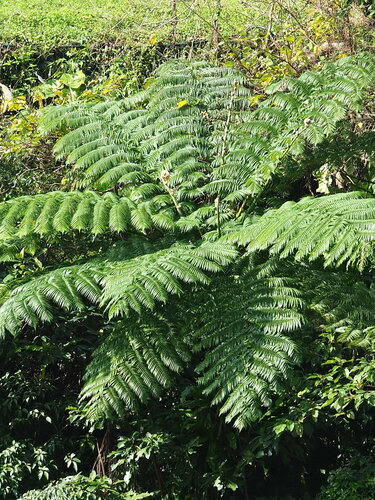
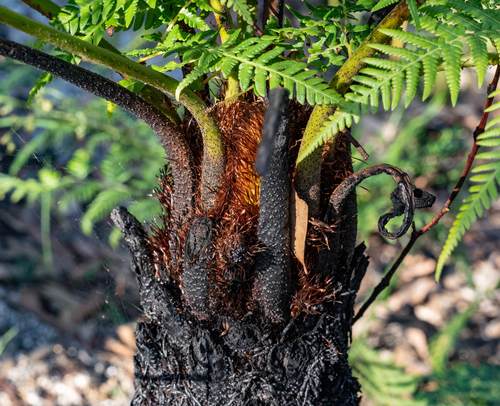
This subspecies, Alsophila australis subsp. australis, typically grows a massive erect trunk reaching up to 12 m tall, though Queensland, Australia has had recorded specimens reaching 20 m. Its fronds are bi- or tripinnate, and can reach 4 m in length, occasionally growing as long as 6 m. The fronds form a distinctive crown that is dark green on the upper surface and lighter green on the lower surface. Adventitious roots, tubercles, and hair-like follicles grow on its trunk. Plants growing in southern Australia often shed all their fronds by the end of winter, a trait shared with Alsophila dregei from South Africa. A characteristic feature of this species is that stipe bases are often retained around the trunk long after they wither. These stipe bases are covered with scales and conical, blunt spines toward the base. The scales range in color from shiny brown to bicolored (a mix of pale and brown), and are often distinctly twisted. The sori are circular, and grow on either side of the fertile pinnule midvein. True indusia are absent, though small reduced scales may form a circle around the sori. Across its montane distribution, this subspecies is ecologically important as it provides nesting substrate for Exoneura robusta, a native Australian reed bee. These bees build their nests almost exclusively in the pith of dead Alsophila australis subsp. australis fronds. This bee species is an important pollinator for other plants in southeastern Australia, which means A. australis subsp. australis indirectly supports other plant species in its native ecosystem. In 1889, Joseph Maiden recorded a traditional use of this plant by Australian Aboriginal people: the starchy pulp from the top of the trunk is eaten raw or roasted. This whitish starchy tissue runs through the center of the trunk from base to apex; when boiled, it is described as tasting like a bad turnip, and pigs will feed on it greedily. In cultivation, Alsophila australis subsp. australis is a robust container plant, and is tolerant of salty winds. It is a popular hardy cool-climate tree fern, adaptable to a wide range of climates and soil types. It naturally grows in moist shady forest, in both coastal and montane areas, at altitudes up to 1,280 m (4,200 ft), and it often grows alongside Dicksonia antarctica. It is a relatively hardy species, and is popular as both a landscape plant and a container plant. As long as moisture levels stay high, it can tolerate frost, full sun, or shade when grown in warmer regions. While it is well known in its native Australia, it is not commonly cultivated outside of Australia.