About Alpinia galanga (L.) Willd.
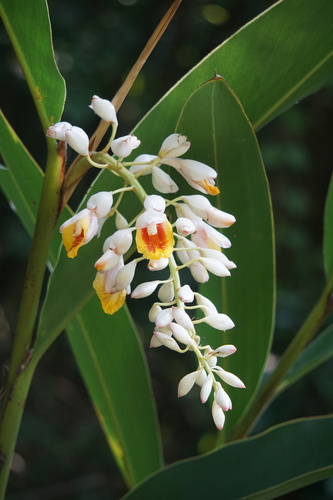
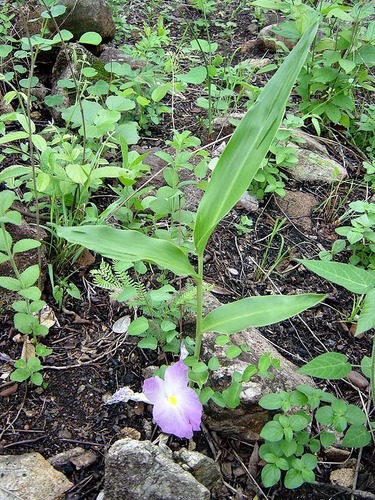
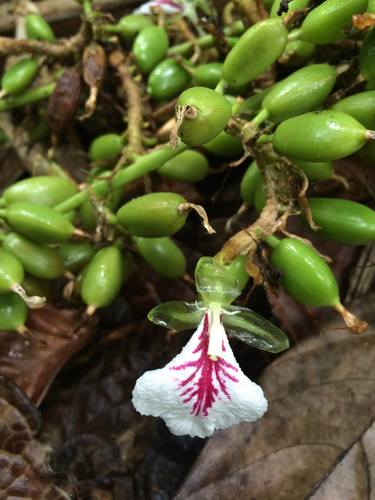
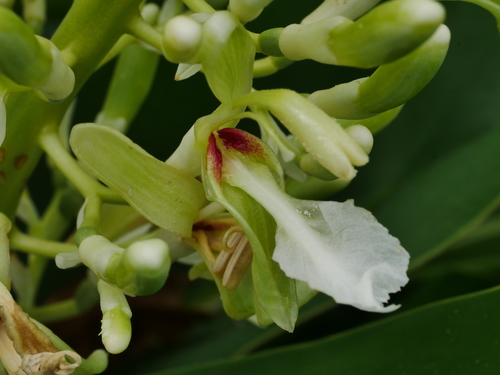
Alpinia galanga (L.) Willd. is an evergreen perennial plant. It grows from rhizomes, forming clumps of stiff stalks that reach up to 2 metres (6 ft 7 in) in height, and produces abundant long leaves and red fruit. The rhizome of this plant is the "galangal" most commonly used in cookery, and it is valued for applications in food and traditional medicine. This rhizome has a pungent smell and a strong taste that resembles a combination of citrus, black pepper, and pine needles. Red and white cultivars of Alpinia galanga are typically used for different purposes: red cultivars are primarily used for medicinal needs, while white cultivars are primarily used as a spice. The plant's red fruit is used in traditional Chinese medicine and has a flavor similar to cardamom. For culinary use, the rhizome is a common ingredient in Thai curries and soups, such as tom kha kai. In these dishes, it is used fresh, either in chunks, cut into thin slices, or mashed and mixed into curry paste. Among the Mansaka people of the Philippines, the rhizome is also traditionally fermented with honey to produce a wine called byais. In traditional medicine, Alpinia galanga is used in African American folk medicine and hoodoo folk magic under the names 'chewing John', 'little John to chew', and 'court case root'. In Unani medicine, Alpinia galanga is called Khulanjan, and its actions and uses are recorded in many classical Unani literary works, including Al qanun fittib (The Canon of Medicine) and maghzanul mufradath. Unani medicine classifies it as Muqawwi qalb (cardiac tonic), mufarreh, munaffise balgam, muqawwi meda, and muqawwi bah, and uses it to treat asthma, cough, sore throat, and other illnesses. Well-known Unani drug preparations that include Khulanjan as an ingredient are Habb e Jadwar, Jawarish Jalinus, and Jawarish Ood shirin. Ayurveda identifies Alpinia galanga, called rasna in Sanskrit, as a Vata Shamana drug. In Tamil, this ginger relative is known as பேரரத்தை (perarathai), and as Tamil folk medicine it is combined with licorice root (Glycyrrhiza glabra, called athi-mathuram in Tamil) to treat colds and sore throats.