About Alphitobius diaperinus (Panzer, 1797)
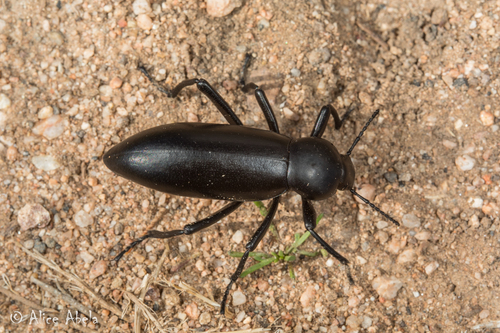
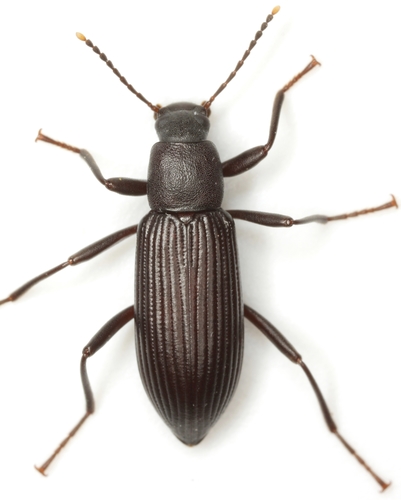
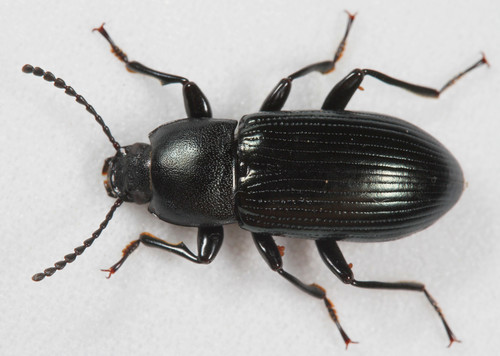
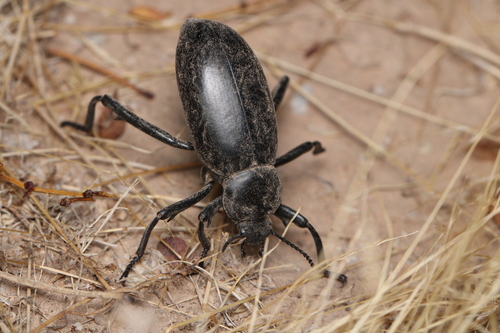
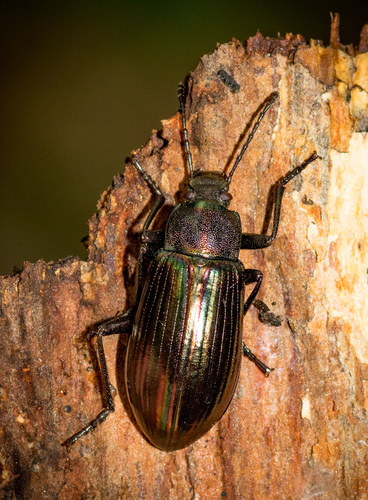
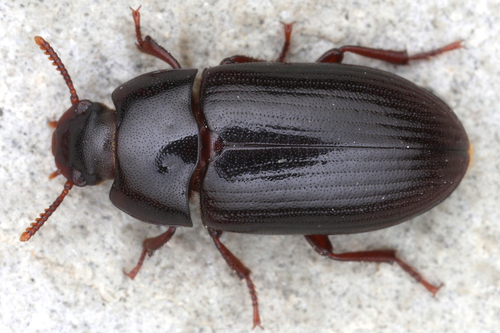
This species has the scientific name Alphitobius diaperinus (Panzer, 1797), and is commonly known as the lesser mealworm. Adult lesser mealworm beetles are roughly 6 mm long, with a widely oval body shape. They are shiny black or brown, with reddish brown elytra; individual color varies, and color changes with age. Most of the body surface is marked with small puncture-like impressions. The antennae are paler at their tips and are covered in tiny yellowish hairs. The elytra feature shallow longitudinal grooves. The eggs are narrow, whitish or tan, and measure about 1.5 mm long. The larvae resemble other mealworms, such as the common mealworm Tenebrio molitor, but are smaller, reaching a maximum length of 11 mm at the final subadult stage. Larval bodies are tapered and segmented, with three pairs of legs located toward the front end. When newly emerged from the egg, larvae are whitish, and darken to yellow-brown as they mature. They become pale when preparing to molt between instar stages; this species goes through six to 11 instar stages total. This species has long been recognized as a common pest across much of the world, so its exact geographic origins are uncertain, but it may have originated in Sub-Saharan Africa. It moved into Europe long ago, and was likely introduced to North America from Europe. The larvae of Alphitobius diaperinus are edible insects, and are farmed for human consumption by specialized European insect farms, mostly located in the Netherlands and Belgium. The larvae are sold either freeze-dried for direct consumption, or processed into other food products such as burger patties, pasta, or snack bars. As an edible product, the larvae are commonly marketed under the name buffalo worms; this name is also used for larvae of Alphitobius laevigatus, which can lead to confusion. This species can be detected using the PCR method. On 4 July 2022, the European Food Safety Authority (EFSA) published an opinion confirming that frozen and freeze-dried larvae of Alphitobius diaperinus are safe for human consumption. Approval as a novel food in the European Union followed on 6 January 2023, when the EU Commission published Implementing Regulation 2023/58 that authorises placing frozen, paste, dried and powder forms of Alphitobius diaperinus larvae on the market.