About Aloe maculata All.
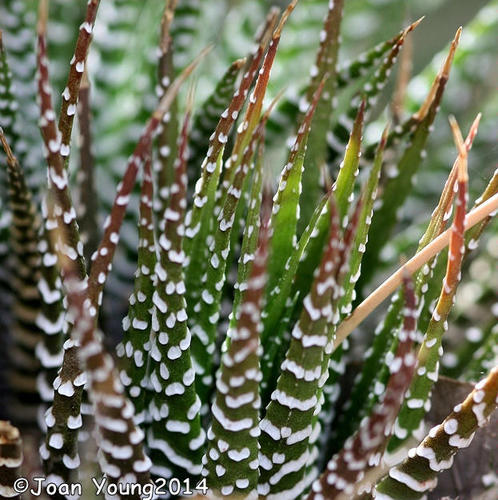
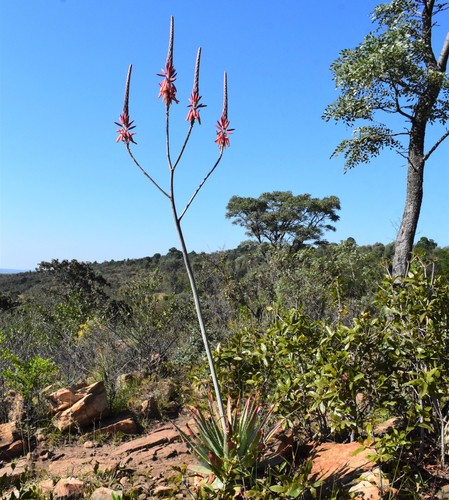
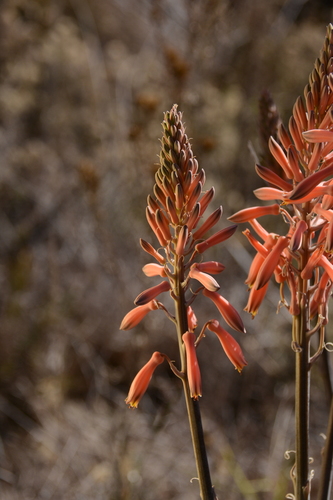
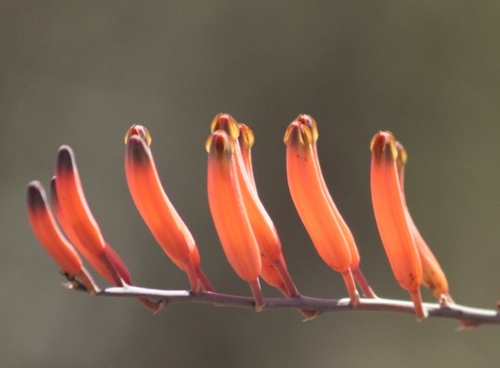
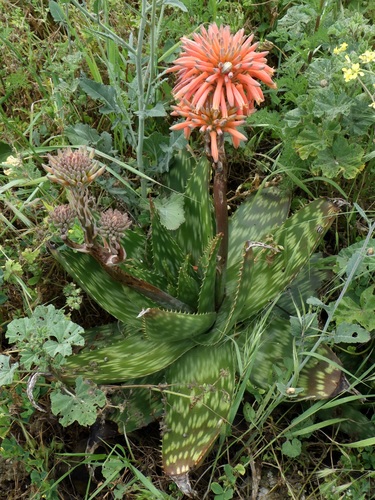
Aloe maculata All. is a highly variable aloe species that hybridizes easily with other similar aloes, which can sometimes make identification difficult. Its leaves vary in color from red to green, and always have distinctive H-shaped spots. Its flowers are also variable in color, ranging from bright red to yellow, but are always grouped in a distinctively flat-topped raceme. The inflorescence grows at the top of a tall, multi-branched stalk, and its seeds are reportedly poisonous. Common called soap aloe, this species is very adaptable and naturally occurs across a wide range of habitats in Southern Africa, extending from Zimbabwe in the north to the Cape Peninsula in the south. It is native to southern and eastern South Africa, south-eastern Botswana, and Zimbabwe. Today, it is planted around the world as a popular landscape plant in warm desert regions; in the United States, it is the most popular ornamental aloe in the Tucson, Arizona area, and is also popular in California. Local people have traditionally used the gel from this plant as a remedy to treat a wide range of conditions, including skin complaints, inflammation, and diseases of the respiratory system, musculo-skeletal system, circulation, and endocrine system. In cultivation, soap aloe plants are damaged by temperatures below 0 °C (32 °F), but they recover quickly. Once established in a suitable climate, they require very little maintenance. Aloe maculata is highly salt tolerant, making it a good choice for seaside gardens. A hybrid between A. maculata and Aloe striata is very popular in the gardening trade and used for water-wise landscaping worldwide. Aloe maculata and its many hybrids are low-growing and propagate via suckers. If allowed to spread, they form a useful ground cover in arid regions. Their spotted leaves remain attractive even when the plants are not flowering, and their blooms produce a striking display for several weeks during summer. Both birds and insect pollinators frequently visit the flowers to feed on nectar and pollen.