About Alnus rubra Bong.
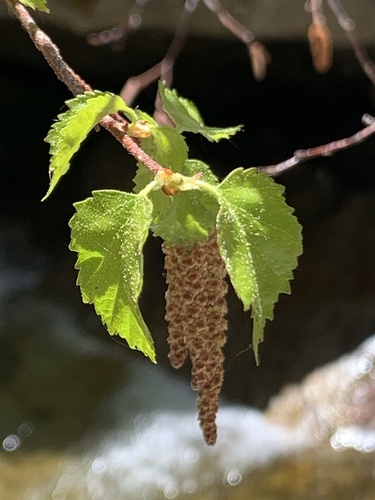
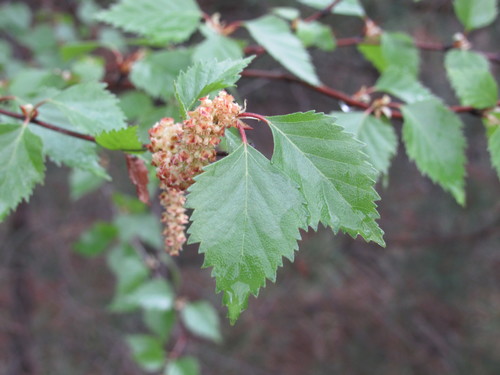
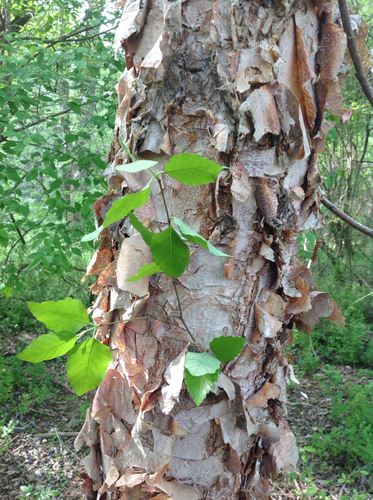
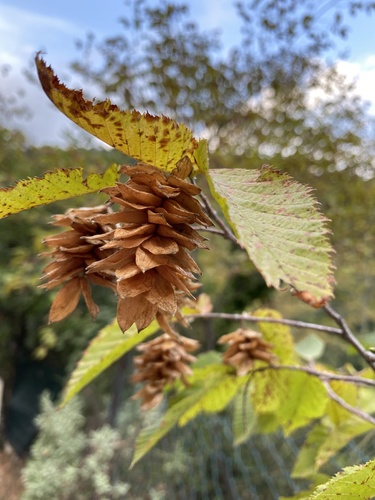
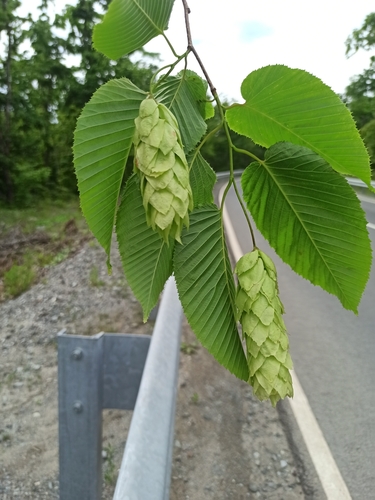
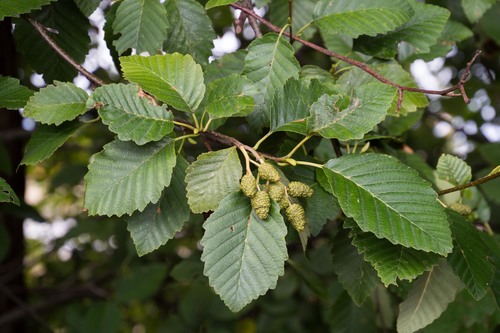
Alnus rubra Bong. (red alder) is the largest alder species in North America, and one of the largest alder species in the world. Mature trees typically reach 20 to 30 metres (66 to 98 ft) in height. As of 1979, the tallest recorded red alder measured 32 m (105 ft) tall, and grows in Clatsop County, Oregon, United States. Tree trunks are between 25 and 50 centimetres (10 to 19 1/2 in) in diameter. The bark is smooth, ashy-gray, and mottled, and is often colonized by white lichen and moss. Its leaves are ovate, 7 to 15 centimetres (2 3/4 to 6 in) long, with bluntly serrated edges and a distinct point at the tip. A key diagnostic feature that sets this species apart from all other alders is its revolute leaf margin, where the very edge of the leaf curls under. Instead of turning yellow in autumn, the leaves darken in color and wither before falling. In early spring, the species produces male flowers that form dangling reddish catkins 10 to 15 cm (4 to 6 in) long. Female flowers grow in clusters that usually hold 4 to 6 flowers, with a range of 3 to 8. Female catkins are erect when the plant is in flower (anthesis), and are pendant at other times. After flowering, female catkins develop into small, woody, oval dry fruits that look superficially like cones, measuring 2 to 3 cm (3/4 to 1 1/4 in) long. Seeds develop between the woody bracts of these cone-like structures, and are shed in late autumn and winter. Red alder seeds have a membranous winged margin that enables long-distance seed dispersal. Most red alder specimens live to around 60 years of age, after which they are typically seriously affected by heart rot. Alnus rubra is distributed from Southeast Alaska to central coastal California. Its range almost always stays within roughly 200 kilometres (120 mi) of the Pacific coast, except for a 600 km (370 mi) inland extension across Washington and Oregon into the northernmost part of Montana. This species occurs from sea level up to elevations of 900 m (3,000 ft). In southern Alaska, western British Columbia, and the northwestern Pacific Coast Ranges of the United States, red alder grows on cool, moist slopes. In inland areas and at the southern end of its range in California, it grows mostly along the margins of watercourses and wetlands. It is a shade-intolerant species. In moist forest areas, Alnus rubra quickly colonizes former burn sites and clearcuts, and often prevents conifers from establishing. It is a prolific seed producer, but its small wind-dispersed seeds require an open area of mineral soil to germinate. This makes skid trails and other areas disturbed by logging or fire ideal seedbeds. In the first year after landscape disturbance, these areas can support between several hundred thousand and several million red alder seedlings per hectare. Twigs and buds of alder are only fair browse for wildlife. Deer and elk browse the twigs in fall, and browse twigs and buds in winter and spring. Beaver occasionally eat the bark, though it is not one of their preferred species. Several types of finches, most notably common redpoll and pine siskin, eat alder seeds; deer mice also eat the seeds. Tent caterpillars often feed on red alder leaves, but affected trees usually recover within a year. Red alder hosts the nitrogen-fixing actinomycete Frankia in nodules on its roots. This association allows the species to grow in nitrogen-poor soils, and makes it an important early colonizer of disturbed forests and riparian areas. Its self-fertilizing trait lets red alder grow rapidly, and makes it effective at covering disturbed or degraded land, such as mine spoils. Introduced Alnus rubra has been found to successfully form associations with Frankia strains native to the United Kingdom. Red alder leaves are shed in fall, and decay readily to form nitrogen-enriched humus, which makes the extra nitrogen available to surrounding plant species. Historically, Native Americans used red alder bark to treat poison oak reactions, insect bites, and skin irritations. Blackfeet Indians used an infusion made from red alder bark to treat lymphatic disorders and tuberculosis. Recent clinical studies have confirmed that red alder contains betulin and lupeol, compounds that have been shown to be effective against a variety of tumors.