About Alnus alnobetula (Ehrh.) K.Koch
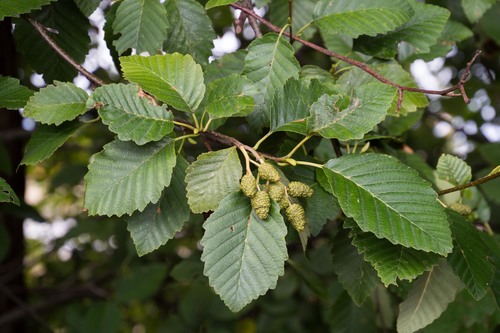
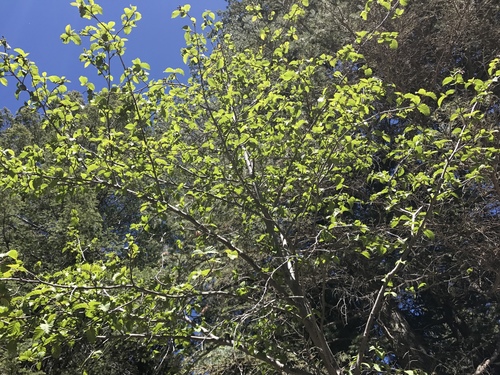
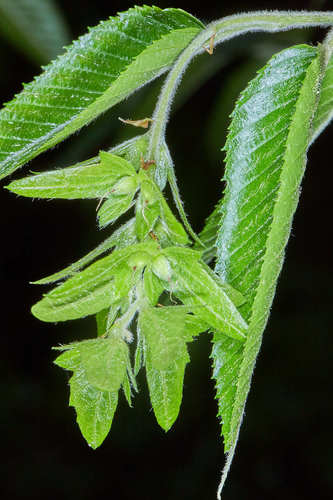
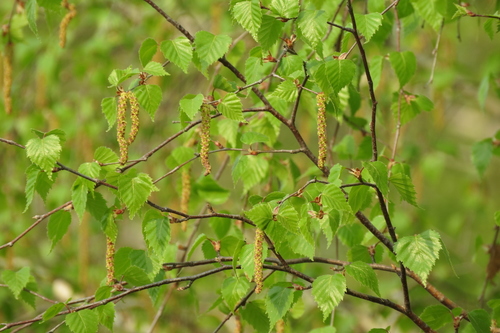
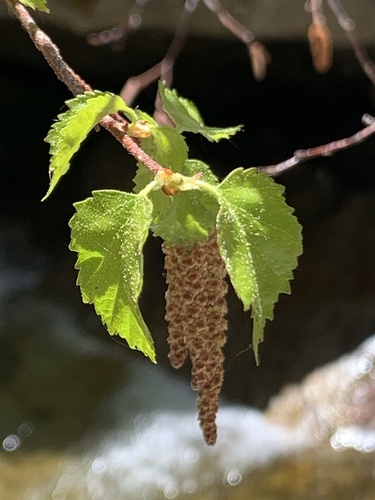
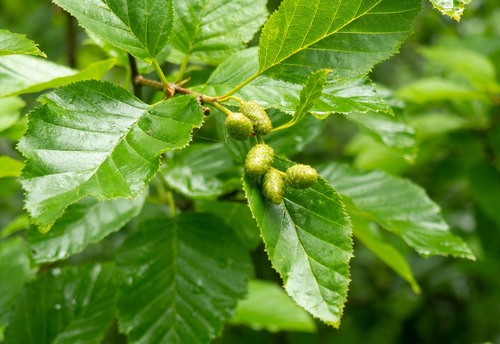
Alnus alnobetula (also referenced as Alnus viridis in the source text) is a species of alder that grows as a large shrub or small tree, reaching 3–12 metres (10–39+1⁄2 ft) in height. It has smooth grey bark even when old. Its leaves are ovoid, 3–8 centimetres (1+1⁄4–3+1⁄4 in) long and 2–6 cm broad, with shiny green upper surfaces and light green undersides. It produces flowers in catkins, which emerge late in spring after leaves have grown out – this differs from other alders, which flower before leafing out. Male catkins are pendulous and 4–8 cm long; mature female catkins are 1 cm long and 0.7 cm broad by late autumn, and grow in clusters of 3–10 on a branched stem. The seeds are small, 1–2 millimetres (1⁄32–3⁄32 in) long, light brown, and have a narrow wing that encircles the seed. Roots of Alnus viridis subsp. sinuata develop nitrogen-fixing nodules. A study conducted in Alaska found that Sitka alder seedlings can colonize coal mine spoils, and the species can be used for revegetation and stripmine reclamation. Between four and six subspecies are recognized, with some authors treating these subspecies as separate species: Alnus viridis subsp. viridis native to Central Europe; Alnus viridis subsp. suaveolens, an endemic subspecies to Corsica; Alnus viridis subsp. fruticosa found in Northeast Europe, northern Asia, and northwestern North America; Alnus viridis subsp. maximowiczii (also called A. maximowiczii) found in Japan; Alnus viridis subsp. crispa (also called A. crispa or mountain alder) found in northeastern North America and Greenland; and Alnus viridis subsp. sinuata (also called A. sinuata, Sitka alder or slide alder) found in western North America and far northeastern Siberia. Alnus viridis is classified as an environmental weed in New Zealand. This species has a shallow root system, and produces vigorous stump suckers as well as root suckers. It is a light-demanding, fast-growing shrub that grows well on poorer soils. In many mountain regions, it is a very characteristic colonist of avalanche chutes, where larger trees that might otherwise outcompete it are killed by regular avalanche damage. It survives avalanches because it can regrow from its roots and broken stumps. Unlike some other alders, it requires moist soil, and colonizes screes and shallow stony slopes. It also commonly grows on subarctic river gravels, particularly in northern Siberia, Alaska and Canada, growing in areas disrupted annually by ice floes during spring river ice breakup; in this habitat it is often found growing mixed with shrubby willows. It is sometimes used for afforestation on infertile soils, which it enriches via its nitrogen-fixing nodules, and does not grow large enough to compete with the intended timber crop. A. sinuata can add 20 kg of nitrogen per acre (50 kg per hectare) to soil each year. In traditional Austrian medicine, leaves of Alnus viridis have been used externally or taken internally as a tea to treat infections and fever.