About Allothereua maculata Newport, 1844
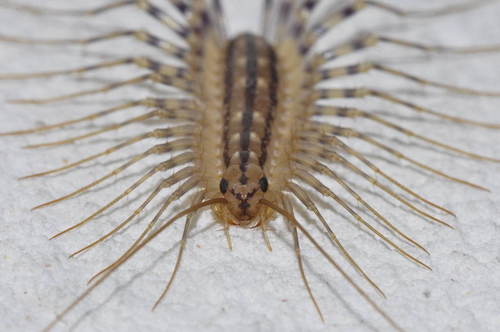
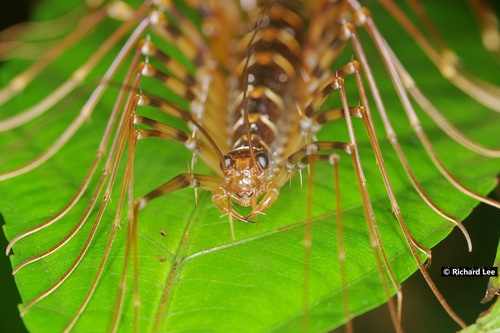
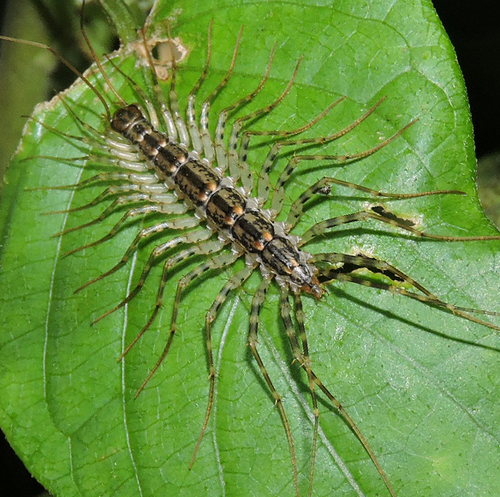
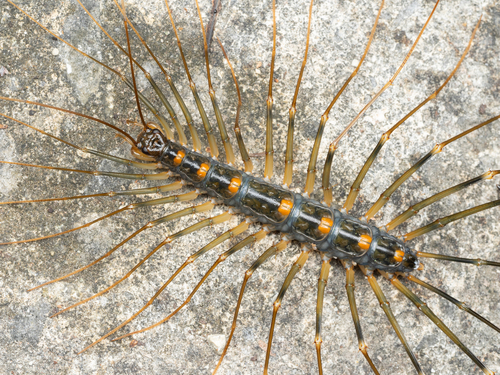
Allothereua maculata (originally described by Newport in 1844) has a 15-segmented body, with 15 pairs of long legs. Its body is pale brown with dark markings, and reaches an adult length of 20–25 millimetres (0.8–1.0 inches). It has one pair of antennae on its head, and a similarly long pair of caudal appendages at its tail end. This species has many small hairs and a spindle-shaped body. Scientists Haase and Heathcote initially hypothesized these features functioned as a specialized organ, but later research found this idea incorrect, confirming the features serve other purposes. Only limited research has been conducted on this species, but current understanding suggests these traits likely evolved to aid survival adaptation. Allothereua maculata is the most common scutigeromorph centipede across southern Australia, distributed from Western Australia to Queensland. It inhabits urban areas and woodland. Its frequent presence inside houses indicates it prefers damp, poorly ventilated environments. A. maculata is a predator that feeds on insects and other arthropods, and is generally considered harmless to humans.