About Allocasuarina fraseriana (Miq.) L.A.S.Johnson
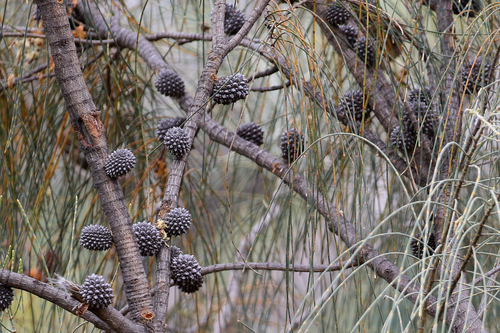
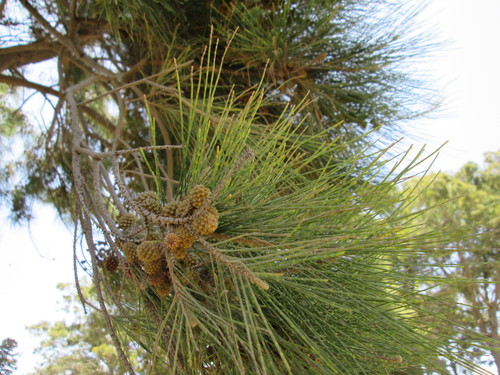
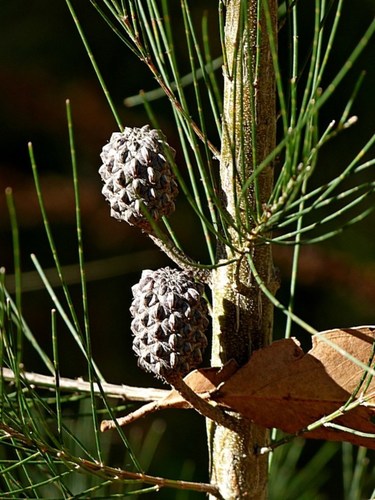
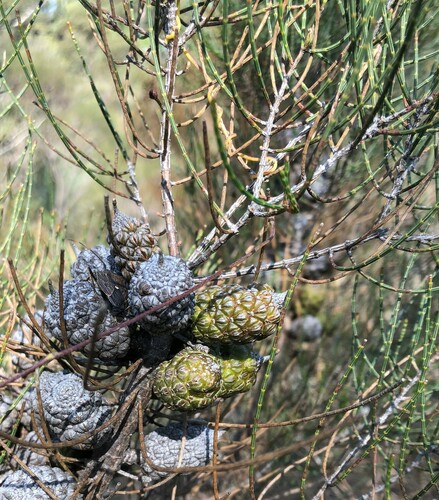
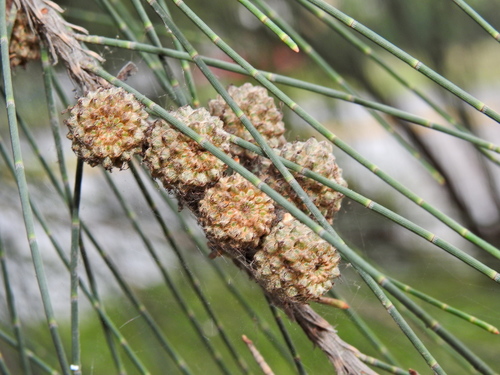
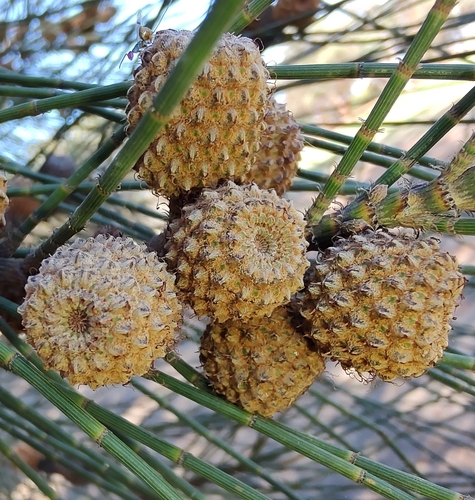
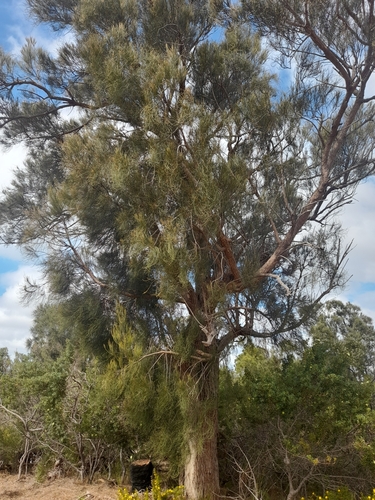
Allocasuarina fraseriana is a monoecious tree that typically reaches 5–15 meters (16–49 feet) in height, with a trunk diameter at breast height of 0.5–1 meter (1 foot 8 inches to 3 feet 3 inches). Its branchlets are more or less erect, growing up to 300 millimeters (12 inches) long. The leaves of this species are reduced to spreading, scale-like teeth 0.7–1.2 millimeters (0.03–0.05 inches) long, arranged in whorls of six to eight around the branchlets. The sections of branchlet between leaf whorls, called "articles", are 7–15 millimeters (0.3–0.6 inches) long and 0.8–1.3 millimeters (0.03–0.05 inches) in diameter. Male flowers are arranged in spikes 30–80 millimeters (1.2–3.1 inches) long, with anthers measuring 0.7–1.2 millimeters (0.03–0.05 inches) long. Mature female cones are shortly cylindrical, 15–40 millimeters (0.6–2 inches) long and 15–22 millimeters (0.6–0.9 inches) in diameter; young cones are covered with soft hair. The samaras of this species are 10 millimeters (0.4 inches) long, and flowering occurs from May to October. This species grows in jarrah woodland and open forest in near-coastal areas between Perth and Albany in south-west Western Australia, with a separate disjunct population located between Moora and Jurien Bay. It occurs within the Jarrah Forest, Swan Coastal Plain and Warren bioregions. The seeds of Allocasuarina fraseriana are a favored food of the red-eared firetail (Stagonopleura oculata), an endemic Australian grass finch. The Noongar Indigenous people have traditional uses for this tree: Noongar women traditionally gave birth beneath it, due to its soft needles. The needles were also used as bedding in shelters, often covered with a kangaroo skin cloak to form a bed, and the wood was used to make boomerangs.