About Allium sativum L.
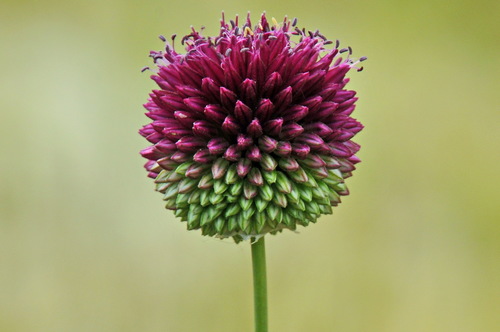
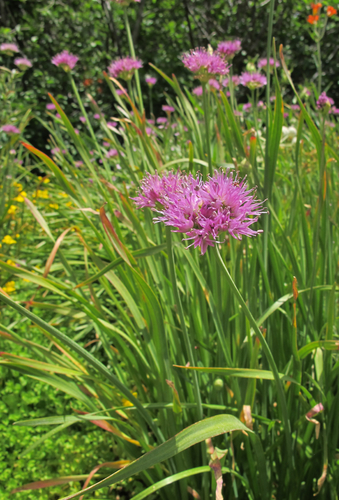
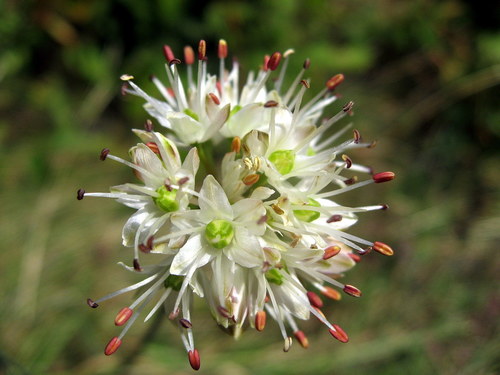
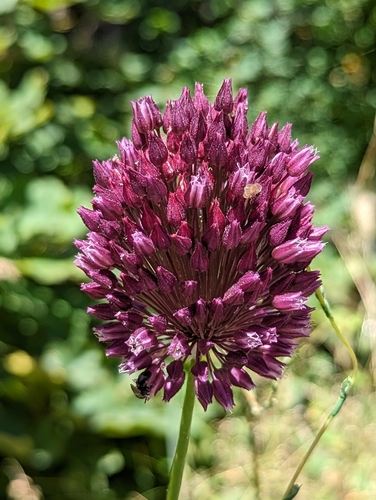
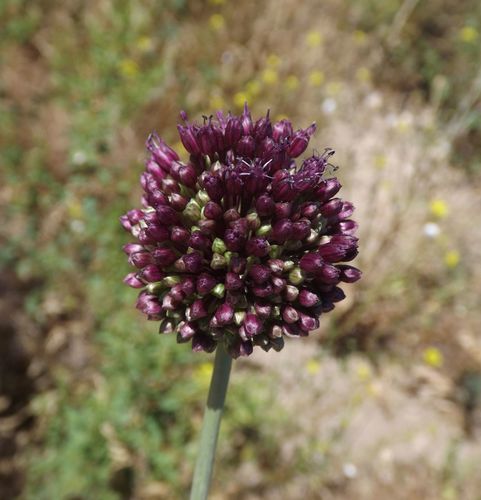
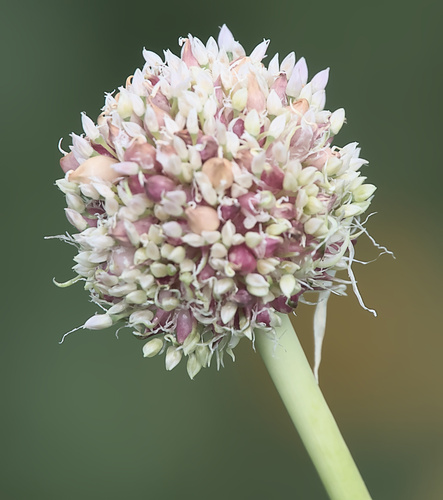
Allium sativum L., commonly known as garlic, is a perennial flowering plant native to Central Asia, South Asia, and northeastern Iran. It grows from a bulb, producing a tall, erect flowering stem that can reach up to 1 meter (3 feet) in height. Its leaf blades are flat, linear, solid, 1.25–2.5 cm (0.5–1.0 in) wide, and end in a sharp point. In the Northern Hemisphere, garlic may produce pink to purple flowers between July and September; these flowers are hermaphroditic, and are pollinated by butterflies, moths, and other insects. The garlic bulb has a strong odor, and is typically made up of 10 to 20 cloves. Cloves near the center of the bulb are symmetrical, while outer surrounding cloves may be asymmetrical. Each individual clove is wrapped in an inner sheathing leaf, which is itself surrounded by layers of outer sheathing leaves. When planted at the correct time and depth, garlic can be grown as far north as Alaska. Garlic plants are generally hardy and not affected by many pests or diseases, and are reported to repel rabbits and moles. The California Department of Food and Agriculture runs a certification program to confirm garlic crops are free from nematodes and white rot disease caused by Stromatinia cepivora; both of these issues can destroy a garlic crop and persist in soil indefinitely once introduced. Other diseases that can affect garlic include pink root, a typically non-fatal condition that stunts roots and turns them pink or red, and leek rust, which usually appears as bright orange spots. Leek moth larvae attack garlic by burrowing into leaves or bulbs. Botrytis neck and bulb rot, a disease that affects onion, garlic, leek, and shallot, is caused in garlic by Botrytis porri. Per the University of California, initial symptoms of this disease usually start at the neck, where affected tissue softens, becomes water-soaked, and turns brown. In humid conditions, a gray, feltlike spore-producing growth forms on rotting scales, and mycelia may develop between scales. Dark brown to black sclerotia, the pathogen's resting bodies, may eventually develop in the neck or between scales. Garlic's characteristic scent can linger on the human body, causing bad breath (halitosis) and body odor, caused by allyl methyl sulfide (AMS). AMS is a volatile liquid that is absorbed into the bloodstream during the metabolism of garlic-derived sulfur compounds; it then travels from the blood to the lungs (and from there to the mouth, causing garlic breath) and to the skin, where it is released through pores. Because digestion takes several hours, and AMS release takes additional hours, the odor effect can last long after eating garlic. Washing the skin with soap only partially and imperfectly reduces this smell. Research has found that drinking milk at the same time as eating garlic can significantly neutralize bad breath, and mixing garlic with milk in the mouth before swallowing reduces odor more effectively than drinking milk after eating. Plain water, mushrooms, and basil may also reduce garlic odor, but the combination of fat and water in milk is the most effective. Fresh parsley is also commonly said to ease garlic breath. Abundant sulfur compounds in garlic are also responsible for garlic turning green or blue during pickling and cooking. Under acidic or heated conditions, the sulfur-containing compound alliin reacts with common amino acids to form pyrroles, which are clusters of carbon-nitrogen rings. These rings can link together into polypyrrole molecules, and their ring structures absorb specific light wavelengths, resulting in a colored appearance. Two linked pyrroles look red, three look blue, and four look green (like chlorophyll, a tetrapyrrole). Like chlorophyll, these pyrrole pigments are safe to eat. Garlic can also turn green after cutting, similar to the color change that occurs in onions from reactions between amino acids and sulfur compounds. The dry green "folds" in the center of a garlic clove are especially pungent. The sulfur compound allicin, produced when fresh garlic is crushed or chewed, breaks down into other sulfur compounds: ajoene, allyl polysulfides, and vinyldithiins. Aged garlic does not contain allicin, but may have some activity from the presence of S-allylcysteine. Some people have allergies to garlic and other species in the genus Allium. Allergy symptoms can include irritable bowel, diarrhea, mouth and throat ulcerations, nausea, and breathing difficulties, and in rare cases anaphylaxis. Garlic-sensitive people test positive for diallyl disulfide, allylpropyldisulfide, allylmercaptan, and allicin, all of which are present in garlic. People with garlic allergies are often also sensitive to many other plants, including onions, chives, leeks, shallots, garden lilies, ginger, and bananas. Multiple reports of serious burns from topical garlic use (including for naturopathic purposes and acne treatment) mean care must be taken for such uses, usually by testing a small skin area with a low concentration of garlic. Based on numerous reports of these burns, including burns in children, topical use of raw garlic and insertion of raw garlic into body cavities are discouraged, and topical application of raw garlic to young children is specifically not advised. The side effects of long-term garlic supplementation are largely unknown. Possible side effects include gastrointestinal discomfort, sweating, dizziness, allergic reactions, bleeding, and menstrual irregularities. Some breastfeeding mothers have observed that after consuming garlic, their babies may feed more slowly, and also note a garlic odor on the babies; in contrast, one experiment found that infants spent more time attached to the breast and sucked more when the mother's milk had a garlic scent. If higher than recommended doses of garlic are taken alongside anticoagulant medications, this increases the risk of bleeding. Garlic may also interact with warfarin, saquinavir, antihypertensives, calcium channel blockers, quinolone family antibiotics such as ciprofloxacin, hypoglycemic drugs, and other medications. The American Veterinary Medical Association classifies garlic as toxic to pets. Garlic is easy to cultivate, and can be grown year-round in mild climates. While sexual propagation of garlic is possible, almost all cultivated garlic is propagated asexually by planting individual cloves in the ground. In colder climates, cloves are best planted around six weeks before the soil freezes, with the goal of allowing bulbs to only grow roots, with no shoots emerging above ground. Harvest takes place in late spring or early summer. Garlic plants can be grown close together, leaving just enough space for bulbs to mature, and can be easily grown in sufficiently deep containers. Garlic grows well in loose, dry, well-drained soils in sunny locations, and is hardy throughout USDA climate zones 4–9. When selecting garlic for planting, it is important to choose large bulbs to separate into cloves; large cloves, paired with proper spacing in the planting bed, produce larger bulbs. Garlic prefers soil with high organic material content, but can grow in a wide range of soil conditions and pH levels. There are multiple varieties of garlic, most notably split into the hardneck and softneck subspecies. Garlic can be day-length sensitive, so the growing latitude affects which type is suitable. Hardneck garlic is generally grown in cooler climates and produces relatively large cloves, while softneck garlic is generally grown closer to the equator and produces small, tightly packed cloves. Garlic scapes are removed to direct all of the plant's energy into bulb growth, and the removed scapes can be eaten raw or cooked. Consumed garlic has been suggested to act as a mosquito repellent due to sulfur compounds circulating in the blood, though there is no scientific evidence supporting this efficacy. Garlic has been used as traditional medicine in many diverse cultures, including Korea, Egypt, Japan, China, Rome, and Greece. In his Natural History, Pliny listed a range of conditions garlic was thought to benefit. Galen, writing in the second century, praised garlic as the "rustic's theriac" (cure-all). 12th century writer Alexander Neckam discussed garlic as a palliative for the heat of the sun during field labor. In the 17th century, Thomas Sydenham valued garlic as an application for confluent smallpox, and William Cullen's 1789 Materia Medica found that some cases of dropsy were cured by garlic alone. The sticky juice inside garlic bulb cloves is used as an adhesive for mending glass and porcelain. An environmentally friendly garlic-derived polysulfide product is approved for use in the European Union (under Annex 1 of directive 91/414) and the United Kingdom as a nematicide and insecticide, including for control of cabbage root fly and red mite in poultry.