About Allium paniculatum L.
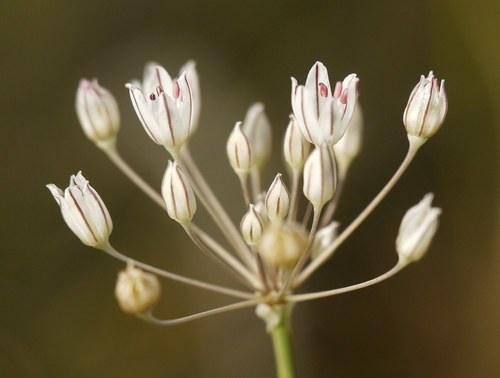
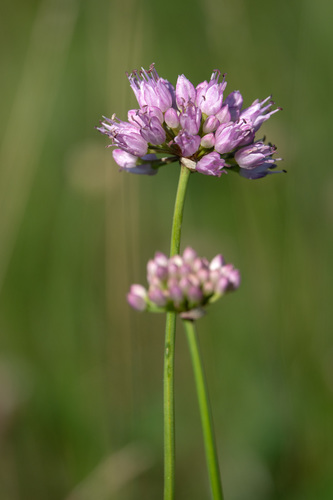
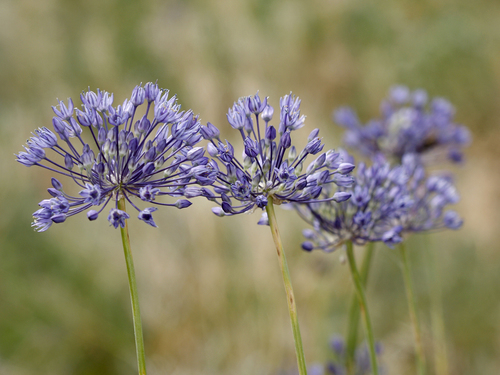
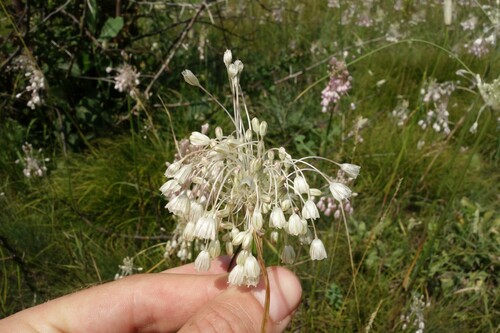
Allium paniculatum L. produces multiple egg-shaped bulbs, each up to 1.5 centimeters across. This species does not form rhizomes. Its leaves are tubular, hollow, and can reach 35 centimeters in length. The scape is round in cross-section, solid, and grows up to 75 centimeters tall. Despite its species name referring to a panicle, its inflorescence is an umbel that can hold up to 100 flowers. The flowers are bell-shaped, approximately 6 millimeters across, with tepals ranging from white to lilac, and yellow pollen and anthers. Historically, Allium paniculatum has been reported from every European country bordering the Black and Mediterranean Seas, including the islands of Corsica, Sardinia, Sicily, and Crete. It is also considered native to Portugal, the Czech Republic, Hungary, western Siberia, Kazakhstan, Armenia, Georgia, Azerbaijan, Iran, Iraq, Lebanon, Syria, Israel, and Palestine. It has become naturalized in California, New York State, the Azores, Madeira, the Canary Islands, and South Australia. Recent phylogenetic studies show the species' true native distribution is limited to countries around the Black and Caspian seas, including Bulgaria, Ukraine, Crimea, European Russia, the Caucasus, Iraq, Iran, Kazakhstan, and western Siberia. In European Russia, Ukraine, and Crimea, Allium paniculatum most commonly grows in dry grasslands called steppes, including on ancient burial mounds, where it grows in association with other steppe plant species. Naturalized populations have been collected near San Francisco Bay in California, and at isolated locations in Essex County, northeastern New York State. This naturalization is a source of concern, as the species has the potential to become a noxious weed. It typically grows in disturbed sites such as roadsides and cultivated fields.