About Allagoptera arenaria (Gomes) Kuntze
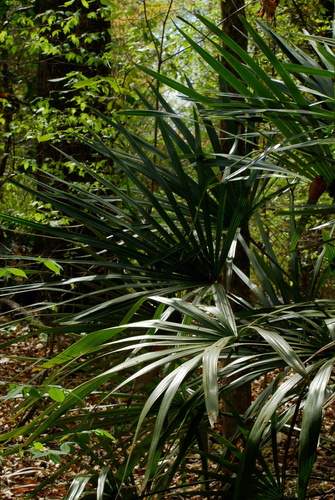
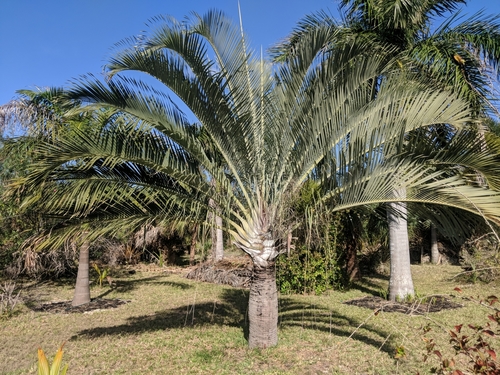
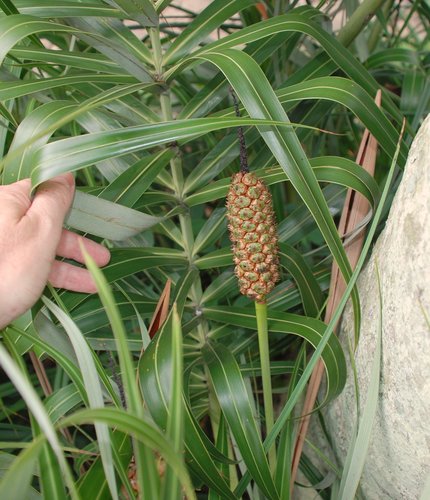
Allagoptera arenaria, commonly called the seashore palm, is a fruit-bearing palm native to the Atlantic Coast of Brazil. It grows in coastal strand habitat, located just above the high tide mark, and is widely grown as an ornamental plant across South America. This species is relatively small, reaching a maximum height of around 6 feet (1.8 meters). It is monoecious, with male and female flowers arranged in separate spirals within the same inflorescence spike. Its leaves grow directly from the ground from a subterranean trunk that is rarely visible above ground. The leaves grow in a swirling pattern, spreading across different, seemingly random planes. Allagoptera arenaria produces 6 to 15 pinnately compound (feather-shaped) leaves that range from bright green to silvery green in color, measuring 2 to 6 feet (0.61 to 1.83 meters) long. Each individual leaflet on these leaves reaches about 2 feet (0.61 meters) in length. Its fruits are yellowish green, shaped like small coconuts, and measure around 1 inch (25 mm) long with a diameter of 0.5 inches (13 mm). Allagoptera arenaria is widely cultivated in South America for its edible fruits, which are eaten fresh or processed into drinks and jams. The leaves of the plant are used to create baskets and other woven items.