About Allacma fusca (C.Linnaeus, 1758)
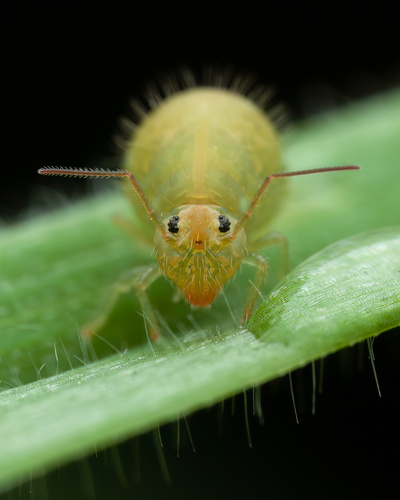
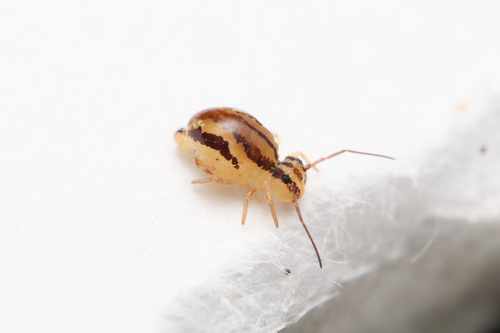
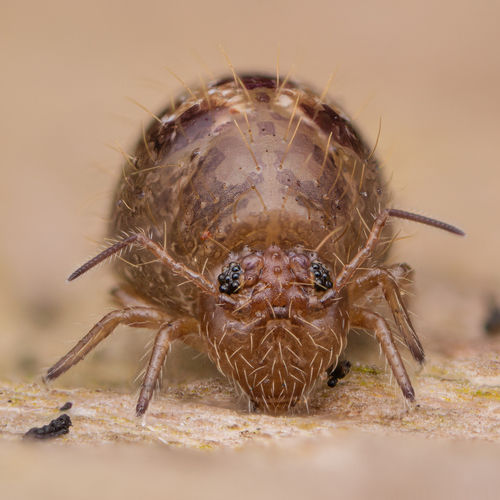
Allacma fusca is a large species of springtail with a dark brown, globular abdomen; adult individuals reach a length of around 3.5 mm (0.14 in). A "snowflake"-like marking is often present on the abdomen, and this marking is most noticeable in paler coloured individuals. This species has internal mouthparts. Its head bears one pair of antennae, two groups of eyespots called "composed eyes", and one pair of small post-antennal organs. The setae (bristles) on the third antennal segment are unequal in length, with some being much longer than others. The fourth antennal segment is divided into sixteen sub-segments. There are three thoracic segments, each bearing one leg, and five abdominal segments. The fourth abdominal segment bears an organ called a "dens", and at the tip of the dens is a structure called a "mucro". The mucros of this species have smooth outer edges and saw-edged inner edges. In females, the appendage on the fifth abdominal segment is unforked. This springtail is native to Western Europe. It is common in the British Isles, and inhabits moist terrestrial environments such as plant litter. Invertebrates that live among soil particles in underground habitats often experience raised carbon dioxide levels, which tend to increase with increasing depth. Researchers have found that surface-dwelling Allacma fusca can tolerate a 10% carbon dioxide level for a few hours. In contrast, Folsomia candida, a springtail that lives deeper in soil, can survive the same conditions for more than six weeks.