About Alisma gramineum Lej.
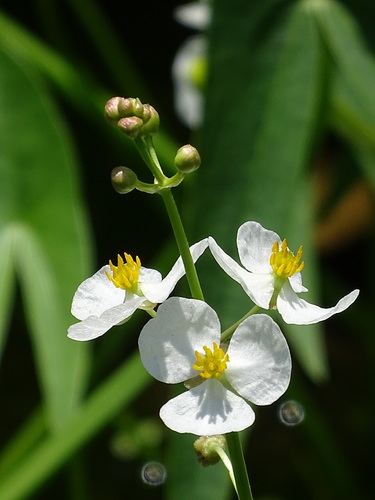
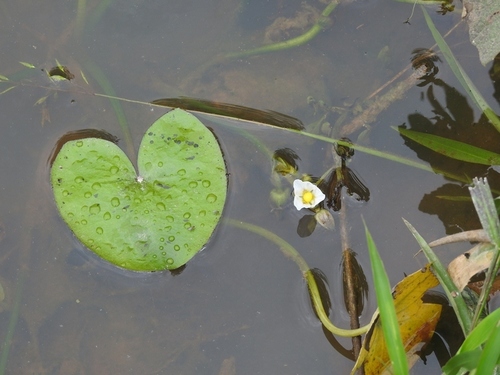
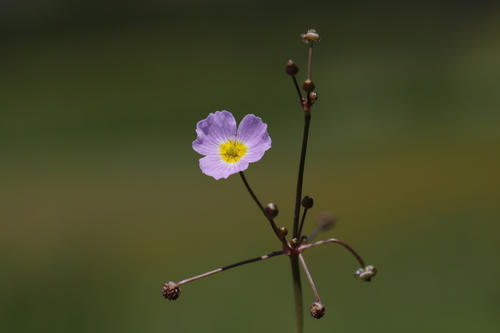
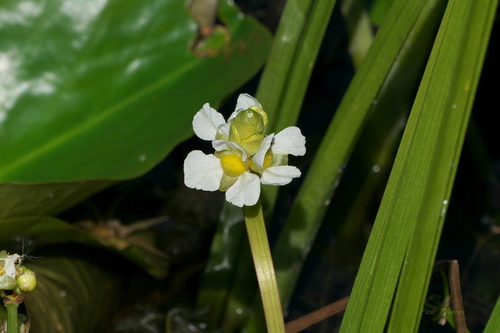
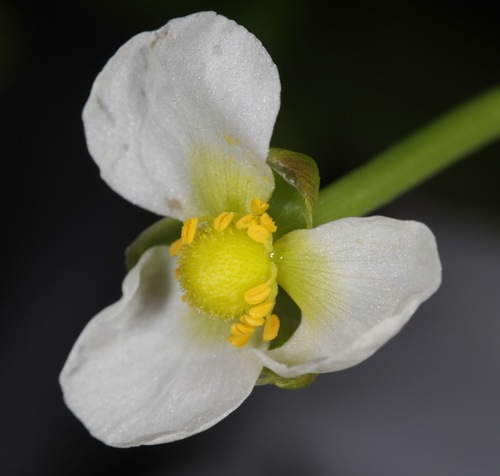
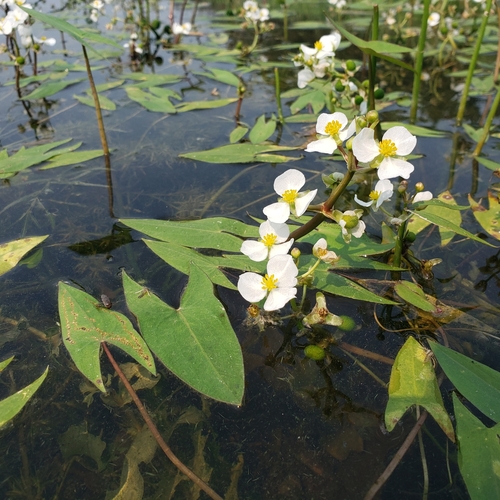
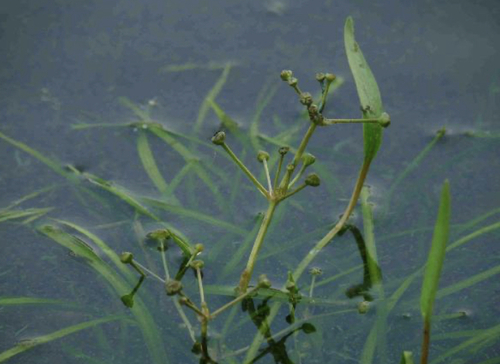
Alisma gramineum Lej. can grow with leaves and tiny purple-tinted white flowers either submerged or above water. Submerged underwater flowers are cleistogamous, meaning they remain closed and self-pollinate, while flowers growing above water open. Emerged leaves above the water surface are stiff and wide, while submerged leaves are ribbon-like in shape. Its fruit forms as a ring of dry nutlets. This species reproduces both by seed and through division of its corm. Alisma gramineum is widespread across temperate and subarctic regions of Asia, Europe, and North Africa, ranging from France and Libya in the west to China and Yakutsk in the east. It has been recorded across much of Canada from British Columbia to Quebec, as well as most of the western United States, plus the eastern US states of New York, Vermont, and Virginia. In the United Kingdom, this species is endangered and legally protected. It was first discovered in Britain in Worcestershire in 1920, and later found beside the River Glen in Lincolnshire. Populations at both of these British sites are small and fluctuate in size from year to year. It typically grows in shallow, nutrient-rich water along the edges of water bodies and in fenland drains. It grows as an annual plant or a short-lived perennial, and its seeds can stay viable for multiple years, sometimes germinating after ground disturbance.