About Aleuroplatus coronata (Quaintance, 1900)
Aleuroplatus coronata, commonly known as the crown whitefly, is a species of whitefly belonging to the family Aleyrodidae. It is native to the southern United States and Mexico, and is currently an established species in California, where it is found in association with oak and chestnut trees.
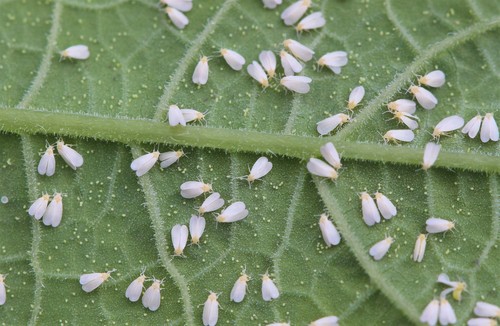
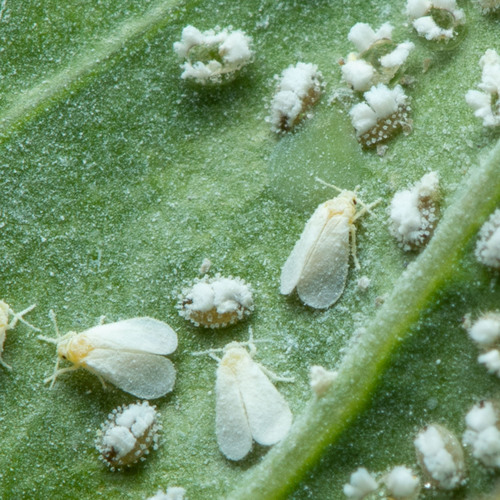
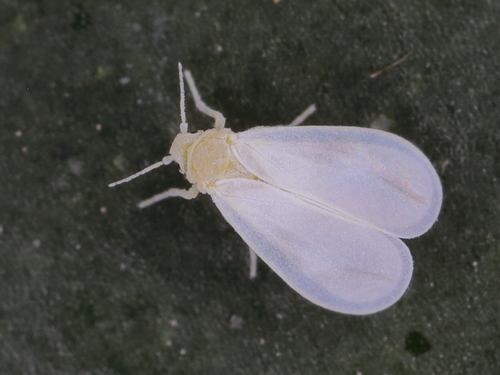
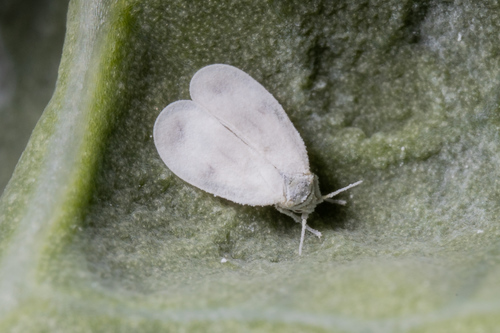
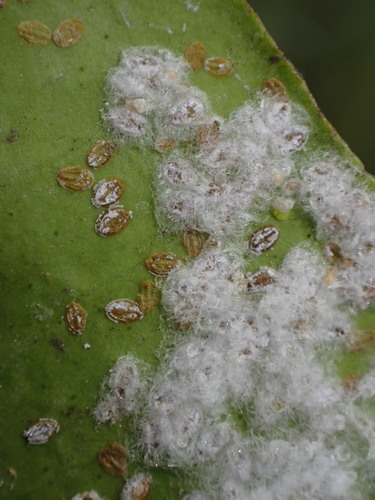
Adult crown whiteflies are small flying insects with pale yellow bodies, reaching approximately 1 mm in length. They have four white wings that look covered in a layer of dusty wax, and their overall appearance somewhat resembles the wings of a small moth. Adult females lay cigar-shaped eggs, which hatch into nymphs. Nymphs have small, elliptical, semitransparent bodies, with antennae, legs, and hairs extending outward from the lateral edges of their bodies. Nymphs lose their legs during their second instar, then attach themselves to the underside of leaves and stay immobile through the pupal stage.
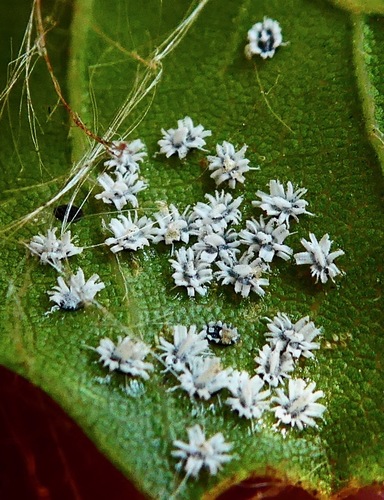
Pupae of this species are enclosed in a puparium, which is the exoskeleton left from the final larval instar. The puparium is surrounded by a distinctive crown-shaped structure made of waxy filaments or plates, which inspired the species' common name of crown whitefly.