About Alectoris graeca (Meisner, 1804)
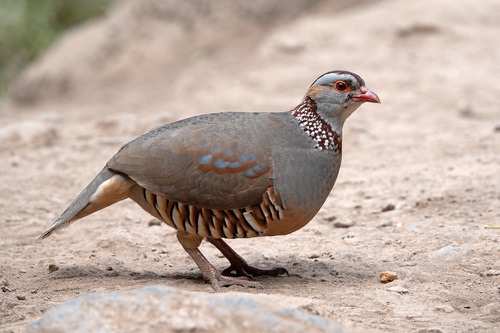
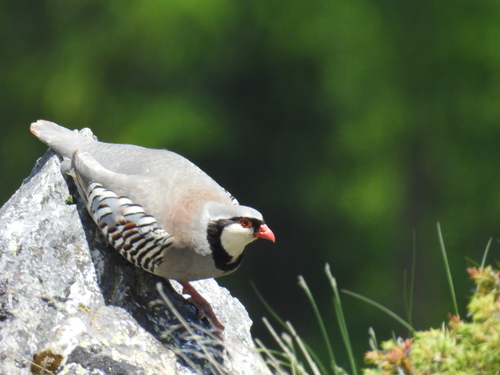
The rock partridge, scientifically named Alectoris graeca (Meisner, 1804), is a rotund bird with a light brown back, grey breast, and buff belly. It has a white face marked with a black gorget, rufous-streaked flanks, and red legs. When disturbed, this bird prefers to run rather than fly, but will fly a short distance on rounded wings when needed. It is very similar to the chukar partridge, but has a greyer back and a white rather than yellowish foreneck. Its sharply defined gorget distinguishes this species from the red-legged partridge. Its song is a noisy ga-ga-ga-ga-chakera-chakera-chakera. Naming confusion exists around this species, because the species called stone partridge in English translates literally to "rock partridge" from many other languages. For example, the Dutch name rotspatrijs, German name Felsenhenne, and French name poulette de roche are all literal translations of "rock partridge". Confusion is further compounded by the fact that in some languages, Alectoris species have names that literally translate as stone partridge, such as the Dutch steenpatrijs and German Steinhuhn; the red-legged partridge (A. rufa) is called rode steenpatrijs in Dutch. Additional complication comes from the use of the name "rock partridge" for a variety of Alectoris species and hybrids, particularly within the United States. International bird trade for sport, aviaries, and meat has led to the incorrect application of many of these common and scientific names. This species is a resident breeder found in dry, open, and often hilly country.