About Aldrichetta forsteri (Valenciennes, 1836)
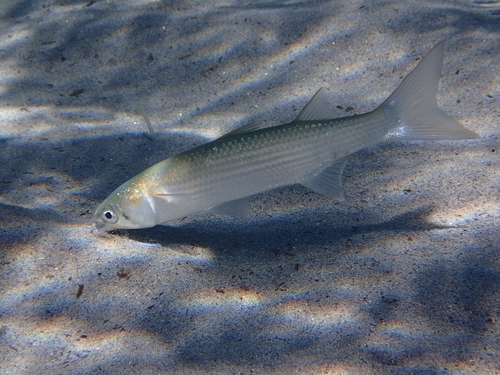
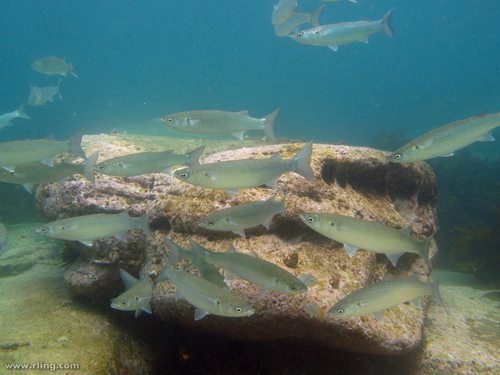
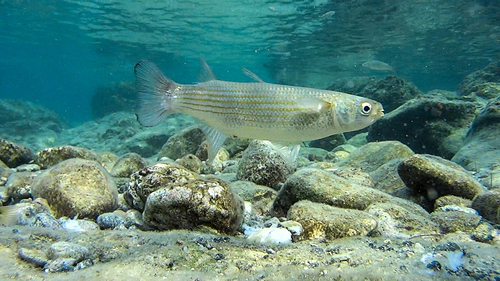
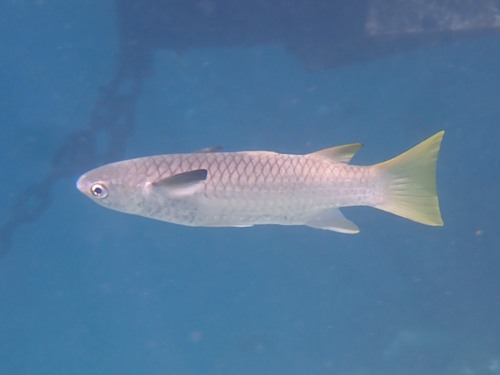
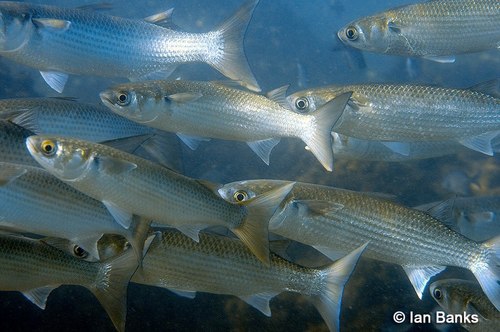
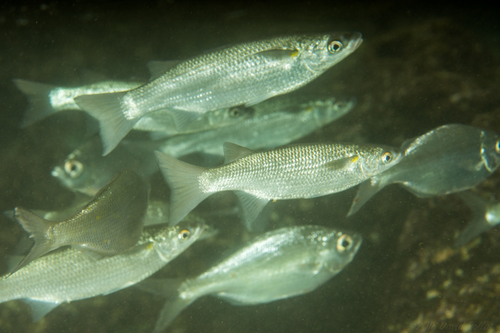
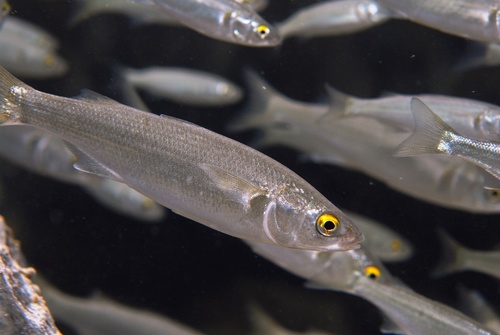
Yellow-eye mullet, with the scientific name Aldrichetta forsteri (Valenciennes, 1836), are small near-shore fish that usually grow to 30–40 cm (12–16 in) long. Their bodies are grey-green or olive/blue-brown on the upper surface, silver on the sides and underside, with bright yellow or gold eyes and brown-edged fins. They have sharp heads and mouths, with particularly small, thin scales that fall off very easily. Unlike most fish, they have two dorsal fins: the first has 4 spines, while the second has 1 spine and 9 rays. They can inhabit waters from 0 to 50 m (0 to 160 ft) deep, but most often stay in depths shallower than 10 m (30 ft). They prefer water temperatures between 14 and 24 °C (57 to 75 °F), can tolerate a maximum temperature of 28 °C (82 °F), and their minimum temperature tolerance is unknown. This species is found in the South-west Pacific, including Western Australia, South Australia, Victoria, Tasmania, all of New Zealand, and the Chatham Islands. Their typical habitat is shallow bays, ports, and estuaries. They are often seen shoaling near the water surface, and rarely enter freshwater. For example, they can be found year-round in Lake Ellesmere / Te Waihora, south of Christchurch, though their spawning always takes place in the sea. The maximum estimated age of yellow-eye mullet is seven years. They reach maturity at 2–4 years of age. Females grow faster and reach a larger size than males. Most spawning occurs between December and March in summer and autumn coastal waters or estuaries, though some sources suggest spawning may also occur in winter. A single fish can release up to 680,000 eggs. Although yellow-eye mullet have a good flavor, they are most commonly used as bait, and are considered the best bait for catching larger fish species. Freshly caught yellow-eye mullet fillets, which release blood and juice, are irresistible to almost any fish in the sea. This species has two main commercial uses. The first is from the marine beach fishery, where adult fish that have laid eggs are processed to make caviar that has high demand in Australia and internationally. Catch from this fishery can also be sold fresh, smoked, or dried, and beach fences are used for this fishery. The second commercial fishery targets this species in estuaries, and this fishery makes up the majority of the total yellow-eye mullet catch. Yellow-eye mullet can be caught year-round here, though most catches happen in late summer and autumn. The main fishing gear used in the estuary fishery are coastal gill nets and tunnel nets. When choosing this fish, consumers typically look for shiny skin, solid meat, and a fresh marine scent. Good quality fillets should have pink or grey, solid, shiny, moist meat with no brown markings or excess water, and a pleasant fresh marine scent.