About Alcis repandata (Linnaeus, 1758)
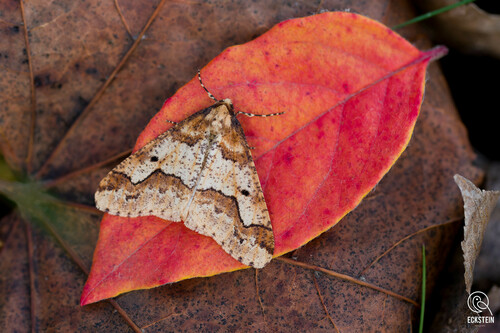
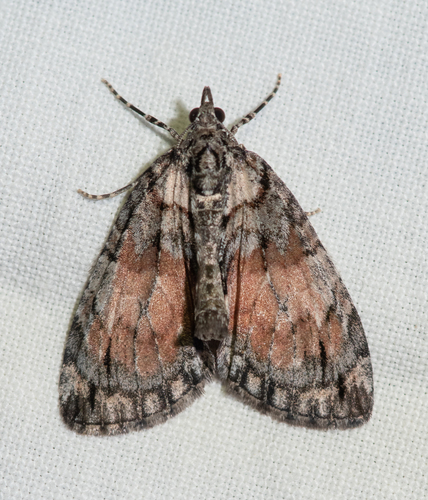
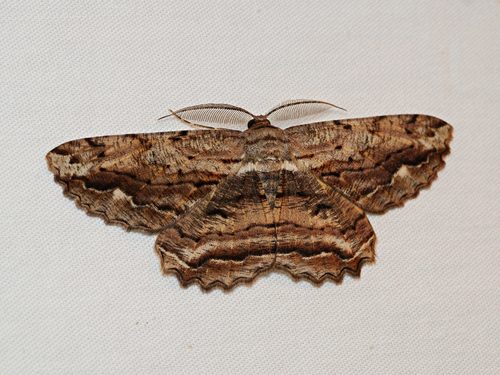
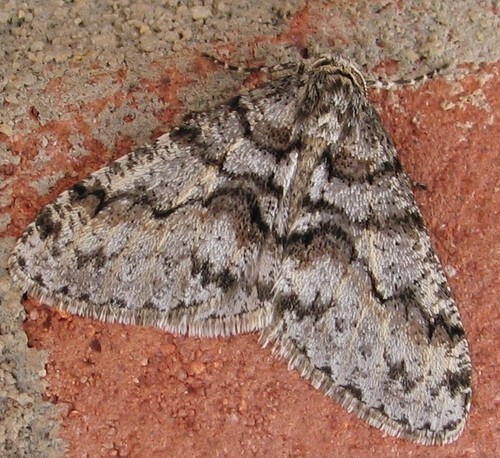
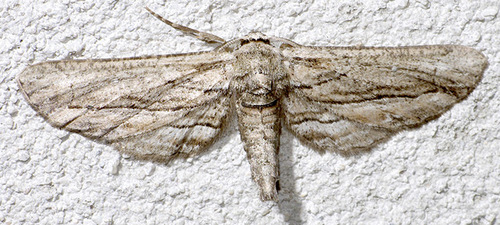
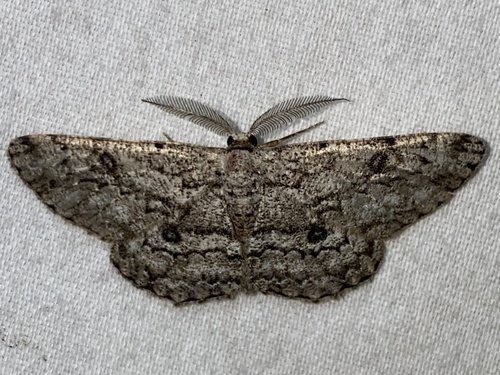
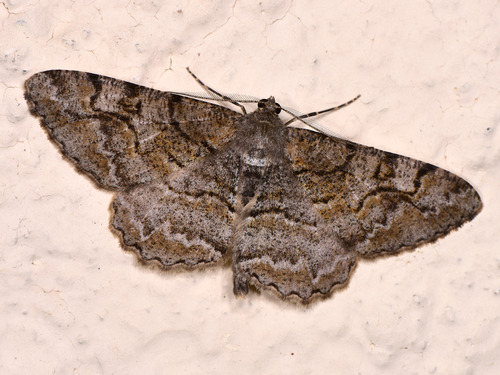
Alcis repandata (Linnaeus, 1758) has a wingspan of 30–45 mm. It is an extremely variable species. Individuals are typically buff or grey with black bars along the costa, and often have a broad blackish band across the forewings. Meyrick gave the following detailed description: The head is grey mixed with whitish and fuscous. The forewings are light ochreous-brown, sprinkled with black and sometimes with whitish. The first line is curved; the median line is twice sinuate, dark fuscous, and sometimes partly confluent. The second line is dark fuscous, projecting in a rounded shape above and below the middle. The subterminal line is waved, pale or whitish, and partially dark-margined. A blackish discal spot sits before the median line. The hindwings match the forewings in appearance, but their lines are less marked and less regular. A discal dot occurs beyond the median line. Melanic forms are common, especially in industrial areas. In all but the darkest variations, the most characteristic feature is a pale zigzag line across the hindwing. The larva is pale greenish-ochreous with brown markings; it is sometimes suffused with dark grey and dusted with yellow. The dorsal line is brown or dark grey, distinct on segments 2–4, and often obsolete on other segments. Segments 5 through 12 sometimes have pale dorsal diamonds. For more detailed information, see Prout (1912–16). This species is rather similar to Willow Beauty (Peribatodes rhomboidaria) and its related species; see Townsend et al. for further distinction. Alcis repandata is a common species found in Europe and the Near East. Its range extends throughout Europe to the Urals, south across the Mediterranean, Asia Minor, and the Caucasus to Kazakhstan, and north to the Arctic Circle. It inhabits deciduous, mixed and coniferous forests, bushy heaths, meadows, marshes, and settlement areas. In the Alps, it occurs up to 1800 meters. No recorded host plants are provided in this description.