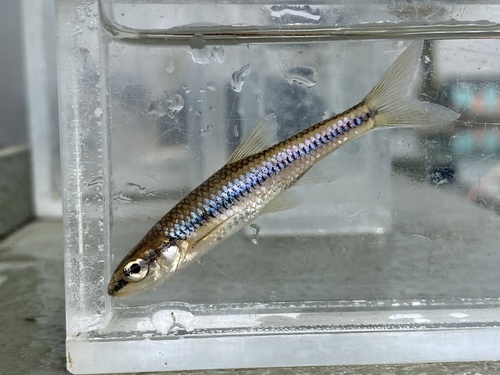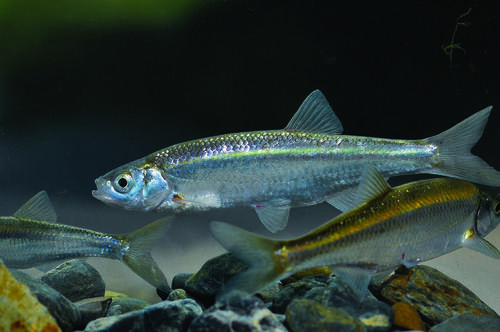
About Alburnus alburnus (Linnaeus, 1758)
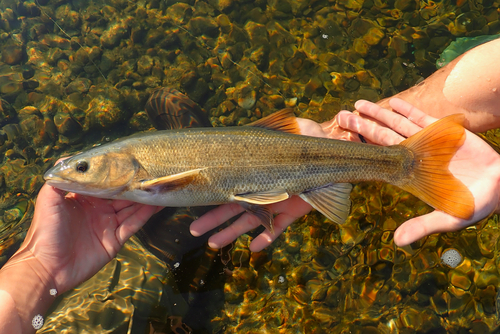
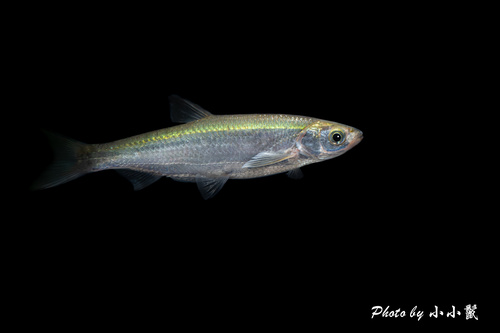
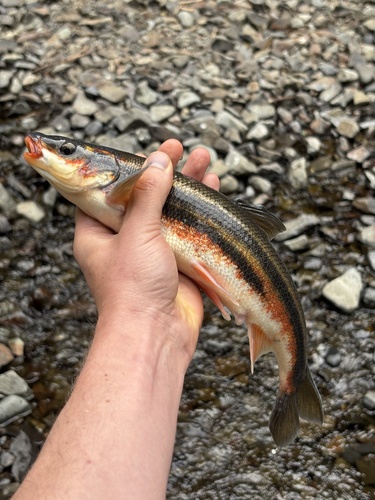
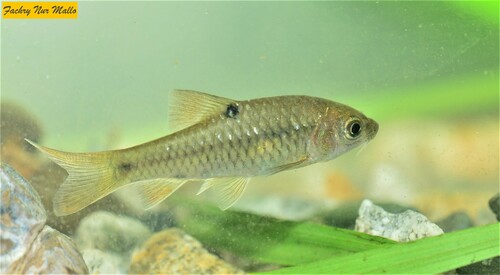
Alburnus alburnus (Linnaeus, 1758), commonly called the bleak, has an elongated, flattened body, a pointed head, and a relatively small, upward-turned mouth. It has a long anal fin with 18 to 23 fin rays, a complete lateral line, a shiny silvery overall color, and pointed, colourless fins. This species reaches a maximum total length of approximately 25 cm (10 in). Across Europe, bleak are easily confused with many other fish species. In England, young common bream and silver bream can be misidentified as young bleak, though the bleak’s characteristic pointed, upward-turned mouth is already distinctive even in young individuals. Young roach and ruffe differ from young bleak by having wider bodies and shorter anal fins. Bleak swim in large schools, and feed on small molluscs, insects that fall into the water, insect larvae, worms, small shellfish, and plant detritus. They inhabit streams and lakes, prefer open waters, and occur in large numbers near food inflow from pumping stations or downstream of weirs. Common bleak typically reach sexual maturity at around three years of age. Their spawning period runs from April to June, when water temperature is between 14 and 15 °C (approximately 58 °F). During spawning, a female common bleak lays between 5,000 and 7,000 eggs in multiple batches, depositing the eggs on submerged vegetation or in shallow water areas. Males develop physical changes during the spawning season: they grow nuptial tubercles on their backs and flanks, and their fins turn orange. Eggs incubate for about 2 to 3 weeks. Young bleak, called fry, grow relatively slowly and feed primarily on plankton. Common bleak can hybridize with other cyprinid fish species, including chub, roach, rudd, and bream. Bleak are commonly used as bait for sport fishing to catch larger fish. In 1656 in Paris, a man named Mr. Jaquin extracted a substance called essence Orientale or pearl essence, which is crystalline guanine, from the scales of common bleak for use in making artificial pearls.