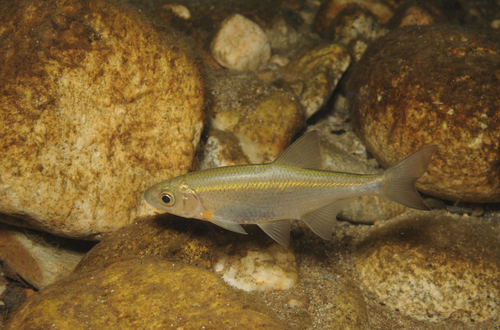
About Alburnoides bipunctatus (Bloch, 1782)
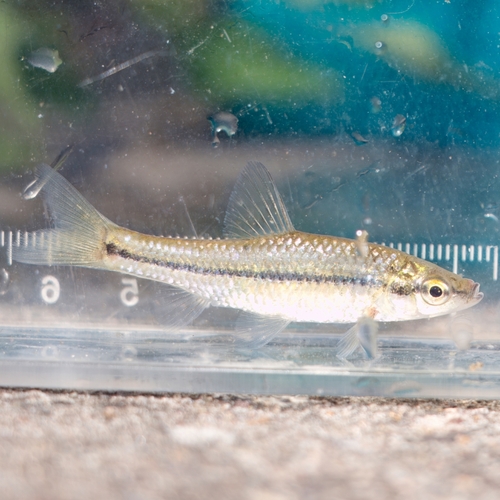
Alburnoides bipunctatus has 3 spines and 7 or 8 soft rays in its dorsal fin. It has 3 spines and 13 to 18 soft rays in its anal fin, of which 12 to 17+1⁄2 are branched. The snout length is equal to or smaller than the eye diameter, and the eye diameter is roughly equal to the distance between the eyes. The mouth is terminal. This species reaches a maximum total length of 18.5 cm (7.3 in), with 9 cm (3.5 in) being a more typical size, and has a maximum recorded weight of 30 g (1.1 oz). Previously, Alburnoides bipunctatus was thought to be widely distributed across Europe and western Asia. After taxonomic revisions in the 2000s, A. bipunctatus sensu stricto is now considered restricted to Europe. It occurs in Central and Western Europe in rivers that drain into the Bay of Biscay, North Sea and Baltic Sea, ranging from the Charente in France to the Vistula in Poland. In the Mediterranean basin, it only occurs in southern France, from the Aude to the Argens, including the Rhône. It has not yet been confirmed that populations in the Danube belong to A. bipunctatus, as three distinct genetic lineages have been identified in the upper, middle, and lower sections of the Danube river system. This species is also found along the Prut and Siret rivers and their tributaries. Alburnoides bipunctatus inhabits lower-lying stretches of streams and smaller rivers. It prefers clear, flowing, well-oxygenated water with substrates of sand, gravel, pebbles, or stones.