About Albatrellopsis confluens (Alb. & Schwein.) Teixeira
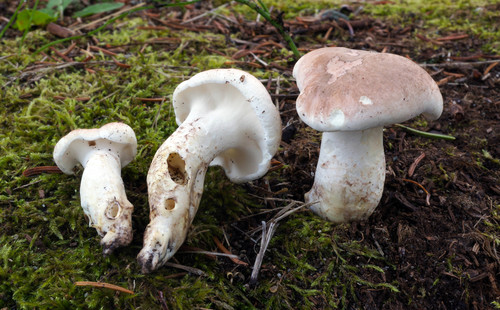
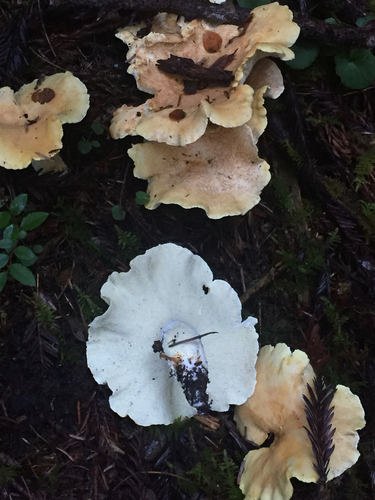
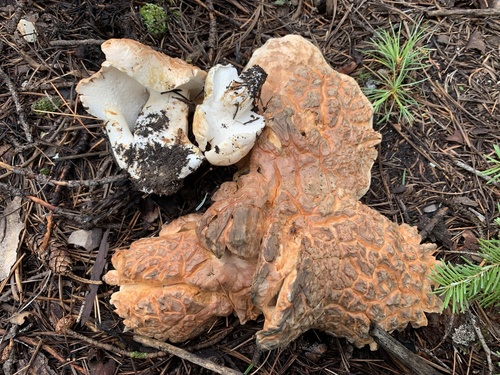
The cap of Albatrellopsis confluens measures 3–15 centimetres (1+1⁄4–6 inches) in diameter, and is shaped hemispherical or irregularly circular. Its surface color ranges from cream or apricot with an orange tinge, and may sometimes be reddish-brown or ochre. The cap edges are flaky, and the outer skin cracks during dry periods. This fungus usually grows in clusters of fused fruit bodies that can reach up to 50 cm (20 in) across. The hymenophore consists of tubes up to 3 millimetres (1⁄8 in) long, which run down the stem, and is white in color. The pores are very small and circular. The spore print is white. Spores are broadly ovate to almost spherical, colorless, and smooth, measuring 4.5–5 × 3–3.5 μm. The stipe (stem) is 3 to 6 cm (1+1⁄4 to 2+1⁄4 in) long and 2 to 2.5 cm (3⁄4 to 1 in) wide, and is not very distinct. It can be positioned centrally, eccentrically, or laterally. Its color is white, sometimes with an apricot or rusty tinge and spots. The flesh is cream-colored. The odour is weak and pleasant, while the taste is bitter. Albatrellopsis confluens is a widespread species found in Europe and North America, and has also been recorded in Japan and on the Yorke Peninsula in Australia. It is a saprotrophic fungus that occurs sporadically in coniferous and mixed forests, and is most often found in mountain spruce forests. It grows on the ground, either singly or in crowded clumps, from July to October.