About Albardia furcata van der Weele, 1903
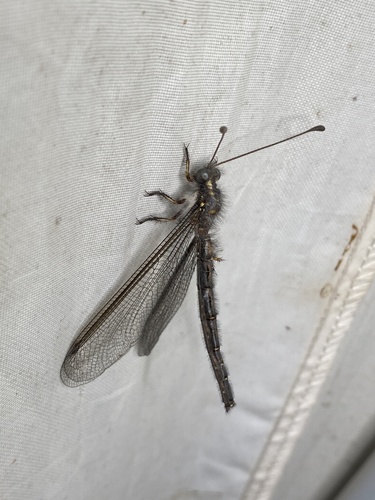
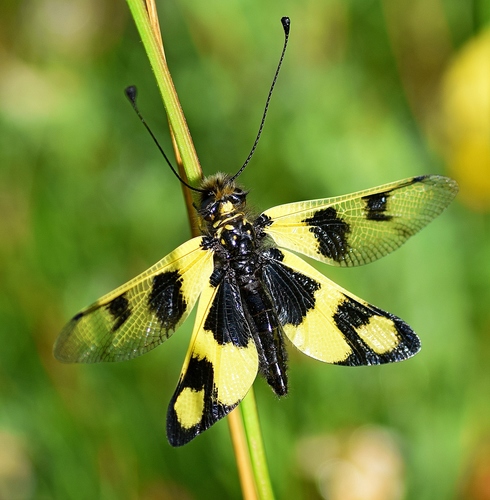
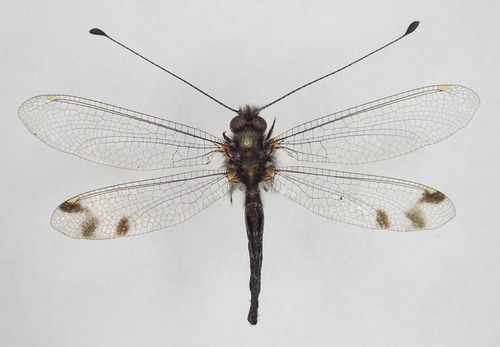
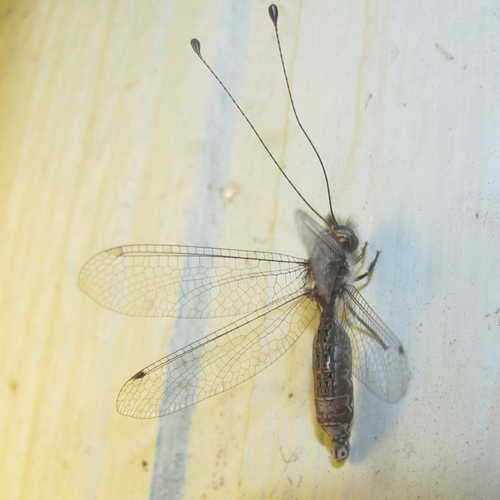
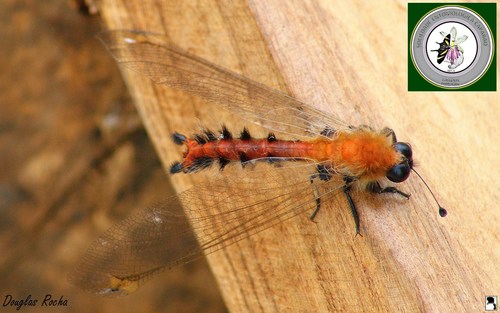
Albardia furcata individuals can be identified by their short antennae, which are thick at the base, and their long, unangled wings. The head and thorax are reddish-brown, and the legs are covered in long bristle-like structures called setae. These bristles are dark yellow on the posterior side of the legs closer to the body, and black on the anterior, or front, side. In adult individuals, the outermost layer of the abdomen has a wooly texture that is noticeably different from other species in the family Ascalaphidae. Albardia furcata shares physical similarities with insects in the order Odonata, which has caused confusion during some identification processes. In all recorded individuals, the head is dorsoventrally flattened, meaning compressed from back to front, and is wider than it is long. Albardia furcata is endemic to Brazil, where it has been recorded in the Cerrado, Caatinga, and Atlantic Forest biomes. These biomes are located within the eastern and northern regions of Brazil, and the species is likely to also occur across other areas of the country.