About Alabes dorsalis (Richardson, 1845)
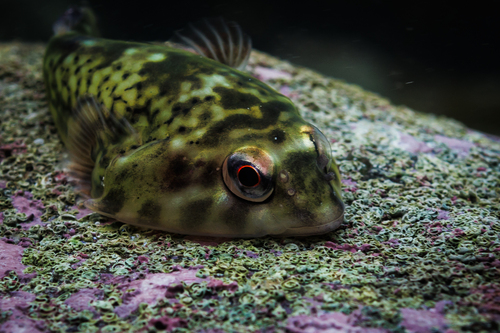
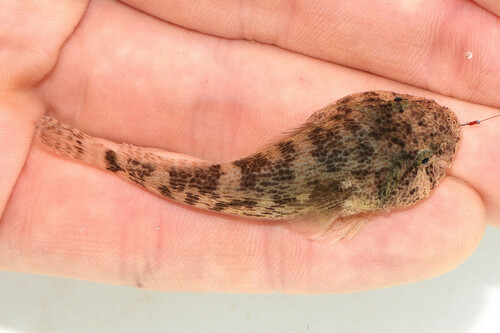
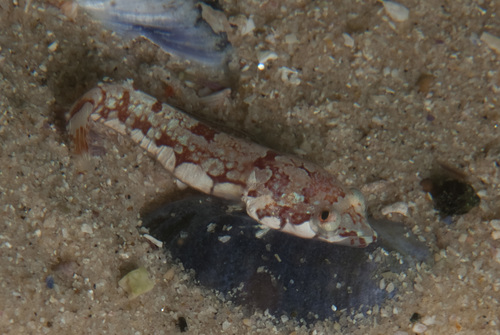
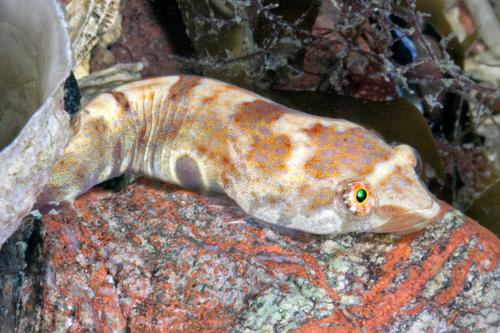
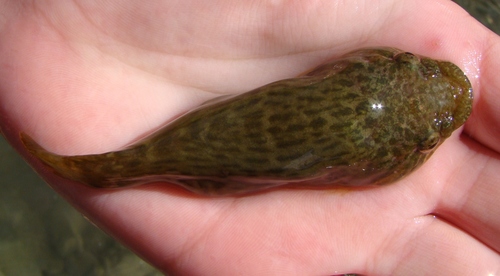
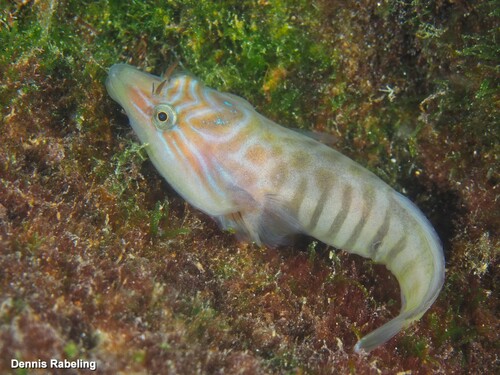
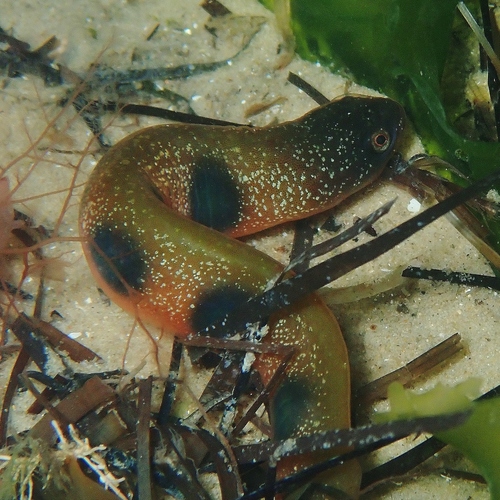
Alabes dorsalis (Richardson, 1845), commonly called the common shore eel, is an eel-like fish. It ranges in color from large brownish-orange to bright green, and sometimes has a line of large blackish spots along its flanks. It has a short head with small eyes, a small mouth, and a small gill slit on the underside of the head that is roughly the same length as the diameter of its eye. A single sensory pore sits above and behind the eyes. The dorsal, anal, and caudal fins are joined into a single continuous fin, and these fins do not have any fin rays. The pectoral fins are much reduced, located just behind the gill slits, and are roughly the same length as the gill slits. A vestigial disc-like sucker is present between the pelvic fins. The maximum total length of this species is 12 centimetres (4.7 in).
This is a temperate fish species endemic to southern Australia. Its range may extend as far north as Queensland, and it is confirmed to occur from Broken Bay, New South Wales south and west to an area just south-west of Ceduna, South Australia. It is also found around the coast of Tasmania. It is frequently encountered by people searching rock pools and turning over rocks on beaches, especially in Victoria and South Australia.
The common shore eel lives under rocks and shells from the intertidal zone down to depths of 10 metres (33 ft); some sources note it can live as deep as 30 metres (98 ft). It can also be found among weeds.