About Ajuga genevensis L.
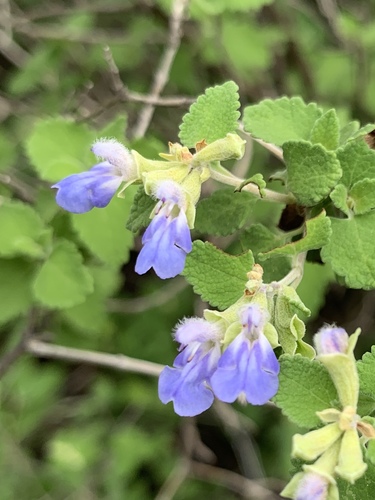
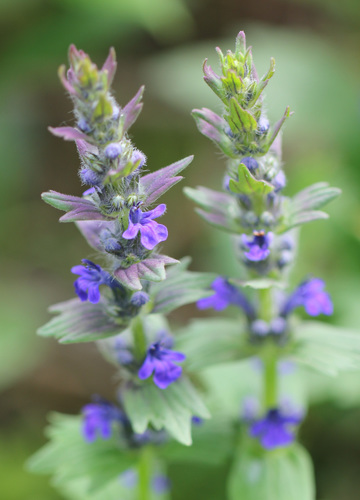
Ajuga genevensis L. is an evergreen perennial plant that flowers between April and July, and grows to a height of 10 to 30 cm. It has long-stalked, obovate basal leaves that are shallowly lobed or toothed. It produces an upright stem, with flowers arranged in dense, terminal, spike-like inflorescences. The flowers are most often violet-blue, but can also be pink or white; the uppermost flowers are often flushed with blue. Pink-flowered forms are sometimes known by the cultivar name 'pink beauty', while white-flowered forms are sometimes called 'alba'. The flowers have short upper lips, with stamens and a pistil that protrude from the flower. This plant is sometimes affected by Erysiphe biocellata, a type of mildew. In the wild, Ajuga genevensis grows on the edges of dry woods, as well as in thickets and grasslands. Its native range extends across Europe from France to western Russia, and it is also native to Turkey and the Caucasus. It has become naturalized in North America after garden seed escaped from cultivation. It is grown as an ornamental plant in gardens around the world, and is often used for garden edging because it spreads more slowly than Ajuga reptans. In traditional Austrian medicine, Ajuga genevensis is used internally as a tonic for treating disorders of the respiratory tract.