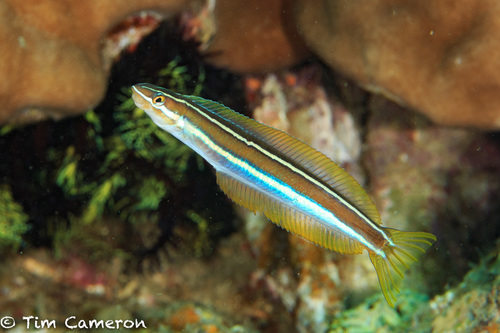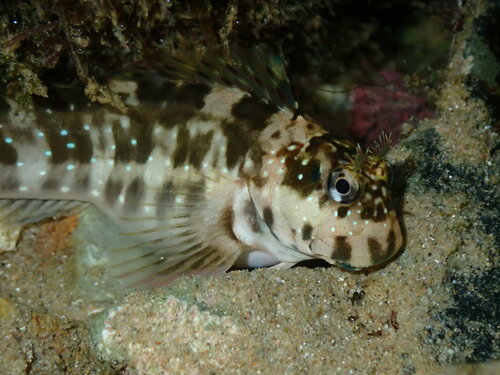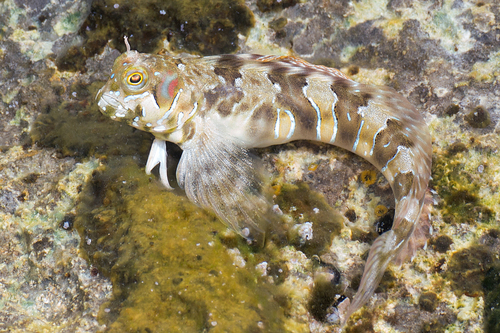
About Aidablennius sphynx (Valenciennes, 1836)
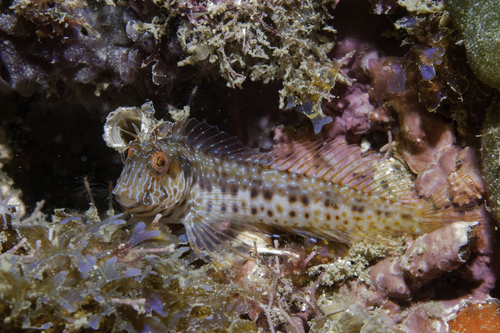
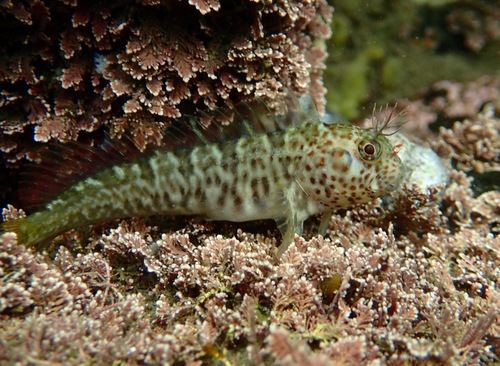
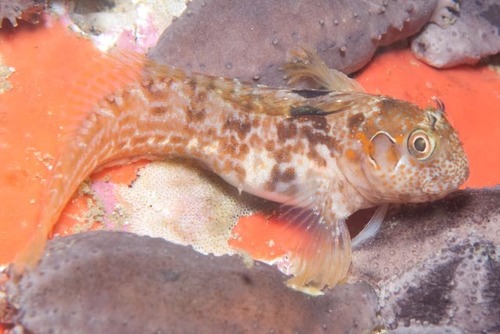
The sphinx blenny, scientifically known as Aidablennius sphynx, is a combtooth blenny species, and the only species in the genus Aidablennius. Achille Valenciennes originally described this species in 1836 under the genus Blennius. In 1947, Gilbert Percy Whitley reassigned it to the new genus Aidablennius. This is a subtropical blenny found in Morocco in the eastern Atlantic Ocean, as well as in the Mediterranean and Black Seas. Sphinx blennies live in shallow, sunlit rocky waters in the littoral zone. Their diet primarily consists of benthic algae, weeds, and invertebrates. This species reaches a maximum total length of 8 centimetres, or 3.1 inches. During reproduction, sphinx blennies form distinct mating pairs. Females can lay up to 7000 eggs in a single clutch. After laying, males guard the eggs inside burrows. Males cannibalize dead eggs to stop infection from spreading to healthy eggs. They have also been observed eating living eggs in smaller broods; this behavior is thought to occur because males have limited feeding opportunities while they are restricted to guarding their nests during the breeding period. According to FishBase, this species has a Low Vulnerability rating, and its reproductive doubling time is less than 15 months.